Trump hunts for weak prey and plays fast and loose with rules. Influencer “Chairman Tu” (兔主席) lays out Trump’s playbook in "A Nation Torn Apart" (《撕裂之國》): Trump picks on soft persimmons and he has no respect for the law. The US President thrives on behavior that looks downright criminal.
Put those together, and Trump’s latest “kidnapping” of Nicolás Maduro reads like a textbook case of bullying-by-banditry, with a small country openly plundered. That’s American imperialism with the mask ripped off.
Here’s the twist: even with public anger boiling, a few people rush in with gold paint. Wanted fugitive Nathan Law tries to dress up “bandit tactics” as acceptable because, he says, “ending dictatorship” is what really counts.
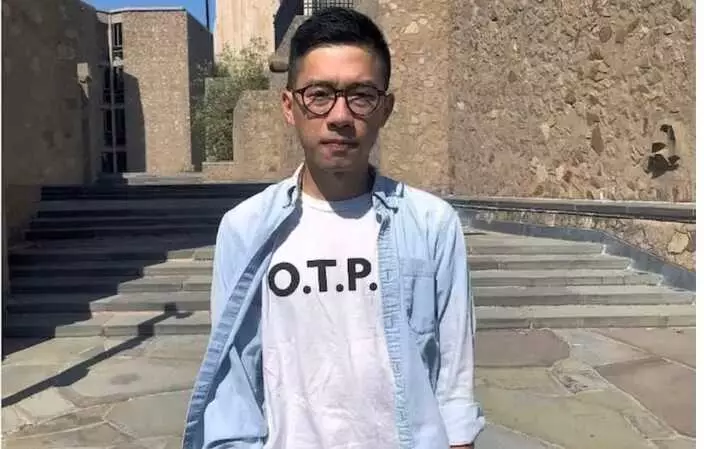
Nathan Law’s post puts gold trim on Trump’s “Maduro abduction,” making an invasion look cleaner than it is.
Chip Tsao goes even bigger. He argues that without imperialism and colonialism, there would be no modern human civilization. He then hails Trump’s capture of Maduro, along with threats aimed at Colombia and Greenland, as the dawn of a “new era of 21st-century imperialism”. No wonder viewers feel like they’re watching black turned into white right in front of them.
Law’s argument lands fast after Trump’s hard-handed “Maduro snatch.” In a social media post, he says the US military action against Venezuela serves US national security and energy needs, boosts the “defender of democracy” storyline, and also weakens China’s allies while striking at socialist dictators.
With his “Revolution of Our Times” pedigree, it’s no surprise he claps the loudest for the most extreme scenes. He insists that toppling a dictatorship lets long-oppressed citizens “recover hope” and perhaps one day draft a democratic blueprint, so pro-democracy supporters ought to welcome the outcome. The spin is so saccharine it turns Trump into Venezuela’s “saviour,” pretending freedom arrives as a gift basket—delivered by abduction.
Goals don’t cleanse methods
Law then tries to police the language. He tells critics not to quickly label the operation “American imperialism,” and instead to appreciate the “diverse and complex” political motives behind it; translation: if the “goal” sounds upright and reasonable, don’t simplify it into condemnation. Strip it down, and it’s still a defense brief for Trump and his administration.
None of this is exactly shocking if you remember Law’s own US storyline. Around 2019, he and opposition representatives visit the US repeatedly, meet Washington politicians, and get treated like honored guests—deeply grateful for American backing of the “Hong Kong protests.” So now he naturally frames Trump’s move as saving the Venezuelan people, no longer fussing over how ugly the action looks.
None of Tsao’s applause is shocking either: this is exactly his lane. He celebrates Trump’s Maduro stunt and the wider saber-rattling as the launch of a fresh, triumphant imperial era. Then he tops it off with that “imperialism built civilisation” argument, laundering colonialism’s crimes and polishing Trump into Venezuela’s supposed benefactor. It’s creepily adoring, and hard to read without shivering.
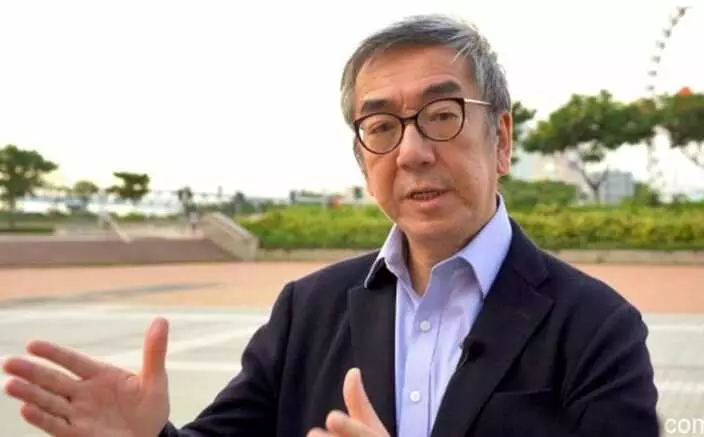
Chip Tsao cheers Trump as the man “opening a new era” of 21st-century imperialism.
The mask comes off
Trump isn’t merely “gaffe-prone” this time—he tears the mask clean off. It’s a barefaced assault on Venezuela: snatch people, seize oil (and pocket the money, too). Anyone still clinging to basic morality and justice will see him for what he is: an enemy. Which makes it all the more grotesque that figures like Nathan Law and Chip Tsao can keep marketing him as a “saviour.”
Still, there’s one silver lining: the debate made the masks slip. One round was enough to reveal who was really who.
Lai Ting-yiu
What Say You?
** 博客文章文責自負,不代表本公司立場 **
Call it what you want—abduction, kidnapping, state-sponsored piracy. Trump just grabbed another country's head of state and dragged him to American soil.
Now comes the really chilling part: the theatrical production. Picture it—law enforcement officers, prosecutors, judges, all assembled on a judicial stage to perform what's supposed to look like legitimate justice. But everyone already knows how this play ends. The opening scene telegraphs the finale.
I've heard the inside story of what happened to Patrick Ho Chi Ping, Hong Kong's former Secretary for Home Affairs, during his time in American custody. The pressure was relentless—cooperate with the "deep state," provide the intelligence they wanted, and watch your sentence shrink. Normal procedures? Forget them.
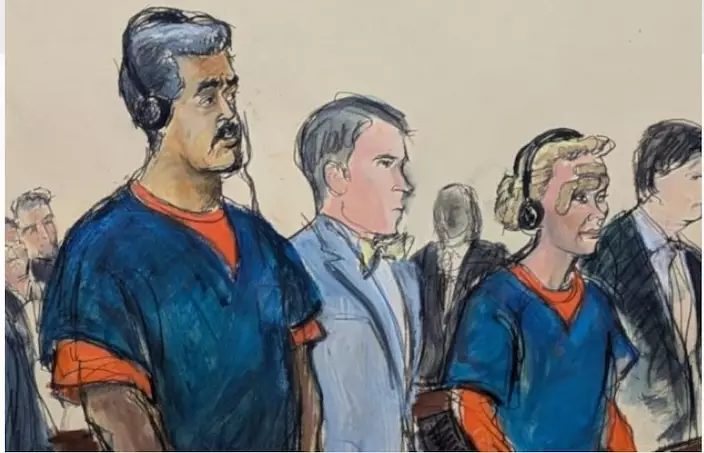
Trump's judicial theater begins. Maduro's arraignment is pure political performance—Patrick Ho's ordeal proves fairness isn't on the menu here.
That's the same template Maduro faces now. When you're meat on the chopping board, your choices evaporate fast. Don't expect judicial fairness. Expect survival tactics.
The moment Maduro touched American soil, they shipped him straight to New York's Metropolitan Detention Center. A literal hell hole, notorious for brutal conditions and a dangerous inmate population.
Yesterday he faced his first arraignment at the Southern District Federal Court. The charge? "Narco-terrorism conspiracy." Maduro stood firm. He refused to plead guilty.
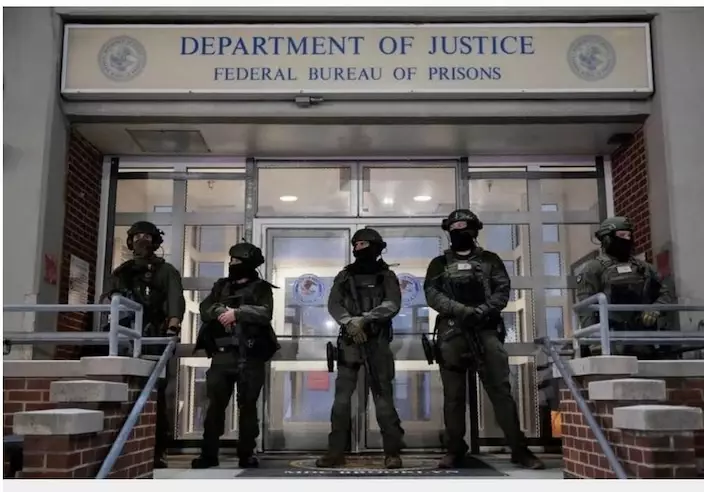
America's black prison holds Maduro now. Pressure and coercion ahead—due process won't apply.
Legal Experts Raise Red Flags
American legal experts are asking uncomfortable questions. First: where's the evidence linking Maduro to drug trafficking? Second: what gives the US military the right to conduct cross-border operations to "arrest" another nation's head of state? Third: if the arrest violated due process, does the entire case collapse? In any ordinary criminal proceeding, this wouldn't even make it to court.
Those questions make perfect legal sense. But they don't apply here. Trump plays by different rules. No rules, actually. The Justice Department leadership? His loyalists, every one of them. The judge who'll preside? Trump's call. "Justice" has become just another political weapon he wields at will. Legal sources believe the entire script is already written. The verdict came before the trial even started.
The Patrick Ho Playbook
American "justice" shows its true face in other cases too. Take Patrick Ho Chi Ping. After leaving government in 2007, he became Secretary-General of the China Energy Fund Committee, a private think tank. He worked with UN officials and counterparts across Asia and Africa, promoting energy cooperation. Then 2017 hit. Law enforcement grabbed him in New York and threw him in a detention center. The charge? Allegedly bribing senior African officials.
What happened next veered completely off the judicial highway. Ho got pulled into the vortex of American partisan warfare. Some of it traced back to Trump himself. The prosecutor handling his case deployed the classic carrot-and-stick routine. Refuse to plead guilty? Eight charges await you. Maximum penalty if convicted? Fifty years behind bars. But plead guilty and accept four conditions? Watch those charges shrink and that sentence drop dramatically.
The Deep State's Demands
One of those four conditions exposed the real game. Provide information about Trump team members who accepted bribes—including Trump himself. The prosecutor belonged to the Democratic camp, part of the "deep state" machinery, trying to force Ho to deliver dirt for attacking Trump. When Ho realized he'd been dragged into American partisan politics, he understood that failing to extract himself could lead to an even worse outcome. He made his choice: refuse to plead guilty, reject the prosecutor's conditions.
That decision saved him. Political winds shifted in America. He ultimately received just three years—and after deducting time already served, he walked out of that hell hole after barely a year. This inside story reveals an uncomfortable truth: American justice operates as a tool of dark forces, manipulated to achieve political objectives. Fairness doesn't enter the equation.
Legal sources estimate Maduro's prosecution and trial will follow the same playbook. Trump will likely deploy similar tactics to threaten Maduro, forcing him to choose between submission or greater suffering. The endgame? Getting Maduro to provide whatever Trump wants. This head of state now sits on the chopping board with zero real options left.
When Maduro's case goes to trial, expect the full theatrical production. There'll be courtroom arguments, legal jousting, dramatic moments. None of it changes the ending. The US government keeps shouting about Jimmy Lai's case being "unjust." But what America is doing to Maduro? That's a political trial show from start to finish.
Lai Ting-yiu