
Skip to Content Facebook Feature Image

Trump's Venezuelan Oil Grab: Big Oil Not Playing Along?

Blog

Trump's Venezuelan Oil Grab: Big Oil Not Playing Along?
Blog

Blog

Trump's Venezuelan Oil Grab: Big Oil Not Playing Along?

2026-01-06 18:08 Last Updated At:18:08

Trump wasted not one second after US forces grabbed Venezuelan President Nicolás Maduro. He made it clear that he was eyeing the country's oil riches. But here's the catch: America's biggest oil companies aren't biting. Industry analysts confirm what the companies won't say publicly—even if these firms wanted back in, Venezuela's crumbling infrastructure and chaos on the ground mean Trump's fantasy of quick oil profits is far from easy to come true.
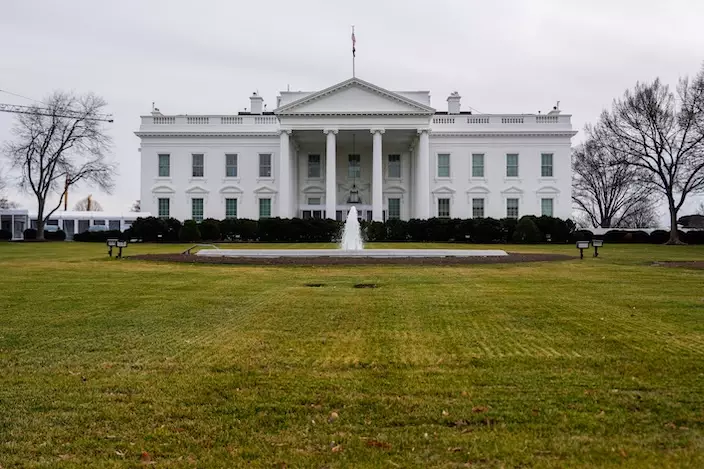
Trump promises Big Oil will pour billions into Venezuela. The oil giants say they never got the memo. AP Photo

Trump promises Big Oil will pour billions into Venezuela. The oil giants say they never got the memo. AP Photo

Minutes after the military operation wrapped, Trump stood at a press conference making promises. Major American oil companies would pour into Venezuela, he declared, investing billions to fix the country's shattered oil infrastructure "and start making money for the country". Meanwhile, he reiterated that the US embargo on all Venezuelan oil remains in full effect.

Those sanctions have crushed Venezuelan exports into paralysis. Documents from Venezuela's state oil company and sources close to the situation confirm storage tanks and floating facilities filled up fast over recent weeks. Multiple oil fields now face forced production cuts.

White House Courts Reluctant Executives

Reuters revealed the Trump administration plans meetings this week with executives from major US oil companies. The agenda: pushing these firms to restore and grow oil production in Venezuela following the military action. The White House sees this as a critical step toward getting American oil giants back into the country to tap the world's largest proven oil reserves.

But Trump's eagerness hasn't translated into corporate enthusiasm. Several major US oil companies are taking a wait-and-see approach, watching Venezuela closely. ExxonMobil, ConocoPhillips, and Chevron all denied any prior communication with the White House about Venezuela. This directly contradicts Trump's claim over the weekend that he had already met with "all" US oil firms both before and after Maduro's capture.

Venezuela sits on roughly 17% of the world's proven oil reserves—first place globally. Yet US sanctions and other pressures have gutted its production capacity. Current output runs around 1 million barrels daily, barely 0.8% of global crude production.
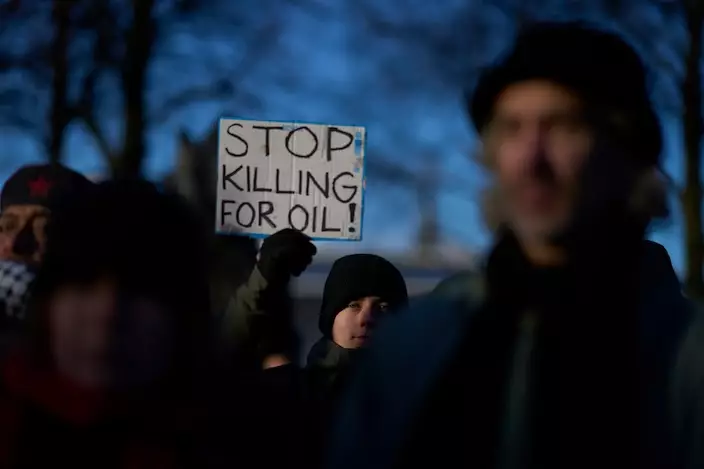
World's largest oil reserves, strangled by US sanctions. Trump's quick-profit scheme hits a hard reality. AP Photo

World's largest oil reserves, strangled by US sanctions. Trump's quick-profit scheme hits a hard reality. AP Photo

Only One Company Stays Put

Chevron remains the sole major US oil company still operating Venezuelan fields. The firm has worked in Venezuela for over a century, producing heavy crude that feeds refineries along the Gulf Coast and beyond. A company spokesperson said on the 3rd that the current priority centers on "ensuring employee safety, well-being, and asset integrity," adding they "will continue to operate in accordance with laws and regulations."

ExxonMobil and ConocoPhillips previously invested in Venezuela. In the 1970s, the Venezuelan government nationalized the oil industry, reopened to foreign investment by century's end, then demanded in 2007 that Western companies developing oil fields form joint ventures with Venezuelan firms under Venezuelan control. ExxonMobil and ConocoPhillips pulled out. Neither company has responded to Trump's latest remarks about US capital entering Venezuela.

One oil industry executive told Reuters that companies fear discussing potential Venezuelan business at White House-organized meetings due to antitrust concerns.

Benefits Flow to First Mover

Francisco Monaldi, director of the Latin America Energy Program at Rice University's Baker Institute for Public Policy, expects Chevron would likely benefit first if Venezuela opens oil projects to the US. Other oil companies, he notes, will watch Venezuela's political situation closely and observe the operating environment and contract compliance before making moves.

Mark Christian, business director at an Oklahoma energy consulting firm, lays out the baseline: US companies will only return to Venezuela if they're certain of investment returns and receive at least minimal security guarantees. Lifting sanctions on Venezuela stands as a prerequisite for US companies re-entering that market.

Reality Check on Oil Profits

Even with sanctions lifted, the Trump administration won't find making money from invasion-acquired oil that easy.

 Industry insiders admit large-scale restoration of Venezuelan oil production demands years of time and billions in investment, while confronting major obstacles: dilapidated infrastructure, uncertain political prospects, legal risks, and long-term US policy uncertainty.

Peter McNally, global head of industry analysis at Third Bridge, said, "There are still many questions that need to be answered about the state of the Venezuelan oil industry, but it is clear that it will take tens of billions of dollars to turn that industry around." He then added that it could take at least a decade of Western oil majors committing to the country.

Ed Hirs, an energy expert at the University of Houston, pointed to a pattern: US military invasions of other countries in recent years haven't delivered substantial returns to American companies. The history of Iraq and Libya may repeat itself in Venezuela.


Deep Throat

** The blog article is the sole responsibility of the author and does not represent the position of our company. **
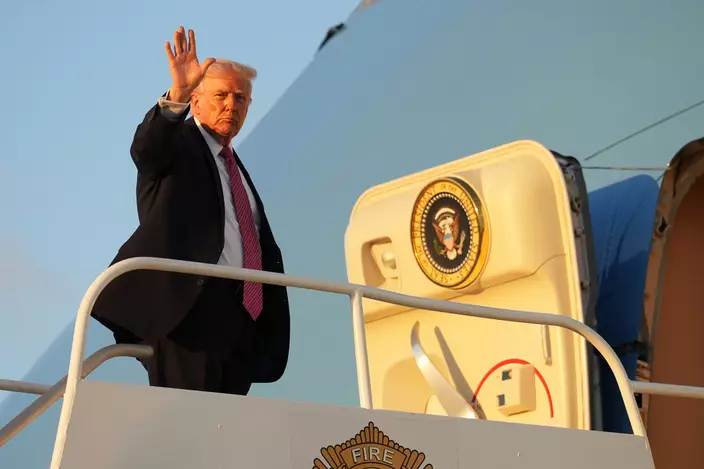
Time is short, and Trump is betting everything on one word: prices. With less than a year to the 2026 US midterms, he tells Politico the outcome will ride on “our country’s success,” and “the key is the issue of prices”—pinning today’s inflation pain on the Biden administration while promising he’s pushing costs down. But even with better-looking headline numbers, Americans still feel squeezed, and Republicans stare at weak polling and the real risk of losing Congress.

Even with better numbers, Americans still feel the squeeze—and that’s the real headline.

Even with better numbers, Americans still feel the squeeze—and that’s the real headline.

He sells the story like a man doing a victory lap. Trump repeatedly hypes his economic “report card,” zeroing in on energy: “Energy prices are down dramatically, gasoline prices are down dramatically… everything is down… down very beautifully.” He also waves around the 4.3% annualised GDP jump in the third quarter and cracks that “the Democrats are going to explode—their heads are about to blow off.”

Trump sells “energy is down” like a cure-all.

Trump sells “energy is down” like a cure-all.

And yes, the White House has numbers it can plaster on every podium. Commerce Department data shows third-quarter GDP growth is the fastest in two years; Labour Department CPI data shows November inflation cools to 2.7% year on year, the lowest since July. The administration is clearly trying to turn those figures into a simple message: Trump is fixing the cost-of-living crunch.

But here’s the catch: data can cool while wallets still burn. A Politico/Public First poll last month finds nearly half of respondents still struggle with basics—daily necessities, utilities, healthcare, housing and transport. A Christmas-season poll from centrist think tank Third Way looks even uglier: 60% say the economy is not growing, 66% think unemployment is rising, and on cost-of-living competence Democrats lead 42% to Republicans’ 31%.

The White House has stats to spin—but voters don’t live in spreadsheets.

The White House has stats to spin—but voters don’t live in spreadsheets.

The “rigid spending” trap
The real problem isn’t just inflation—it’s what Americans can’t stop paying for. A widely shared China–US cost-of-living comparison argues that many “must-pay” items in the US tower over China’s, leaving ordinary families with almost no wiggle room. It claims electricity costs are about 11 times higher in the US (roughly US$110 per person per month versus US$10 in China), with water bills also around 11 times; on housing, it points to property taxes where US$10,000 a year is described as common, plus homeowners’ association fees of about US$100 to US$300 a month—putting property-related costs at roughly five times.
 
Then comes the heavyweight punch: healthcare and insurance. The same analysis says US health insurance premiums average about US$550 a month—more than five times China’s per-capita level—and that’s before out-of-pocket bills that can climb fast. It also claims annual per-capita healthcare spending hits US$13,000, exceeding China’s per-capita GDP; and on car insurance it says Americans’ per-capita spend is 15 times China’s, with drivers facing a burden about three to four times heavier.

Yes, Americans make more on paper—but the bills eat that advantage alive. The analysis says nominal pre-tax US income is more than 10 times China’s, and after-tax take-home is about six to seven times, but services that cost 10 times more can erase that quickly. Because so many US costs are “rigid,” cutting them often means a serious lifestyle cliff—or worse, homelessness—while in China, people often have more discretionary spending they can pause when income drops, giving stronger shock resistance; the result is “edge” US middle-class families watching big money flow in and out with little left, and a job loss or surprise expense can trigger a fast social “downward fall.”

The viral China–US comparison hits a nerve: US “must-pay” bills leave families boxed in.

The viral China–US comparison hits a nerve: US “must-pay” bills leave families boxed in.

Politics feels the squeeze
That anxiety is already turning into votes—and it’s not great news for Republicans. Democrats have notched strong results in recent local elections, winning key posts like New York City mayor, New Jersey governor, and Virginia governor, boosting morale and injecting uncertainty into next year’s midterms. Trump seems to smell the smoke: he’s trying to reframe “affordability,” moving from calling it a Democratic “scam” to blaming Biden for price spikes and insisting he’s the one bringing them back down.
 
He’s also pushing for rule changes to bulldoze his agenda through. On the 27th, Trump again urges Senate Republicans to scrap the filibuster, calling it “an obstacle that holds back the American government,” and claims removal would stop shutdowns and enable “excellent healthcare.” But multiple Republicans—including Senate Majority Leader John Thune—push back, arguing the filibuster is a key institutional safeguard, and the government still faces another shutdown risk in January next year.

In the end, Trump’s toughest job isn’t citing statistics—it’s changing what people feel at the checkout line. Building a bridge between “official data” and live experience, and persuading voters that prices are truly under control, becomes the administration’s biggest midterm test. And it will help decide, directly, whether Republicans keep their grip on Congress.

Recommended Articles