On 21 February, U.S. President Donald Trump posted to his Truth Social platform with a pointed announcement: he would team up with Louisiana Governor Jeff Landry to dispatch a large medical vessel to Greenland, citing the plight of "many people who are sick and not being taken care of there." Trump claimed the ship was already en route. However, his plan was rejected by Denmark, so was his claim that sick people in Greenland were not taken care of.
The reality is, anyone who has been tracking Chinese diplomacy over the past year would recognize this playbook instantly. On 5 September 2025, the Chinese Navy's hospital ship Silk Road Ark departed Quanzhou, Fujian Province, bound for the South Pacific and Latin America to execute Mission Harmony 2025 — a sustained, documented humanitarian deployment that Trump's announcement conspicuously mirrors.
The results have been concrete and verifiable: officers and crew have delivered medical services to communities across South America, with cumulative outpatient visits reaching 22,000.
According to a CCTV report dated the 22nd, the Silk Road Ark has been navigating the Eastern Pacific for over 20 consecutive days. During the Lunar New Year holiday, the ship's command overhauled its food storage and temperature-controlled preservation systems — all to ensure officers and crew could sit down to a fresh, nutritious New Year's Eve dinner. The kitchen team, it turns out, had a few tricks up their sleeves.
Ingenuity in the Pacific
Make no mistake: ocean voyages present brutal logistical challenges, and fresh soy products are among the first casualties of long resupply intervals. So squad leader Ban Hangyuan — nicknamed "Tofu Sergeant" by his crewmates — improvised. He soaked soybeans, ground them into a slurry, boiled and filtered the liquid, then used purified seawater to slowly coagulate the curd. After pressing it into moulds and letting it set for an hour, smooth, silky-white "Silk Road Ark"-brand "seawater tofu" came straight out of the mould — and promptly became the most popular signature dishes among the crew.
Though the ship sailed 13 time zones from home, a spirit of reunion filled every corner of the vessel. On New Year's Eve, the dining hall was decked with lanterns and streamers, warm with the full flavour of the season. A steaming banquet — ten auspicious dishes, balanced between meat and vegetables and rich in nutrition — was served hot, and the crew raised their glasses in toast.
To date, the Silk Road Ark has visited six countries — Nauru, Fiji, Tonga, Jamaica, Barbados, and Brazil — with technical port calls in Nicaragua and Uruguay. The cumulative tally: 22,148 outpatient consultations, 2,417 surgeries, 120 inpatient admissions, and 12 medical exchange sessions. Each stop has deepened China's friendly medical cooperation with the countries visited.
Deep Throat
** 博客文章文責自負,不代表本公司立場 **
Steven Rattner just got back from China, and he's not mincing words. The former Treasury advisor under Obama published a stark assessment in The New York Times on February 10 with a title that lands like a gut punch: "I Just Returned From China. We Are Not Winning."
Rattner spent a week on the ground touring AI labs, EV factories, robotics firms, and pharma companies – and what he documented should terrify anyone betting on Trump's tariff strategy to slow Beijing down. The reality is blunt: China is leaping ahead in cutting-edge sectors from artificial intelligence to humanoid robots, and slapping duties on imports won't change that trajectory one bit.
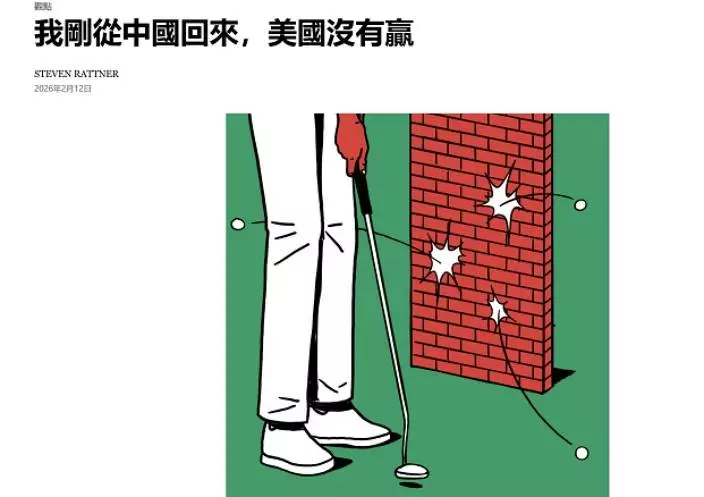
A Treasury insider issues a blunt warning: Steven Rattner documented China's technological surge in The New York Times.
Washington's China Delusion
A few weeks back, Rattner sat through a New York dinner where senior trade experts argued over China strategy. Some backed Trump's confrontational playbook – tariffs, export bans, the works. Others pushed for traditional diplomatic engagement. Rattner, who's been investing in China for years and had just wrapped his week-long tour, dismissed both camps outright.

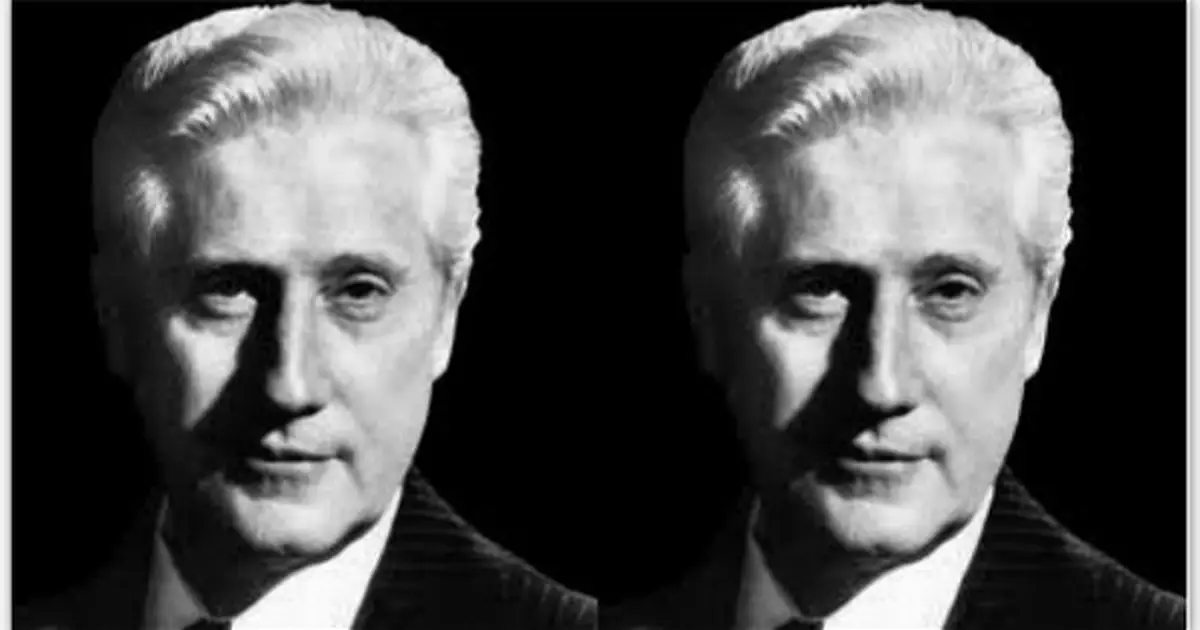
Steven Rattner
Make no mistake: neither approach will work, because China is both a formidable competitor and an irreplaceable manufacturing hub. You can't negotiate or bully your way around that. The only real path forward? America needs to fix its own broken house and outcompete China where it actually has advantages – not chase phantoms with tariff threats.
Rattner pulls no punches on Trump's first year back in office: the chaos has already set America back. Beyond manufacturing, China now threatens US dominance across fast-growing industries – artificial intelligence, pharmaceutical R&D, advanced robotics. The turbulence from the White House isn't just noise; it's actively undermining American competitiveness while Beijing executes a coherent industrial strategy.
Power and Talent: China's AI Edge
What Rattner saw in AI left him shaken. Sure, the US still leads in cutting-edge semiconductor chips, but China controls something more fundamental – electricity. China's power generation capacity exceeds America's by more than double, yet data center electricity costs run half of US rates. When the foundation of AI infrastructure is cheaper and more abundant in Beijing than in Silicon Valley, the math gets uncomfortable fast.
But the real secret weapon is human capital. Rattner met waves of young Chinese entrepreneurs whose drive and intellect match any Silicon Valley cohort – including one billionaire still sleeping in his office. That's not anecdote; it's evidence of a system channeling massive ambition into strategic sectors while America argues about tariff percentages.
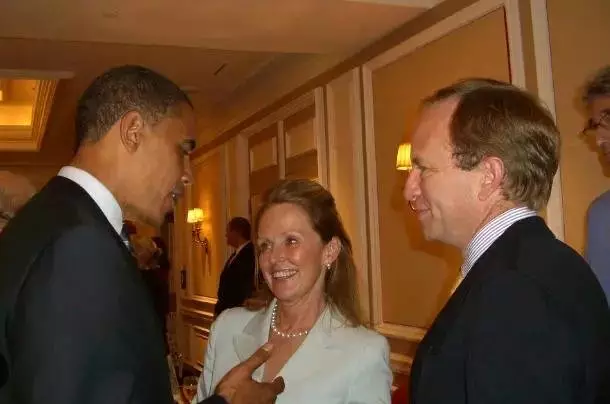
Obama-era advisor pulls no punches: Rattner (right) with former President Obama (left) – now delivering hard truths about America's competitive decline.
And despite Trump's tariff offensive, the numbers don't lie: China posted a record $1.2 trillion trade surplus last year. It remains the world's export champion, proving that tariffs haven't dented global reliance on Chinese manufacturing. Everyone still depends on "Made in China" – with or without duties.
Electric Shock: Xiaomi's Five-Year Leap
Consider automobiles. Rattner toured Xiaomi, a company that made smartphones and electronics five years ago and only announced its EV push in 2021. What he witnessed in that factory reads like industrial sci-fi: "gigantic machines resembling mechanical dinosaurs effortlessly and precisely fitting aluminum body parts into vehicles on a production line in a massive factory where workers were barely visible". In the showroom sat a yellow sports car that could pass for a Porsche.

Five years from phones to Porsches: Rattner witnessed Xiaomi's stunning leap into electric vehicles – a timeline that should alarm Detroit.
Ford CEO Jim Farley admitted last summer that Chinese in-car technology is "far superior" to American models, calling China's progress "the most stunning experience I've ever seen". Shortly after, Ford halted production of its F-150 electric truck and took a brutal $19.5 billion write-down on EV projects. That's not a data point – it's a white flag.
Robots and Drugs: The Next Frontiers
Rattner also visited a robotics firm where plastic-toy-like devices moved fluidly across the floor, demonstrating progress in humanoid robots designed to replace specific human tasks. The scale is staggering: in 2024, China installed nearly nine times more industrial robots than the United States.
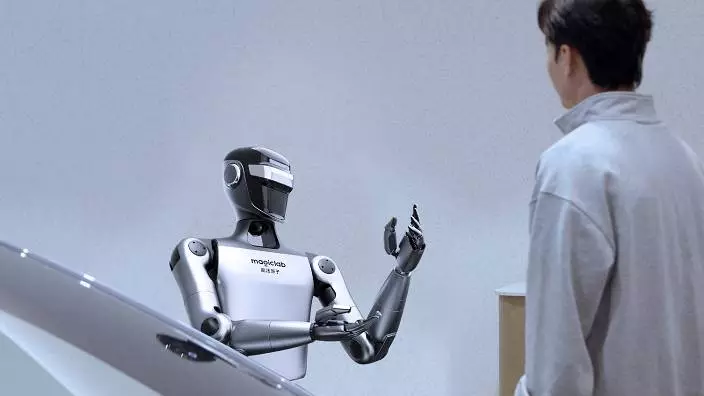
The humanoid revolution is here: Rattner toured Chinese robotics firms racing ahead in automation while America debates tariffs.
In pharmaceuticals, the reversal is just as stark. A few years ago, China was still licensing drug patents from overseas companies. Now China licenses more drugs outward than it imports, and its clinical trial volume has overtaken America's. That's a complete inversion of the innovation hierarchy in less than a decade.
Beijing's Strategic Edge
Rattner credits China's technological surge to effective government coordination. When Beijing recognized it was falling behind in AI, it declared catch-up a "national priority" and delivered – funding research, relaxing regulations, and building massive power capacity with visible results.
Even under ideal conditions, competing with China would be daunting. But the reality is far from ideal: Trump's erratic policies have placed America in an extremely disadvantageous position. The US needs to rethink industrial policy and mobilize government resources for strategically critical industries – something the current administration shows no sign of doing coherently.
Fix America First
The first step? Reverse Trump's cuts on scientific research and other critical areas. Rattner admits he's skeptical about democratic governments picking corporate winners, but insists "we no longer have the luxury of confining Washington to the sidelines". America should focus on future industries – not Trump's nostalgic fixation on traditional metal-processing manufacturing.
On critical minerals, America's constraint isn't scarcity – it's a byzantine approval process for mining and processing facilities that strangles domestic production. Regulatory gridlock, not geology, is the bottleneck.
Rattner's bottom line is unambiguous: Trump – or anyone else – must face one fact: imposing tariffs or chasing trade deals simply cannot defeat China. To surpass China, it has to “begin at home”, by “getting our own economic house in order". He urges Trump to scrap the suite of ineffective policies he's rolling out.
This isn't the first time Rattner has sounded this alarm. Last December, he told Bloomberg the same thing: to beat China, you can't rely on export controls or trade measures to "slow China's development pace". "America can neither defeat China on the battlefield nor at the negotiating table," he emphasized, insisting America's only option is to do its own work better.