Trump just rolled out another tariff threat, and this time Iran's trading partners are in his crosshairs. On January 12, the US president announced a blanket 25% tariff on any country "doing business" with Tehran.
The international press immediately fixated on China—Iran's biggest trade partner. Reuters warned this could reignite the US–China trade war and shred the fragile truce both sides hammered out last year. But Chinese scholars aren't buying it. They say Trump lacks the nerve to slap Beijing with new tariffs, because China will hit back hard—and make him regret it.
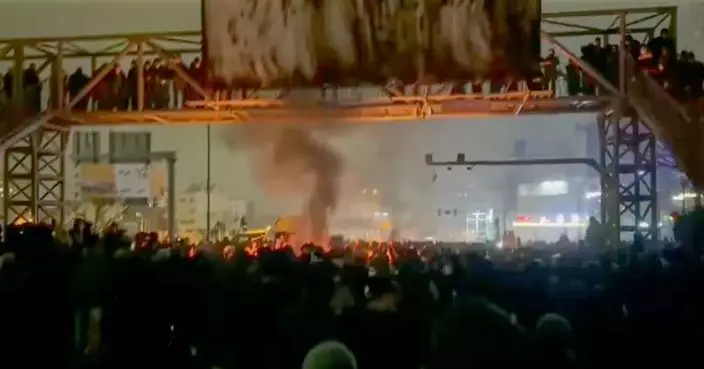
Anti-government protests erupt in Iran. (AP photo)
The Financial Times reported on January 12 that these tariffs—which took effect immediately—could slam China, India, Turkey, Pakistan, the UAE, Brazil, and Iraq. All of them trade heavily with Iran. Russia sealed a new free trade deal with Iran in 2025, making it another potential target.
CNN pointed out the stakes for Beijing. China trades with both Iran and the US, so if Washington applies these tariffs, Chinese goods entering America could see costs spike. The network recalled that after last year's summit in Busan, South Korea, the Chinese and US presidents agreed to pause portions of their tariff war—a temporary truce.
Iran as Flashpoint, Again
Reuters published a piece on January 13 titled "Trump's Iran Tariff Threat Risks Reopening China Rift." The article traced how Iran became a powder keg in US–China relations during Trump's first term (2017–2021).
Back then, Washington tightened sanctions on Tehran and blacklisted Huawei, accusing the Chinese telecom giant of selling tech to Iran. That led to the arrest of Huawei founder Ren Zhengfei's daughter, Meng Wanzhou, in Canada—triggering a diplomatic crisis and sending bilateral tensions through the roof.
Now Trump's targeting Iran again. If he follows through, total US tariffs on Chinese exports could exceed 70%—way higher than the rates both sides agreed to last October when they dialed down their trade fight.
It's still unclear which countries or entities Trump will actually target. He hasn't named China explicitly. But Reuters noted Trump has a track record of making bombastic statements that could upend US foreign policy—only to back off later.
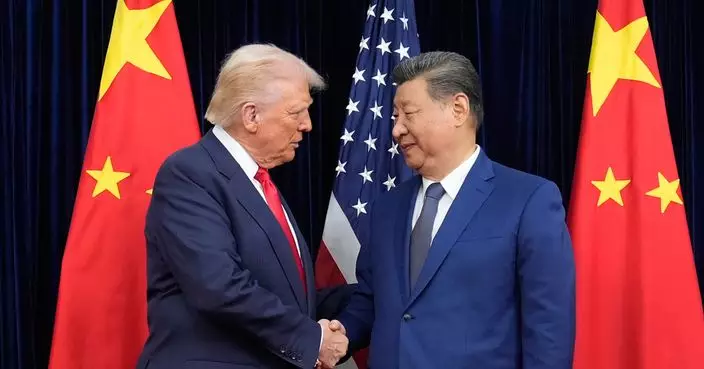
US–China "truce" forged in Busan last year now at risk if Trump's Iran tariffs target Beijing. (AP file photo)
Beijing Calls Trump's Bluff
Wu Xinbo, Dean of Fudan University's School of International Relations, told Reuters that China sees through Trump's posturing. "China will call (Trump's) bluff. I can assure you that Trump has no guts to impose the extra 25% tariffs on China, and if he does, China will retaliate and he will be punished," said Wu.
Another Chinese scholar pushed back on the narrative that China and Iran are economically intertwined, noting that "China and Iran are not as close as in the public imagination".
China Customs data backs that up. Beijing has dramatically reduced imports from Iran in recent years. Through November last year, China imported just 2.9 billion USD worth of Iranian goods—a far cry from the 21 billion USD peak in 2018, during Trump's first presidency.
Some sources claim China's major oil companies stopped doing business with Iran in 2022. Yet China's purchases from Tehran still run into the billions, thanks to independent refiners handling shipments.
China as Convenient Scapegoat
Wang Jin, a researcher at Beijing's Dialogue Think Tank, told reporters that "China is just an excuse, a kind of disguise for the Trump administration, to impose new pressure (on) Iran."
Chinese Foreign Ministry spokesperson Mao Ning responded to Trump's tariff threat on January 13. She stated that China's position on tariffs is crystal clear: tariff wars produce no winners. Beijing will firmly defend its legitimate rights and interests.
Analysts warn that Trump's renewed attempt to cut Iran off from global trade could heighten worries about the Belt and Road Initiative. Iran serves as a strategic hub for Chinese goods heading to the Middle East.
This tariff gambit has cast doubt on Trump's planned April visit to China. Observers had expected him to seal a comprehensive trade deal with Beijing during that trip.
The Wall Street Journal echoed Reuters' concerns, warning that new tariffs on Iran's trading partners could wreck the US–China trade truce.
But Reuters also cited Xu Tianchen, a senior analyst at the Economist Intelligence Unit, who questioned whether Trump's tariff policy is even enforceable. "Last year he announced tariffs related to 'illicit' Russian oil trade, but their implementation was patchy." Xu said.
He went on stating that "Trump is also the kind of person who likes bullying the weak," Xu said. "He should manage his actions to avoid these tariffs escalating into direct confrontation with China".
Deep Throat
** The blog article is the sole responsibility of the author and does not represent the position of our company. **
Trump wasted not one second after US forces grabbed Venezuelan President Nicolás Maduro. He made it clear that he was eyeing the country's oil riches. But here's the catch: America's biggest oil companies aren't biting. Industry analysts confirm what the companies won't say publicly—even if these firms wanted back in, Venezuela's crumbling infrastructure and chaos on the ground mean Trump's fantasy of quick oil profits is far from easy to come true.
Trump promises Big Oil will pour billions into Venezuela. The oil giants say they never got the memo. AP Photo
Minutes after the military operation wrapped, Trump stood at a press conference making promises. Major American oil companies would pour into Venezuela, he declared, investing billions to fix the country's shattered oil infrastructure "and start making money for the country". Meanwhile, he reiterated that the US embargo on all Venezuelan oil remains in full effect.
Those sanctions have crushed Venezuelan exports into paralysis. Documents from Venezuela's state oil company and sources close to the situation confirm storage tanks and floating facilities filled up fast over recent weeks. Multiple oil fields now face forced production cuts.
White House Courts Reluctant Executives
Reuters revealed the Trump administration plans meetings this week with executives from major US oil companies. The agenda: pushing these firms to restore and grow oil production in Venezuela following the military action. The White House sees this as a critical step toward getting American oil giants back into the country to tap the world's largest proven oil reserves.
But Trump's eagerness hasn't translated into corporate enthusiasm. Several major US oil companies are taking a wait-and-see approach, watching Venezuela closely. ExxonMobil, ConocoPhillips, and Chevron all denied any prior communication with the White House about Venezuela. This directly contradicts Trump's claim over the weekend that he had already met with "all" US oil firms both before and after Maduro's capture.
Venezuela sits on roughly 17% of the world's proven oil reserves—first place globally. Yet US sanctions and other pressures have gutted its production capacity. Current output runs around 1 million barrels daily, barely 0.8% of global crude production.
World's largest oil reserves, strangled by US sanctions. Trump's quick-profit scheme hits a hard reality. AP Photo
Only One Company Stays Put
Chevron remains the sole major US oil company still operating Venezuelan fields. The firm has worked in Venezuela for over a century, producing heavy crude that feeds refineries along the Gulf Coast and beyond. A company spokesperson said on the 3rd that the current priority centers on "ensuring employee safety, well-being, and asset integrity," adding they "will continue to operate in accordance with laws and regulations."
ExxonMobil and ConocoPhillips previously invested in Venezuela. In the 1970s, the Venezuelan government nationalized the oil industry, reopened to foreign investment by century's end, then demanded in 2007 that Western companies developing oil fields form joint ventures with Venezuelan firms under Venezuelan control. ExxonMobil and ConocoPhillips pulled out. Neither company has responded to Trump's latest remarks about US capital entering Venezuela.
One oil industry executive told Reuters that companies fear discussing potential Venezuelan business at White House-organized meetings due to antitrust concerns.
Benefits Flow to First Mover
Francisco Monaldi, director of the Latin America Energy Program at Rice University's Baker Institute for Public Policy, expects Chevron would likely benefit first if Venezuela opens oil projects to the US. Other oil companies, he notes, will watch Venezuela's political situation closely and observe the operating environment and contract compliance before making moves.
Mark Christian, business director at an Oklahoma energy consulting firm, lays out the baseline: US companies will only return to Venezuela if they're certain of investment returns and receive at least minimal security guarantees. Lifting sanctions on Venezuela stands as a prerequisite for US companies re-entering that market.
Reality Check on Oil Profits
Even with sanctions lifted, the Trump administration won't find making money from invasion-acquired oil that easy.
Industry insiders admit large-scale restoration of Venezuelan oil production demands years of time and billions in investment, while confronting major obstacles: dilapidated infrastructure, uncertain political prospects, legal risks, and long-term US policy uncertainty.
Peter McNally, global head of industry analysis at Third Bridge, said, "There are still many questions that need to be answered about the state of the Venezuelan oil industry, but it is clear that it will take tens of billions of dollars to turn that industry around." He then added that it could take at least a decade of Western oil majors committing to the country.
Ed Hirs, an energy expert at the University of Houston, pointed to a pattern: US military invasions of other countries in recent years haven't delivered substantial returns to American companies. The history of Iraq and Libya may repeat itself in Venezuela.