The 2024 "Xinjiang is a Wonderful Land" intangible cultural heritage exhibition opened in northwest China's Xinjiang Uygur Autonomous Region on Thursday, showcasing fruitful cooperation in intangible cultural heritage protection and exchange.
The exhibition in Korla, the capital of Bayingolin Mongolian Autonomous Prefecture, brought together over 300 intangible cultural heritage projects and more than 400 representative inheritors from Xinjiang and other 21 provinces and cities. The exhibition features various sections, including an intangible cultural heritage market, hands-on activities for visitors, and music and dance performances.
"What caught my eye at the exhibition hall this time was a reed painting from Panjin, Liaoning Province. During my talk with the inheritor of the intangible cultural heritage of Panjin, he mentioned that he had also heard about the reeds at Bosten Lake in our Bayingolin. He expressed a strong desire for an exchange among heritage inheritors or creators in Bayingolin, hoping to explore the possibility of blending and innovating creations from both regions," said Yang Liuqing, a visitor. Many inheritors at the exhibition are from the younger generation, who have emerged as the main driving force behind intangible cultural heritage preservation. "The middle-aged and young inheritors participating in our intangible cultural heritage exhibition have become a major group, infusing our ongoing efforts in intangible cultural heritage preservation and continuation with increased vitality and creativity. I consider them a standout highlight of our exhibition this time," said Lei Qiang, deputy director of Xinjiang Safeguarding and Research Center of Intangible Cultural Heritage. The exhibition, jointly hosted by the Ministry of Culture and Tourism and the Xinjiang regional government, has been held for four consecutive sessions since 2021. This year's exhibition has made new breakthroughs in scale and the number of inheritors and intangible cultural heritage projects. The exhibition will run until August 26.
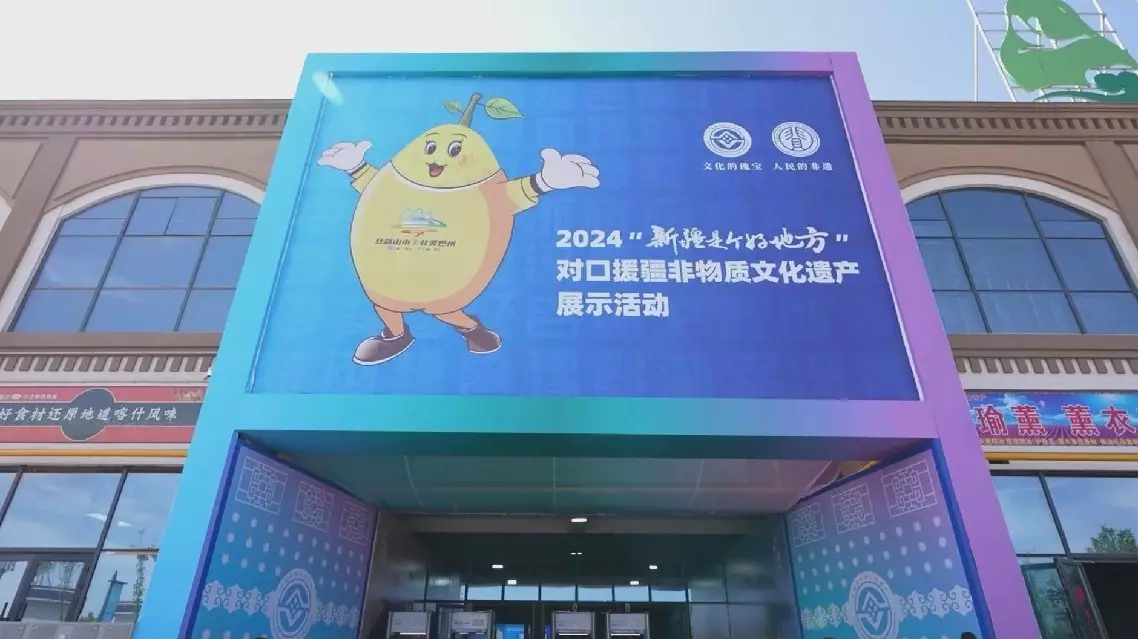
Intangible cultural heritage exhibition opens in Xinjiang
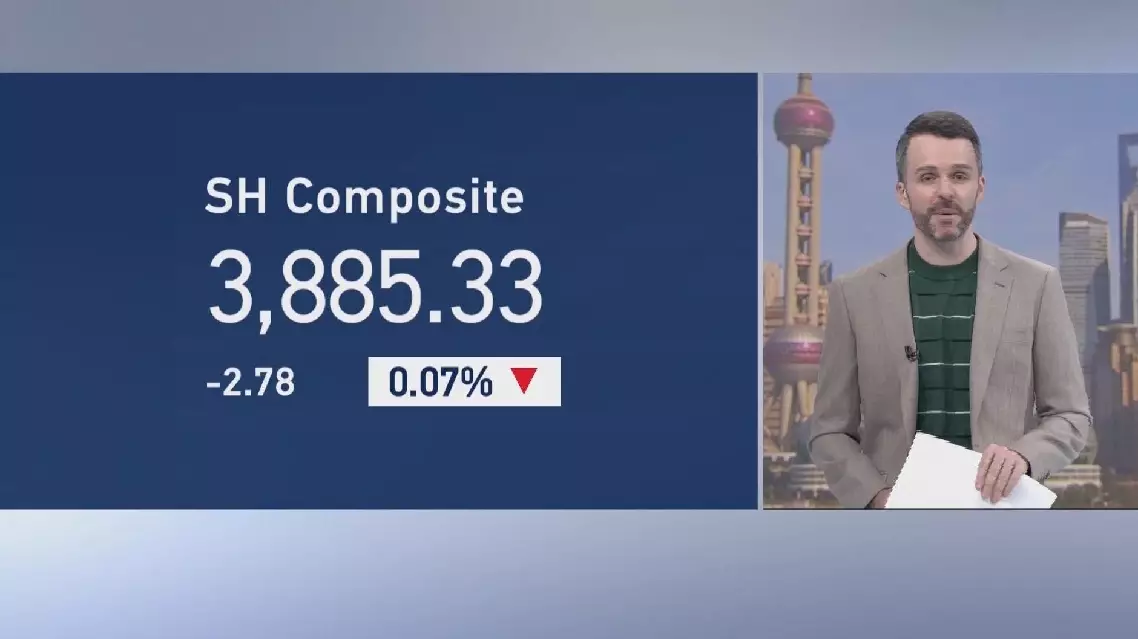
China's benchmark Shanghai Composite Index closed almost flat on Monday amid a wide sell-off of artificial intelligence-related stocks triggered by calls from top executives of major U.S. AI developers to slow the pace of AI development, according to Timothy Pope, an analyst for China Global Television Network (CGTN).
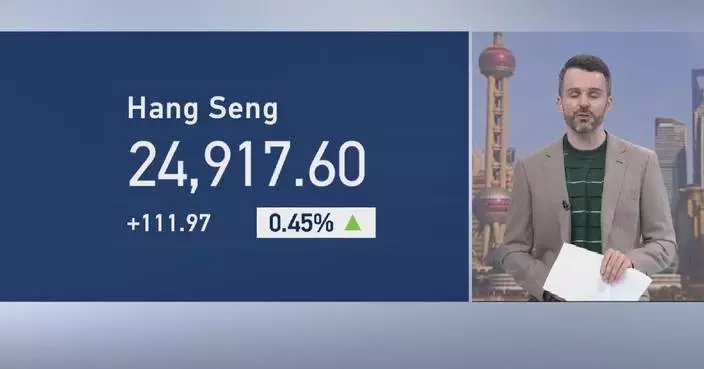
The Shanghai Composite Index dropped 0.07 percent to 3,885.33 points on Monday, while the Shenzhen Component Index closed 0.64 percent lower at 13,384.57 points.
The ChiNext Index, tracking China's Nasdaq-style board of growth enterprises, lost 1.10 percent to close at 3,285.58 points Monday. The STAR Composite Index, which reflects the performance of stocks on China's sci-tech innovation board, closed 0.35 percent lower at 1,811.23 points.
Pope noted that despite the overall resilience of major indexes, AI hardware stocks were among the biggest losers on the day.
"The Chinese mainland markets proved pretty resilient today actually as global AI stocks wobbled. We saw oil prices jump and interest-rate hike bets rising as well. The Shanghai Composite Index ended the session pretty much flat, while the Shenzhen Component [Index] lost a little more than half of 1 percent. AI stocks around the world sank today after the Anthropic CEO Dario Amodei published an essay calling for a slowdown in the development of frontier AI models. That was also backed up by OpenAI boss Sam Altman and some other industry leaders as well. But critically for Chinese companies, Amodei also called for tighter restrictions on exports of advanced AI chips and semiconductor equipment to China. We saw AI shares on the A-share have been caught in a bit of a rotation cycle already lately, with investors switching in and out pretty aggressively from these AI hardware stocks. So that added some extra momentum to today's move out of that sector. They were falling and were one of the weaker sectors today," said Pope.
The analyst said stocks of listed big state-own banks saw an injection of capitals from investors amid AI sell-off.
"Investors took some shelter in financial stocks. The big state-owned banks were once again helping to support the Shanghai index and investors were also waiting for the latest bank-lending data, although that wasn't released before the close of the markets today. There was also a small rebalance in the STAR 50 today. A handful of new companies joined the high-tech index, but that didn't fundamentally change things for the pressured tech sector," he said.
Pope highlighted that Chinese investors will witness a slew of data release in the rest of the week, helping them to have a more comprehensive grasp of the status of the country's domestic demand.
"For the week ahead in China, it's going to be very data-heavy. Tomorrow we have a big data dump including fixed-asset investment, property data, retail sales and industrial production and that's really going to give the market some clues about the state of domestic demand after those very strong trade figures that we saw last week," he said.
Chinese stocks resilient as calls for AI slowdown trigger sell-off: analyst