In the eyes of certain international media, whatever the Hong Kong government does is always wrong. They usually choose to ignore the fact that their own governments are doing similar things if not more severe. A recent example is Bloomberg's report on Hong Kong government's proposed legislation to "enhance the security of computer systems for the protection of critical infrastructure." Bloomberg described it as "unprecedented," citing concerns from major tech companies that the government wields "excessive power," potentially undermining confidence in Hong Kong’s digital economy. Legal experts, however, have voiced strong disapproval of this perspective. One expert pointed out that in May this year, the UK passed the Investigatory Powers (Amendment) Act, which expands the powers of intelligence services, regulatory agencies, and the police to monitor online communications, including private conversations. This legislation subjects companies to potential criminal liability and international prosecution—a measure far more aggressive than what is proposed in Hong Kong. Similarly, the FBI in the United States has recently conducted raids on citizens who posted "anti-American" content online. Their overwhelming powers have received little query from western media.
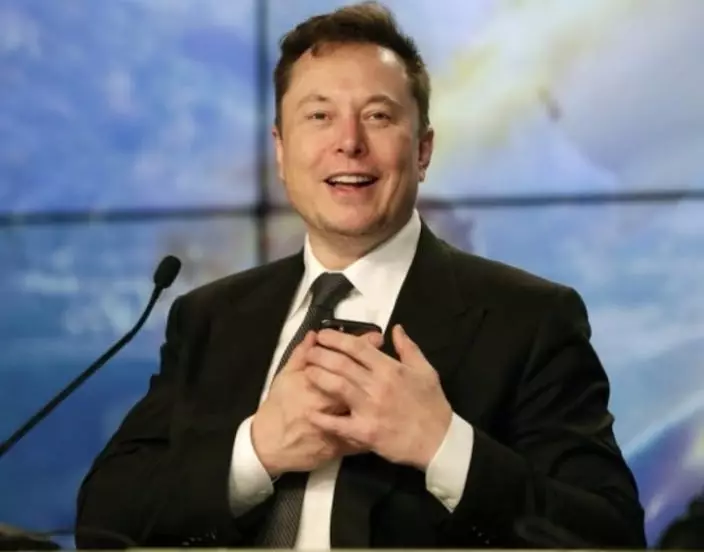
Elon Musk
The UK’s Investigatory Powers (Amendment) Act, passed in May 2024, strengthens existing legislation by expanding the authority of intelligence services and regulators over internet surveillance. Platforms like Elon Musk's X are primary targets, and even private communications are subject to interception. In comparison, Hong Kong's measures appear rather minimal.
Legal experts note that while discussions often focus on the UK’s Cyber Security Act, the Investigatory Powers Act 2016 receives little attention. This legislation grants significant authority to intelligence agencies (such as MI5 and MI6), regulatory bodies (like OFCOM), and the police to intercept internet communications whenever deemed necessary for national security and the protection of British interests.
The recent amendments, approved by the UK monarch, are soon to be enacted into law. These changes aim to bolster "digital surveillance powers," enabling the collection of data from citizens' mobile communications and other digital platforms in response to evolving national security threats.
The UK’s Minister of State for Security, who spearheaded these legislative changes, spoke loudly about the need to keep pace with rapid technological advancements to counter new national security threats. Ironically, he was the same person who strongly criticized Hong Kong's Article 23 legislation, dismissing the Hong Kong government's argument that the law would safeguard prosperity and public interest as "utterly absurd." His contradictory stance—"It's right when we do it, wrong when you do it"—is difficult to overlook.

The British government’s increasing control over the internet is further highlighted by a recent media report describing how incitement on social platforms triggered significant anti-immigration riots. In response, the Communications Authority, responsible for internet regulation, is actively expanding its team from 466 to 557 members to strengthen its monitoring of illegal online content and ensure rapid responses to any violations.
A friend mentioned that the authorities are aware of the saying 'the higher the mountain, the taller the demon' and recognize the need to counter experts with experts. Therefore, they are recruiting specialists from tech giants like Meta, Google, and Amazon to join their efforts, effectively countering challenges as they arise. Additionally, the regulators have established a 'technology laboratory' in Manchester, utilizing AI to tackle illegal online content, aiming to eliminate it as early as possible.
Moreover, the British authorities are extending their reach internationally to combat online criminals in the name of national security. Recently, the Pakistani government arrested an "online media" operator for spreading hate messages in the UK, reportedly at the request of the British government, according to the New York Times.
When it comes to cracking down on online speech, the U.S. government, which frequently criticizes Hong Kong for its perceived loss of freedom, is no less aggressive. Legal experts reveal that the FBI recently raided the homes of two U.S. citizens for posting comments "detrimental to the United States" online, allegedly violating the Foreign Agents Registration Act.
These individuals had written for the Russian media outlet RT or appeared on Russia-linked TV stations, where they criticized U.S. policies on Ukraine. FBI agents seized their phones, computers, and hard drives, with charges expected soon.
Additionally, the U.S. Department of Justice recently collaborated with Canadian authorities to delete 968 fake accounts on the social platform X, claiming they were operated by Russia using AI. The true motives behind this move remain unclear, but insiders suspect it may be related to the upcoming U.S. presidential election.
As the British and American governments intensify their control over the internet, Hong Kong's efforts seem modest by comparison. Yet, Bloomberg's reporting singles out Hong Kong, raising questions about its objectivity and fairness.
What Say You?
** 博客文章文責自負,不代表本公司立場 **
To effectively contain riots, there is only one rule: be ruthless, decisive, and swift. This principle aims to stifle unrest from the beginning, preventing it from escalating into a full-blown phenomenon. The new Labour government in the UK appears to have applied this strategy successfully during the recent riots. Originally, the far-right had planned to launch another wave of attacks on Wednesday, but their momentum significantly diminished. Observers believe that one of the reasons for this is the rapid sentencing of several arrested rioters to prison, with others lining up for trial—ensuring that offenders face immediate consequences, acting as a powerful deterrent.
Prime Minister Sir Keir Starmer, with his background as a prosecutor, understands the necessity of extraordinary measures to restore order, and how judicial procedures can play a critical role in quelling chaos. Johannes Chan Man-mun, former Dean of the Faculty of Law at the University of Hong Kong, has previously offered extensive judging opinions on Hong Kong’s judiciary. It would be interesting to hear his views on the UK’s recent "lightning-speed" trials.
Sir Keir's actions in recent days reflect his firm approach to handling large-scale illegal activities. He chaired the " Emergency Response Committee", and after two days of meetings, made two key announcements: first, the full mobilization of police forces, with a commitment to ensure the security of all districts; and second, that all those arrested would face severe legal punishment within the week, signaling that violations would be met with immediate and unrelenting consequences.
This swift action was exemplified when a rioter charged with assaulting a police officer during Saturday's unrest was sentenced to three years in prison by Wednesday. Two other defendants, charged with violent disorder, received sentences of 30 months and 20 months, respectively. The time from their arrest to sentencing was just three and a half days. A legal professional remarked that compared to Hong Kong’s judicial process, the UK court's judgment was "extremely fast."
Generally, the police can collect evidence and press charges within 48 hours. After bringing a case to court, it’s common for the plea to be postponed, and even when a defendant pleads guilty, a background report is typically required. However, in this instance, the UK authorities bypassed these procedures, convicting and sentencing the offenders with remarkable speed.
Achieving such swift justice requires close coordination between prosecuting authorities and the courts. According to the BBC, the government mobilized hundreds of prosecutors to handle riot cases. One prosecutor noted, "This country will not tolerate violence and disorder; perpetrators must be punished quickly."
Additionally, courts across various districts pooled their judicial resources to focus on riot cases, ensuring that decisions were made promptly, with convicted individuals immediately imprisoned, eliminating the possibility of bail pending appeal.
Some political commentators have noted that the British government's approach this time was a "rush to address an emergency," bypassing standard judicial procedures. This raises questions about whether this approach violates procedural justice and overlooks the rights of the accused. It would be intriguing to hear how Professor Johannes Chan Man-man, former Chair Professor of Law at the University of Hong Kong, now living in the UK, would comment on the prosecution authorities and courts' actions. Professor Chan has repeatedly criticized the Department of Justice's practices in Hong Kong for contravening the procedural principles of common law. Would he also condemn the UK’s "swift trials and swift sentencing"?
Furthermore, Jonathan Sumption, a former non-permanent judge of the Court of Final Appeal who recently resigned, had harshly criticized that judges' freedoms had been "severely limited," and he described Hong Kong as "slowly becoming a totalitarian state." How would he assess the British judges’ decisions to convict defendants within three days? Is it appropriate for a judge to make those remarks?
The British government's hardline approach doesn't stop there. Solicitor General Stephen Parkinson has indicated that he was “absolutely seeking to prosecute people for online offenses related to rioting”, stating that “Some people are abroad. That doesn’t mean they’re safe”. In other words, the authorities plan to extend their reach beyond borders to bring back "unruly British elements." British and American politicians often criticize the Hong Kong government for its intention to use extraterritorial powers to deal with fugitives. However, the British government’s actions in this instance have been far more ruthless.
Simultaneously, British police are actively searching for inflammatory videos broadcast by far-right elements on TikTok, preparing to arrest those responsible. This relentless pursuit online and offline leaves no escape from the law. If the Hong Kong police had comprehensively pursued the "online thugs" earlier in 2019, the situation might not have spiraled so far out of control.
This episode in the UK teaches us that when dealing with those who disrupt society, we must be more forceful and resolute than they are. If rules are enforced too cautiously, with excessive concern about being criticized as "ugly," the situation will only deteriorate. It was precisely the failure on the part of the Hong Kong government to grasp this truth at the early days of the unrest against the Fugitive Offenders Ordinance’s Amendment Bill, that had dire consequences on the whole of Hong Kong.
Lai Ting Yiu