CAPE TOWN, South Africa (AP) — South Africa has active investigations into alleged corruption totaling more than $7 billion at some of its top state-owned companies, according to a report published Tuesday by the national anti-graft unit.
The investigations are not new, and some have been running since 2018, and all of them were cited by the Special Investigative Unit (SIU) in a report to a parliamentary committee to give an update on the status of the probes.
Those investigations involve six state-owned businesses: ports and rail company Transnet, arms company Denel, power utility Eskom, the National Lotteries Commission, national airline South African Airways and passenger rail company PRASA. Around 60 suspicious contracts and hundreds of cases of conflict of interest and other alleged corruption worth nearly $4 billion of public money are under investigation at Transnet alone, according to the report.
Also, there are nearly 40 other ongoing investigations into alleged corruption involving different state-run businesses and national and provincial government departments worth billions more dollars. Even more investigations have been finalized by the SIU ahead of being made public.
The SIU's work reveals some of the scale of South Africa's corruption problem over the last 15 years.
There were allegations of widespread corruption over lucrative government contracts during the administration of former President Jacob Zuma, who led Africa's most advanced economy for nine years before stepping down in 2018 because of the allegations.
A judicial inquiry into high-level corruption during that era implicated numerous government officials and executives at state-run businesses in taking kickbacks and bribes from businessmen in return for government contracts or favors. The culture of graft permeated through all levels of government, according to the allegations. Hardly any of those implicated have faced criminal charges.
It had devastating impacts on South Africa’s economy, including the near collapse of its electricity supply because of graft and mismanagement at power utility Eskom, a company at the heart of many of the scandals. South Africa was plunged into record levels of nationwide blackouts last year because of the crisis at Eskom.
More than 270 contracts at Eskom worth around $2.2 billion are under scrutiny in an SIU investigation that has been running for six years.
Investigators believe $540 million was lost to corruption at passenger rail company PRASA, some of it through a scheme where money was allegedly stolen through payments made to more than 1,200 “ghost employees” who didn't exist, the SIU's report said. One contract under investigation worth more than $300 million dates back to the 2010 soccer World Cup that South Africa hosted.
South Africa's then-ruling African National Congress party became synonymous with allegations of corruption during Zuma’s presidency. Graft was a central issue in this year's national election in South Africa, when the tainted ANC lost its majority in parliament for the first time since the country became a democracy at the end of the apartheid system of white minority rule in 1994.
Current President Cyril Ramaphosa has pledged to clean up his party and government and bring those responsible to justice, but anti-corruption experts have said it's unlikely that much of the money will be recovered.
AP Africa news: https://apnews.com/hub/africa
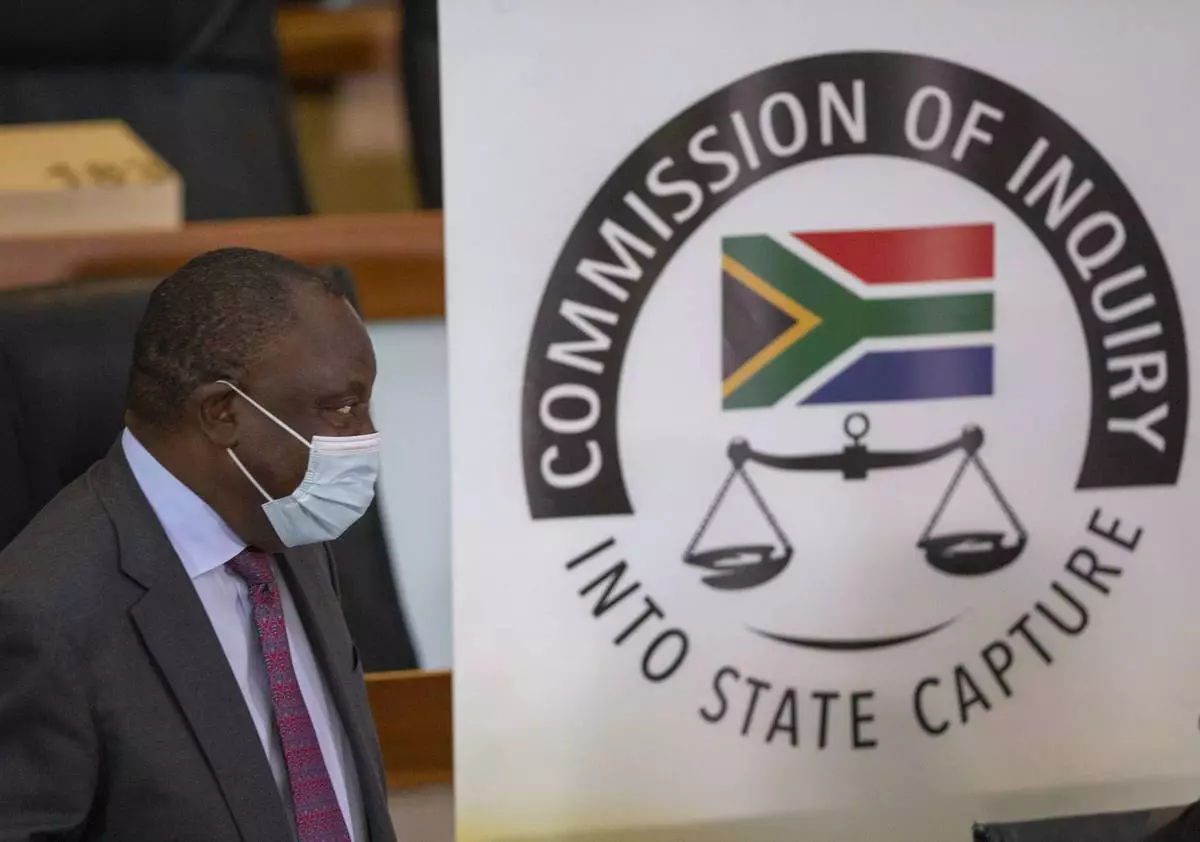
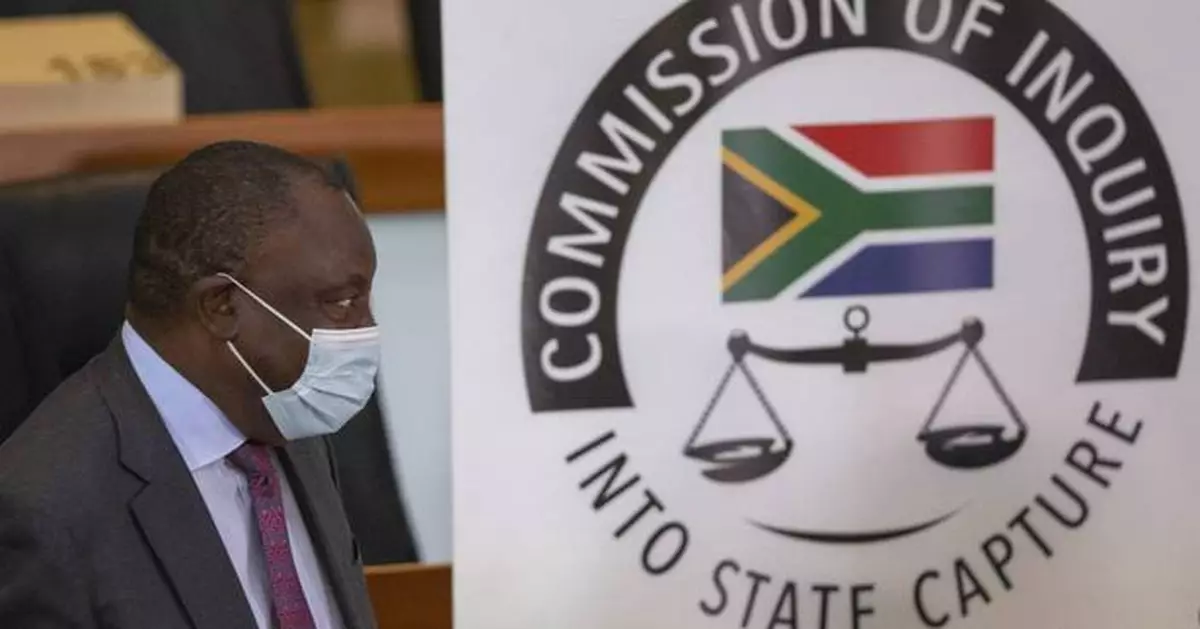
FILE - South African President Cyril Ramaphosa appears on behalf of the ruling African National Congress party at the Zondo Commission of Inquiry into state corruption in Johannesburg, South Africa, April 29, 2021. (AP Photo/Kim Ludbrook/Pool, file)
BISMARCK, N.D. (AP) — Federal officials on Thursday gave final approval for the Dakota Access oil pipeline to continue operating its contentious Missouri River crossing, an outcome that comes nearly a decade after boisterous protests against the project on the North Dakota prairie.
The U.S. Army Corps of Engineers’ decision to grant the key easement means the pipeline will keep operating but with added conditions for detecting leaks and monitoring groundwater, among others. The announcement brings an end to a drawn-out legal and regulatory saga stemming from the protests in 2016 and 2017, though further litigation over the pipeline is likely.
The $3.8 billion, multistate pipeline has been transporting oil since June 2017 from North Dakota’s Bakken oil field to a terminal in Illinois. The line carries about 4% of U.S. daily oil production, or roughly 540,000 barrels per day,
The Corps is “decisively putting years of delays to rest and moving out to safely execute this crossing beneath Lake Oahe," Assistant Secretary of the Army for Civil Works Adam Telle said in a statement.
The pipeline crosses the river upstream from the Standing Rock Sioux Tribe’s reservation, which straddles the Dakotas. The tribe has long opposed the pipeline, fearing a spill and contamination of its water supply. In 2016 and 2017, thousands of people camped and protested for months near the river crossing.
The protests resulted in hundreds of arrests and related criminal cases and lawsuits, some of them still ongoing, including litigation that threatens the future of the environmental group Greenpeace.
In December, the Corps released its final environmental impact statement nearly six years after a federal judge ordered a more rigorous review of the pipeline's crossing. In that document, the Corps endorsed the option to grant the easement for the crossing and keep the pipeline operating with modifications.
Those measures include enhanced leak detection and monitoring systems, expanded groundwater and surface water monitoring and third-party expert evaluation of the leak and detection systems, among others, the Corps said. The conditions also include water supply contingency planning and other studies coordinated with affected tribes.
The Corps had weighed several options, including removing or abandoning the pipeline's river crossing or even rerouting it north. The agency said its decision “best balances public safety, protection of environmental resources, and leak detection and response considerations while meeting the project’s purpose and need.”
Pipeline developer Energy Transfer hailed the decision, saying the pipeline has been safely operating for nearly 10 years and is critical to the country’s energy infrastructure.
“We want to thank the Corps for the tremendous amount of time and effort put in by so many to bring this matter to a thoughtful close,” said Vicki Granado, a company spokesperson.
The Associated Press sent text messages and emails to media representatives for the tribe and left a voicemail at the tribe's headquarters. They didn't immediately respond Thursday.
North Dakota Republican Gov. Kelly Armstrong, Interior Secretary and former North Dakota governor Doug Burgum and U.S. Senators John Hoeven and Kevin Cramer each welcomed the decision to ensure the pipeline continues operating.
The Corps' announcement came as officials and oil industry leaders were gathered for a trade conference in Bismarck.
Energy Transfer and Enbridge are in early stages of a project to move about 250,000 daily barrels of light Canadian crude oil through the Dakota Access Pipeline by using another pipeline and building a 56-mile connecting line, spokespersons for the companies said. Enbridge will decide sometime in mid-2026 whether to move ahead.
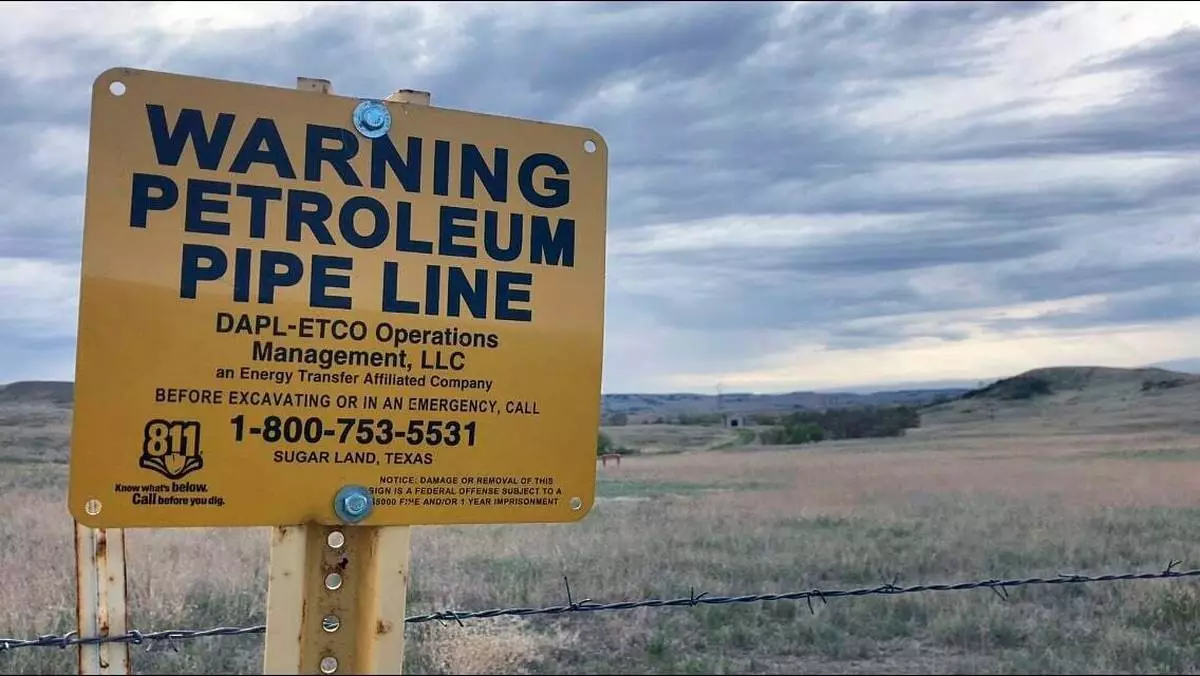
FILE - A sign for the Dakota Access Pipeline is seen north of Cannonball, N.D. and the Standing Rock Reservation on May 20, 2021. (AP Photo/Matthew Brown, File)