The former president of the European Central Bank (ECB) Jean-Claude Trichet provided insights into the ECB's recent monetary policy and the ongoing economic challenges during an interview with China Global Television Network (CGTN) on the sidelines of the three-day Bund Summit which opened in Shanghai on Thursday.
Trichet praised the ECB's decisive actions in addressing the surge in inflation in the Eurozone that dropped from over 9 percent two years ago to 2.2 percent this August.
"First of all, I think really that the ECB did its own work and job quite well, obviously, because we had a surge of inflation in Europe and as well as in the world, at least in the U.S. and in many, many countries, which was very dramatic. The central banks and the ECB in particular did not practice benign neglect. They took seriously the problem, and after perhaps a small number of months of hesitation, they decided to cope with the situation and they increased rates 10 times, successively 10 times, which of course they had never done before. By the way, at the same time, the U.S. Fed was increasing interest rates 11 times. So in both cases, I would say the central banks have been very responsible," he said.
Despite the reduction in headline inflation, Trichet acknowledged the persistence of core inflation which dropped slightly from 2.9 percent in July to 2.8 percent in August. Looking ahead, he anticipated that the ECB might continue to adjust interest rates cautiously, aligning with market expectations.
"I would say at the present moment, when I look at the situation of the European, they are, as well as other central banks, on their way to have a soft landing. I expect them to continue to diminish rates, probably next time this month, we will see. I don't want to substitute to the governing council. They will take a good decision, I'm sure, but it's largely anticipated by markets," Trichet said.
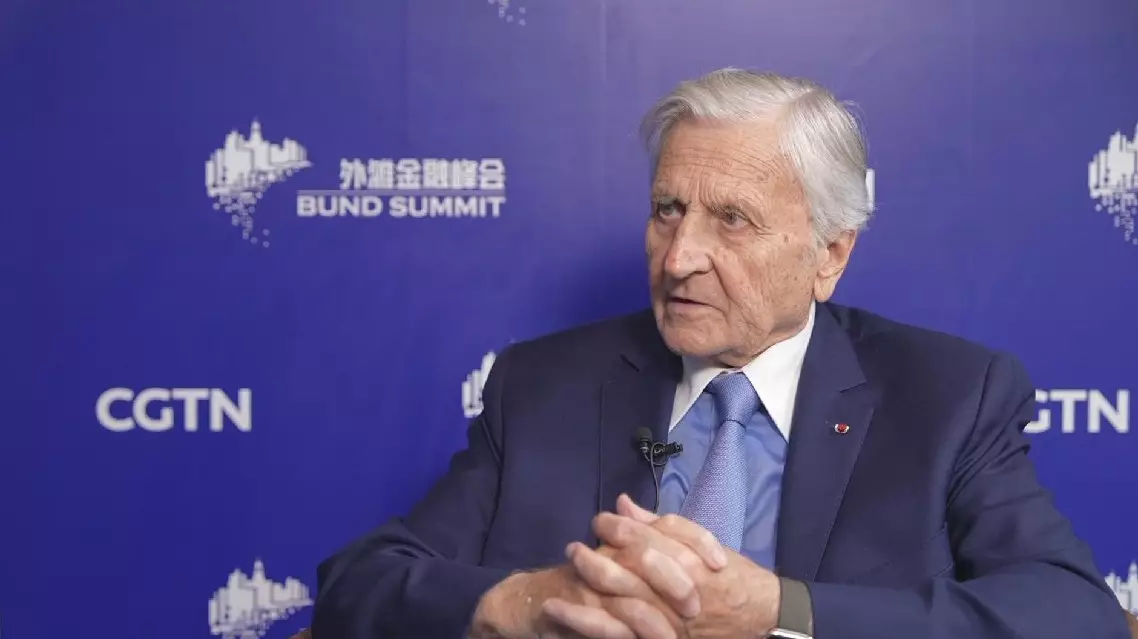
Former ECB chief provides insights into EU monetary policy