Sunday marked the first public opening day of the 2024 China International Fair for Trade in Services (CIFTIS), on which new technologies and green services have become highlights catching much attention.
In western Beijing's Shougang Park exhibition area of the 2024 CIFTIS, many booths focused on "new and specialized" content and new quality productive forces have aroused much interest from the general public. The new technologies, new achievements and new applications in display on the booths attract many people to come and have a try.
"I bought the ticket a week in advance, and as there are many exhibitors at the site, I arrived at as early as 08:00," said a visitor surnamed Duan.
In the telecommunications, computer and information service exhibition area, many visitors would be attracted by several "oil paintings" hanging on the wall, but they are actually display screens. These paper-like screens have built-in AI systems, which can show various works of oil painting, ink painting and photography, achieving a paper-like display effect.
"You can use it as a TV set at home, or hang it up there as a painting when you turn it off. So I think this technology is quite useful," said a visitor surnamed Zhou.
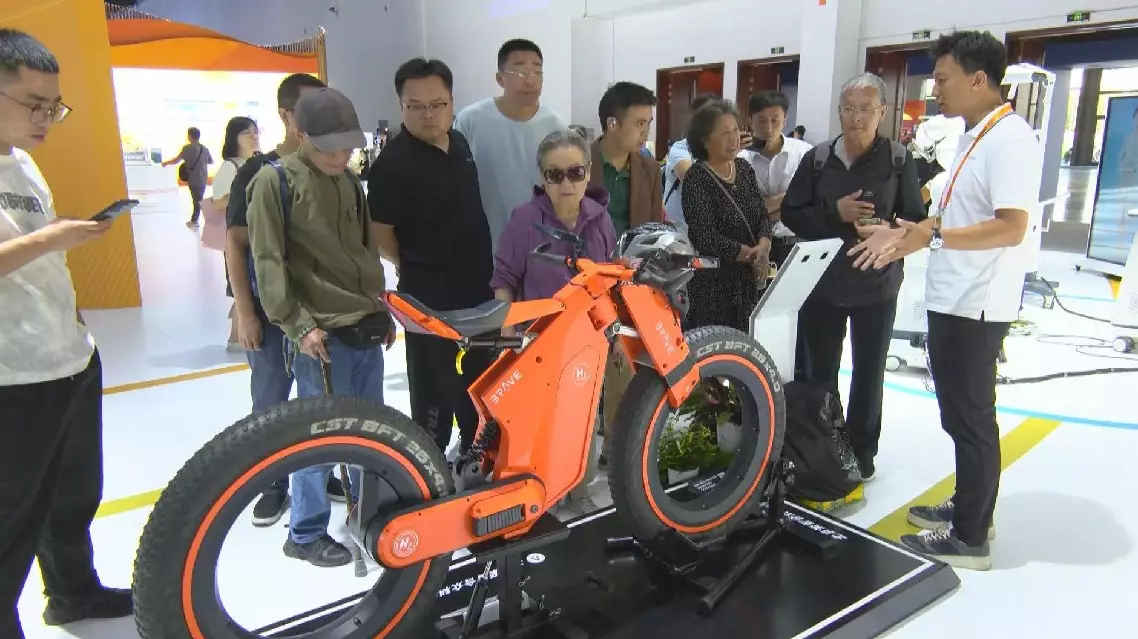
At the National Convention Center exhibition area of the 2024 CIFTIS in eastern Beijing, a hydrogen-powered motorcycle equipped with a hybrid power system with completely independent intellectual property rights has attracted much attention since its debut. It has currently received more than 30,000 overseas pre-orders.
The prototype of a shield machine independently developed by China is also on display. The original machine is currently being used to excavate the world's longest submarine high-speed railway tunnel -- the Jintang submarine tunnel in east China's Zhejiang Province. An intelligent monitoring system and an advanced geological prediction system are installed on the cutterhead to ensure safe and efficient tunneling.
"As our technology has reached such an advanced level, and as we are already at the forefront of the world in terms of progress in major hardware development, I feel particularly proud," said another visitor surnamed Bai.
In addition to the cutting-edge new technologies, green and low-carbon environment-friendly products are also a highlight at the event. Pendants made of discarded bottle caps and shared bicycles made of environment-friendly materials are breaking the boundaries of service trade and empowering the development of more and more industries.
"I think the growth in green trade, and green products and services in China has great opportunity for growth. China's growth in services is faster than GDP growth. China's service growth is faster than trade in goods and growth in goods, and provides a low-carbon growth opportunity and high-quality development opportunity," said Joshua Wickerham, external relations manager of the ISEAL Alliance.
Over 450 Fortune 500 companies and industry leaders, as well as representatives from 85 countries and international organizations, are participating in the five-day event, which opened on Thursday under the theme "Global Services, Shared Prosperity."
New, green technologies become highlight at 2024 CIFTIS open day event
U.S. President Donald Trump said on Friday that he estimates a deal with Iran will be signed "in the next day or two."
Trump said in an interview with Israel's Channel 12 News that the United States and Iran will probably meet over the weekend to finalize a deal to end the war. "The Iranians want to meet and make a deal," he said.
He said "the naval blockade on Iran is helping to make a deal. I will not lift it until we make a deal," adding that "the biggest part of this deal is that it will make Israel safer. This deal is good for Israel."
According to the channel, one component of the deal under discussion is that the United States will release 20 billion U.S. dollars in frozen Iranian funds.
In exchange, Iran would give up its stockpile of enriched uranium, and would be only allowed to have nuclear research reactors to produce medical isotopes, all above ground.
Trump also stressed that Israel must stop the strikes on Lebanon, saying, "They can't keep blowing up buildings. I'm not going to allow that."
Also on Friday, Trump said in a phone interview with Bloomberg that a deal to end the U.S.-Israeli war with Iran is mostly complete as talks over a lasting peace deal will "probably" be held this weekend in Pakistan.
Trump said in the phone interview that Iran agreed to suspend its nuclear program indefinitely, and will not receive any frozen funds from the United States.
"Most of the main points are finalized. It'll go pretty quickly," Trump said.
Asked if he would travel to Pakistan to sign the potential deal, Trump said: "I may."
Trump again denied that the moratorium on Iran's nuclear program would expire after 20 years. "No years, unlimited," Trump said.
The United States will get all of Iran's nuclear "dust" with no money having exchanged hands "in any way, shape, or form," Trump wrote on social media earlier on Friday. Multiple Western media outlets have interpreted Trump's reference to nuclear "dust" as meaning Iran's stockpile of enriched uranium.
Iran has yet to comment on any deal beyond the reopening of the Strait of Hormuz, nor on claims made by Trump that Tehran had offered concessions, including over the key issue of its nuclear program.
If the United States continues its naval blockade of the Strait of Hormuz, Iran will consider it a violation of the ceasefire between the two countries and will close the waterway, the semi-official Tasnim news agency reported Friday, citing an informed source close to the Supreme National Security Council.
The Iranian side has yet to respond to the media report on the enriched uranium issue.
The United States and Iran had their first round of negotiations in Pakistan's Islamabad last weekend to ease tension in the Middle East. The talks, which failed to produce an agreement, took place after a ceasefire was announced on April 8 between Iran, the United States, and Israel, following 40 days of fighting.
Iran tightened control over the Strait of Hormuz after the United States and Israel launched joint attacks on the country on Feb. 28. The United States also imposed a naval blockade on the strait following the failed negotiations in Islamabad.
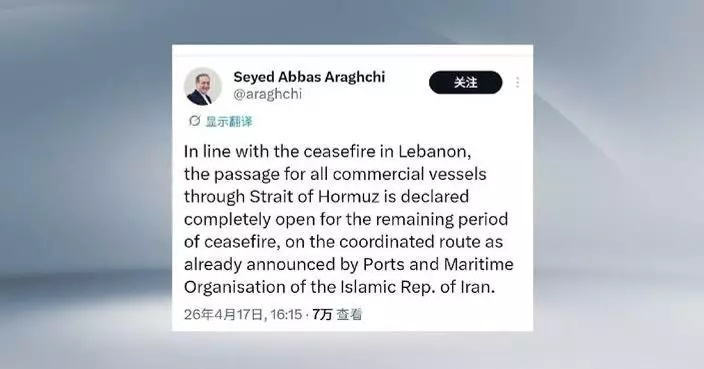
Earlier on Friday, both Washington and Tehran confirmed that the strait had been completely open for all commercial vessels. However, Trump said on Truth Social that the U.S. naval blockade would "remain in full force." In response, Iran warned of closing the waterway again if the U.S. blockade continues.
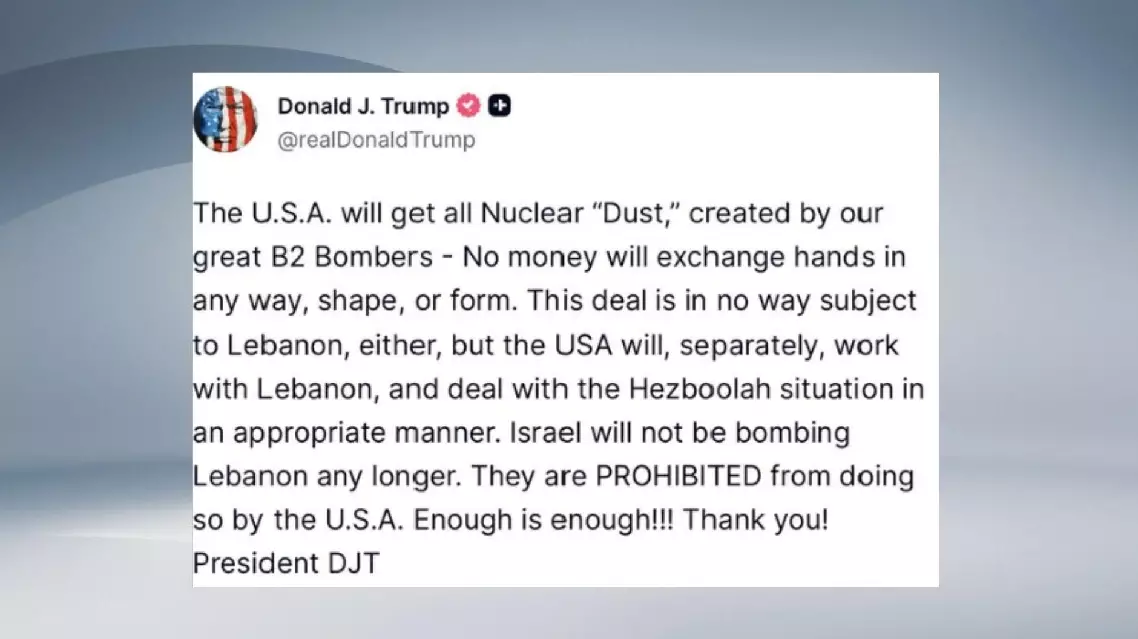
Trump says may sign deal with Iran "in the next day or two": Israeli media
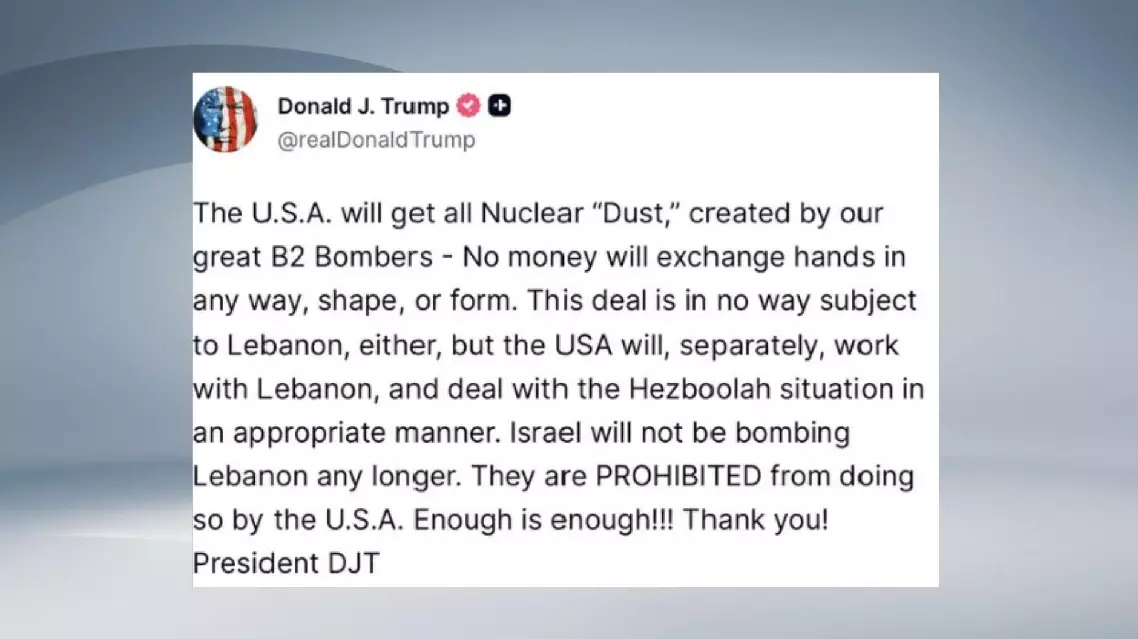
Trump claims peace deal with Iran mostly complete: report