The Qiantang River tidal bore, a natural wonder, has lured numerous enthusiasts to Haining City in east China's Zhejiang Province, to capture the mesmerizing spectacle of the ever-changing tides.
A tidal bore is a phenomenon where the leading edge of an incoming tide creates a wave that surges up a river against the flow.
The Qiantang River boasts the world's largest tidal bore, and is called the "Silver Dragon" by locals.
Tide-watching has become a grand folk tradition during the Mid-Autumn Festival, which falls on Tuesday this year.
These enthusiasts have not only captured the stunning scenes of the tides, but also given them vivid names based on their distinct features.
"The crossing tide is more captivating, with two or even three tidal currents merging together. There is also the legendary dragon-scale tide, where the tide water resembles the upturned scales of a dragon," said Pan Linglong, an enthusiast.
"The tides come in different forms. For example, I've captured the crossing tide, the surging tide, and the dragon head tide. Photographing the tides is like unwrapping a surprise gift. The tide appearance changes from day to day and is fleeting. Once captured, the experience can be truly breathtaking," said He Bin, another enthusiast.

Enthusiasts flock to capture spectacular scenes of Qiantang River tidal bores

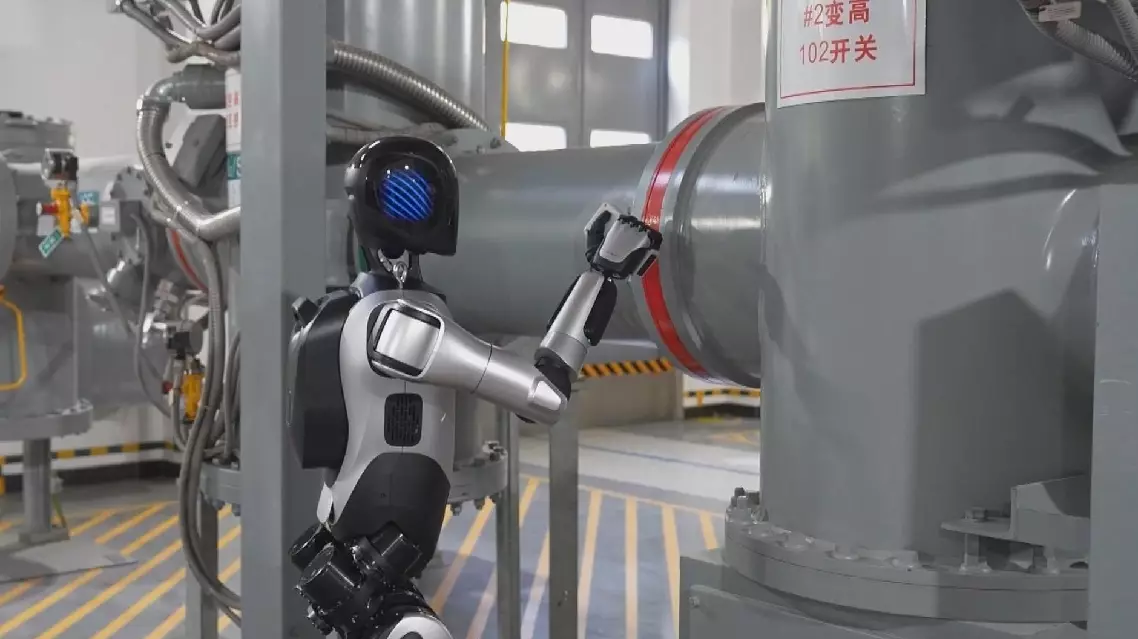
China's natural gas production is projected to reach 300 billion cubic meters by 2030, according to a development report released in Beijing.
The report, covering the development of China's oil and gas industry during the country's 14th Five-Year Plan period (2021–2025), said proven geological reserves rose by 7 billion tons of oil and 7 trillion cubic meters of gas, up 43 percent and 40 percent respectively from the previous five-year period. Oil and gas production hit record highs.
"The oil output is likely to reach between 215 and 216 million tons this year. Natural gas has seen major growth during the 14th Five-Year Plan period (2021–2025), with annual domestic output rising by nearly 13 billion cubic meters. In the 15th Five-Year Plan period (2026-2030), we expect annual increases of more than 10 billion cubic meters, reaching 300 billion cubic meters around 2030," said Wu Mouyuan, deputy director of the Economics and Technology Research Institute of China National Petroleum Corporation (CNPC).
The report forecast that China's energy structure will feature less coal, stable oil and gas, and rising non-fossil fuels over the next decade.
By 2060, fossil fuels are expected to account for 23 percent of the energy mix, hydropower and nuclear 19 percent, wind 25 percent, and solar 30 percent, the report said.
"In the next five years, through the integrated development of fossil energy and renewables, we will achieve a heathy, stable, and resilient energy system. Clean energy will continue to grow rapidly. More than 90 percent of renewable energy will be consumed via electricity, so the electrification at end-use sectors is a key direction of transformation in the future," said Wu.
With the rapid growth of artificial intelligence and new high-energy industries, China's power demand will exceed 20 trillion kilowatt hours by 2060, double the 2025 level. Electrification at end-use sectors is expected to reach 62 percent, rising by nearly one percentage point annually, the report projected.
China to see gas output hitting 300 bcm by 2030: report