The lunar samples collected by China's Chang'e-6 mission are providing unprecedented insights into the moon's enigmatic far side, revealing distinct differences from the familiar near side and potentially rewriting the understanding of lunar evolution.
The mission, which marked the first time humanity has retrieved samples directly from the moon's far side, brought back 1,935.3 grams of lunar material from the South Pole-Aitken Basin. This ancient impact crater, the oldest on the moon, making it crucial for studying the moon's formation and the evolution of the solar system.
Additionally, as the deepest impact crater on the moon, it holds the potential for collecting samples from the moon's deeper layers, including the lunar mantle, thereby providing valuable first-hand data on the composition of lunar materials.
While these far-side samples are still undergoing preliminary processing and analysis, they have already begun to reveal the unique characteristics of this mysterious region. This marks a critical advancement in our understanding of the moon, as previous lunar sample missions—totaling 10—have only focused on the near side, including samples from the Chang'e 5 mission.
Earlier the week, a Chinese team of scientists published the first research paper on these lunar samples, saying that they exhibit "distinct characteristics" compared to previously obtained lunar samples.
The team found out that the Chang'e-6 soil samples have a lower density than previous samples, indicating a more porous and loosely structured composition. The plagioclase content of the Chang'e-6 samples is significantly higher than that of the Chang'e-5 samples, while their olivine content is significantly lower.
The study has also revealed that the Chang'e-6 lithic fragment samples are primarily composed of basalt, breccia, agglutinate, glasses and leucocrate. Geochemical analysis of the Chang'e-6 lunar samples has shown that their concentration of trace elements such as thorium, uranium and potassium is markedly different from the samples retrieved by the Apollo missions and the Chang'e-5 mission.
"It has only provided answers regarding the characteristics of the materials on the far side of the moon. First of all, the materials on the far side are definitely very different from those on the near side. We will investigate why these differences exist and explore the driving forces behind them," said Li Chunlai, deputy chief designer of the Chang'e-6 mission and researcher with the National Astronomical Observatory of the Chinese Academy of Sciences.
The Chang'e 6 samples not only fill a critical gap in lunar research but also offer direct evidence for studying the moon's early evolution, volcanic activity on the far side, and its impact history. This breakthrough opens new avenues for understanding the geological disparities between the far side and the near side of the moon.
"Of course, the current results are very preliminary, but they have provided insights into the characteristics of the Chang'e 6 samples, what they consist of, and how they differ from the samples collected by Chang'e 5. We are conducting further analyses and expect to have fundamental results soon, including information on its age, petrology, and genesis, as well as the type of volcanic activity it represents. We are also investigating how the materials on the far side of the moon differ from those on the near side, and whether we have collected any components of the lunar mantle. We anticipate that these findings will be available relatively soon," said Li.
The Chang'e-6 probe was launched from the Wenchang Spacecraft Launch Site in south China's Hainan Province on May 3, 2024. It touched down on the far side of the moon on June 2. During its two-day stay, Chang'e-6 used a scoop and drill, collecting nearly 2 kilograms of lunar material. On June 25, upon its return it brought back the samples and made a landing in north China.
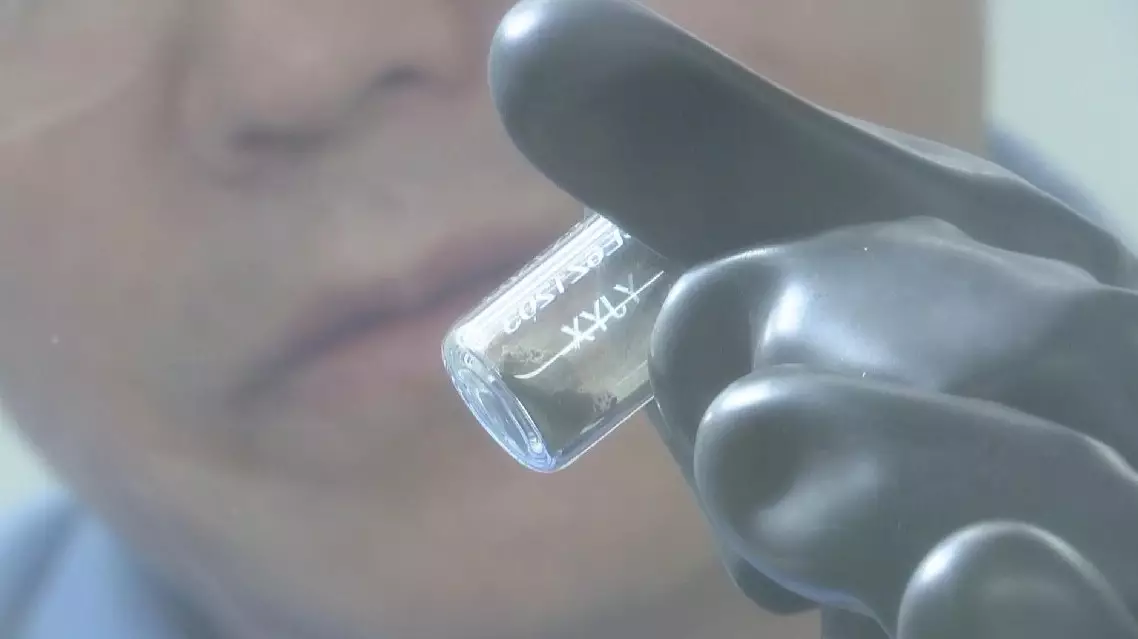
Chang'e 6 sample study unveils new insights into lunar far side