Chinese President Xi Jinping on Friday called for consolidating and developing the unity of the Chinese nation.
Xi, also general secretary of the Communist Party of China Central Committee and chairman of the Central Military Commission, made the call at a grand meeting held in Beijing to honor role models for ethnic unity and progress.
He urged efforts to advance the building of the community for the Chinese nation.
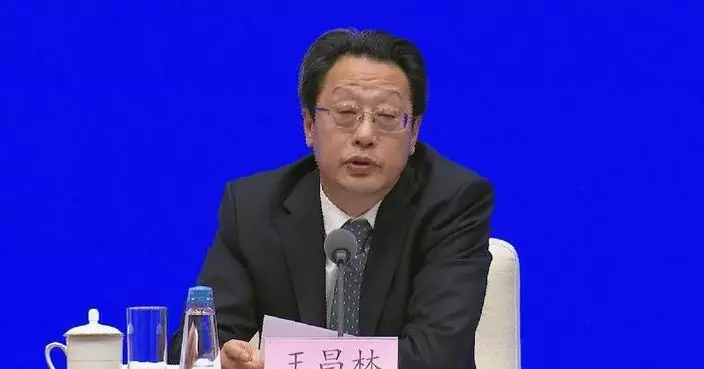
Premier Li Qiang presided over the meeting. Top political advisor Wang Huning announced the central authorities' decision to award the role models. Senior leaders Zhao Leji, Cai Qi, Ding Xuexiang and Li Xi attended the event.
A total of 352 groups and 368 individuals were honored. Xi and other senior leaders presented the awards to representatives of the models.
Addressing the meeting, Xi said the CPC has always attached great importance to ethnic affairs. Over the past more than a century, it has blazed a correct path of handling ethnic affairs with a distinctively Chinese approach.
Along this path, Xi said, the CPC has made new advances in developing ethnic relations of equality, solidarity, mutual assistance and harmony, and promoted economic and social development of ethnic areas and the life of ethnic minority groups to register unprecedented progress.
Since the 18th CPC National Congress in 2012, the Party has taken fostering a strong sense of community for the Chinese nation as the focus of its work related to ethnic affairs, and achieved new historic success, he said.
Xi highlighted key aspects of the path of handling ethnic affairs with a distinctively Chinese approach, which include maximizing cohesion among all ethnic groups, adhering to the principle of equality for all ethnic groups, opposing ethnic oppression and discrimination, and properly balancing the safeguarding of national unity with the implementation of regional ethnic autonomy.
The path has helped build a stronger sense of shared identity and unity within the Chinese nation, Xi said.
The Chinese nation is a great nation with a civilization history of over 5,000 years, said Xi, stressing that the formation and development of the Chinese national community is the will of the people, the trend of the times, and a historical inevitability.
"The great motherland and the great nation nurtured by over 5,000 years of Chinese civilization will always be the source of the most profound and enduring attachment for all the Chinese people. On this vast, beautiful and rich land, people of all ethnic groups share one home - China; we share one identity - the Chinese nation; we share one name - the Chinese people; and we share one dream - to realize the great rejuvenation of the Chinese nation," said Xi.
He called for efforts to guide all ethnic groups toward firmly embracing the concept of a community for the Chinese nation. He emphasized the importance of enhancing education in patriotism, collectivism, and socialism, as well as strengthening historical and cultural education for young people.
He also urged efforts to fully promote the use of the standard Chinese language.
Xi pointed out that in advancing Chinese modernization and achieving common prosperity, no ethnic group should be left behind.
He called for the promotion of high-quality development in areas with large ethnic minority populations, stronger economic ties between regions, and increased exchanges and interactions among ethnic groups.
He said it is necessary to strengthen the construction of infrastructure in the border areas and ethnic minority regions and advance urbanization efforts that put the people first.
Xi emphasized that ethnic affairs must be handled in accordance with the law.
He urged Party committees and governments at all levels to prioritize ethnic affairs on their agendas and to foster a supportive social environment for related work.
When presiding over the meeting, Premier Li urged efforts to implement President Xi's instructions on strengthening and improving the work on ethnic affairs.
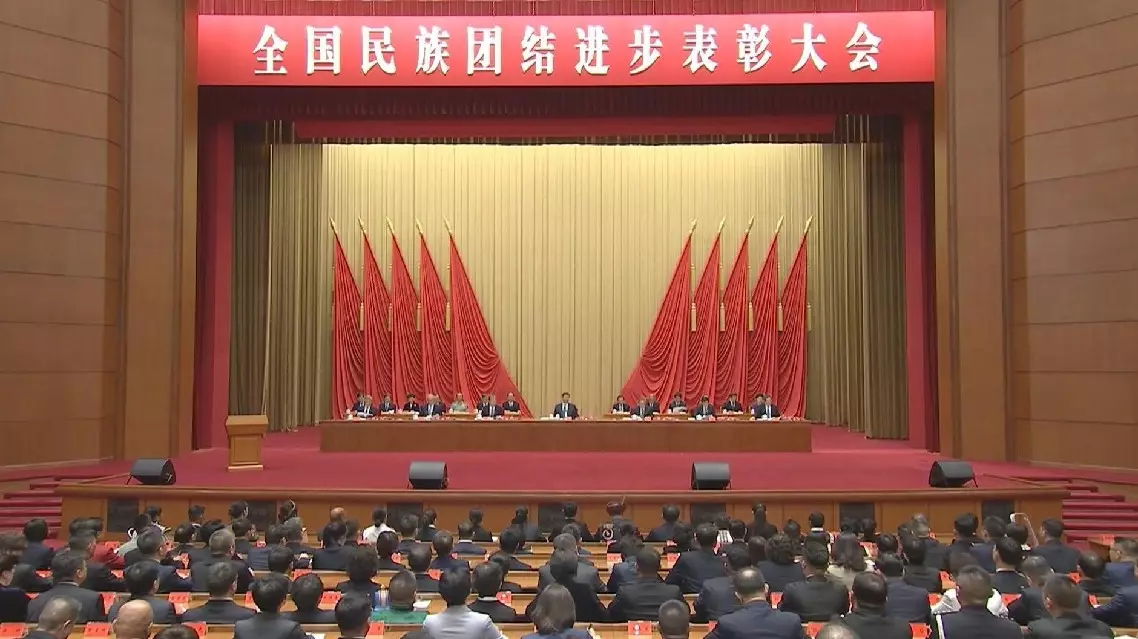
Xi stresses consolidating unity of Chinese nation