The District Court has sentenced Editor-in-Chief Chung Pui-kuen and acting Editor-in-Chief Lam Siu-tong to imprisonment for conspiracy to publish seditious materials through Stand News, concluding a nearly two-year trial.
As the U.S. and Western nations criticize Hong Kong for allegedly suppressing press freedom, it is essential to take a critical view to see whether Stand News is simply a media organization.
First, the promotion of nativism is paramount. The nativist movement aims not only to incite hostility toward the Central Authorities and the Hong Kong SAR Government but ultimately to pursue Hong Kong's independence. District Court Judge Kwok Wai-kan, referencing evidence including Stand News' inaugural edition, three editorials, and its physical publication "Lizhi," concluded that Stand's political philosophy is nativist, serving as a tool to disparage the Central and SAR Governments during the anti-amendment to the extradition law protests.
Second, there are significant ties to Jimmy Lai, owner of Apple Daily. Stand News was founded by Tsoi Tung-ho, one of the ten key figures of the Occupy Central movement, who received considerable support from Lai. While Apple Daily operates its own online media and competes with Stand News and its predecessor, The Home News, Lai has shown support for various local media, even financially assisting his rivals. Notably, Lai contracted out to Home News a section called "Financial Center" in Apple Daily's financial edition, paying hundreds of thousands of dollars monthly to aid Choi during a financial crisis. This kind of direct funding in support of a rival is difficult to explain and reflects a complicated relationship of the two media organizations.
Third, there is an alarming influx of undisclosed funding. Following police action against Stand News in 2021, the Secretary for Security froze its assets under the Hong Kong National Security Law, revealing that Stand had over $61 million in funds. Due to the organization’s lack of financial transparency, this amount might have gone unnoticed without police disclosure. An organization claiming to be non-profit yet possessing substantial assets raises questions about the true source of its funding. It remains unclear whether the $61 million was accrued through public support during protests or other undisclosed means.
Additionally, Stand News has intriguing overseas connections. Reports indicate that Evan Fowler, an overseas director of Stand News, co-founded the Hong Kong Free Press (HKFP), known for its anti-China stance, and is an associate fellow of the Henry Jackson Society, a British think tank with close ties to the U.S. and U.K. governments. Recent media coverage suggests that the U.S. and U.K. are leveraging think tanks like the Henry Jackson Society to shape public opinion against China.
Fourth, the Stand News case has not jeopardized legitimate media. The evidence presented in the Stand News case illustrates that it does not function as a typical media organization. The judgment noted that eleven articles published by Stand News incited hatred without objective basis, undermined the Justice Department's prosecution efforts, and spread falsehoods to encourage anti-government sentiment among protesters.
Judge Kwok emphasized that journalists must adhere to Article 19(3) of the International Covenant on Civil and Political Rights, which stipulates that media freedom is not absolute and does not shield one from legal responsibility. The judgment highlighted that journalists bear "special responsibilities and duties," including safeguarding national security, public order, and public health. Citing the European Convention on Human Rights, it reiterated that journalists must operate in good faith, based on accurate facts, to warrant protection under freedom of expression. The European Parliament's Code of Conduct for Journalists also stresses the importance of factual verification and impartiality.
In summary, legitimate media organizations conducting normal interviews and commentary—even critical of the government—would not face sedition charges. It is reasonable to conclude that typical news organizations do not embrace nativism as a core principle, possess vast financial resources, or publish a multitude of incendiary articles in a politically charged atmosphere, as noted by Judge Kwok.
In conclusion, Stand News was not operating as a normal media outlet.
Wing-hung Lo
Bastille Commentary
** 博客文章文責自負,不代表本公司立場 **
Recently, I came across a report from Voice of America that I believe is worth sharing.
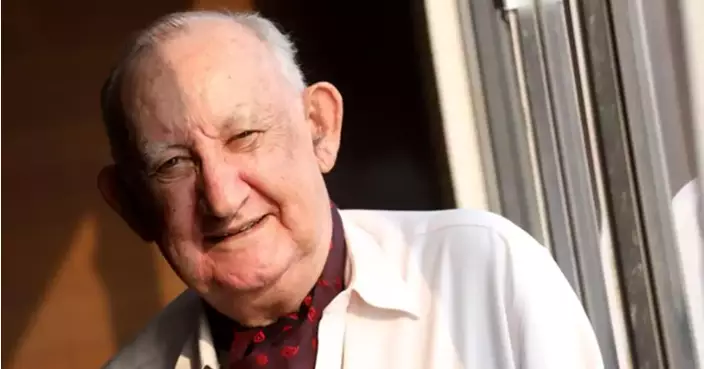
The subject of the story is Vincent Lam, a Hong Kong resident who moved to the UK and now works as a rodent exterminator—a profession some have described as demeaning. However, Lam strongly disagrees with this portrayal, expressing his appreciation for the job, which he claims has deepened his understanding of life.
Lam was formerly an active opposition figure in Hong Kong. Between 2016 and 2017, he served as the deputy convenor of the Civil Human Rights Front and later worked as an assistant to former Legislative Council member Claudia Mo. He also ran for a seat in the 2019 District Council elections. Fearing arrest when the police started investigation into the "35+ subversion case," Lam fled Hong Kong within a day.
For the past three years, Lam has worked for a pest control company in London. The Voice of America report primarily seeks to counter the narrative that he took up this "lowly" exterminator job out of sheer necessity.
The article notes that Lam, once afraid of cockroaches as a child, overcame this fear as he grew older and now handles rat corpses with ease. He described the experience: "When you touch them, they’re stiff and cold, just like the hamsters I used to raise when they died. So I don’t feel disgusted or scared at all."
From a third-party perspective, it is clear that most people would find such work unpleasant.
Voice of America also emphasized that Lam studied social policy at Baptist University and holds a university degree, dismissing claims that his current job is beneath him. The report further highlights a common issue faced by many Hong Kong immigrants in the UK—the difficulty of securing employment in their original fields due to the non-recognition of academic and professional qualifications.
However, Lam noted that the pay for exterminators in the UK, after tax, is higher than that for similar jobs in Hong Kong, and the working hours are shorter. This makes the job more than acceptable to him. "Honestly, I’ve never felt bad about it from the beginning," he said.
Honestly, it is evident that immigrants often face challenges in having their foreign qualifications and work experience recognized, making it difficult to secure ideal jobs.
I once saw a discussion on a local forum about the challenges of finding employment in the UK. While the UK’s unemployment rate is 4.4%, not particularly high, a person joining the forum, likely a Hong Kong immigrant, commented: "White-collar jobs are hard to come by; blue-collar jobs are easier. It’s tough to find senior and middle management positions, while entry-level jobs are more accessible. But for even low-level white-collar jobs, you need time to prepare resumes and go through interviews, whereas for blue-collar jobs, you just need to show up for a trial, and get hired."
Quite a number of my friends who have relocated to the UK now work in bakeries or warehouses. Night shifts, in particular, are easier to find, as locals often avoid these jobs.
The Voice of America report continued to highlight Lam’s story, challenging the notion that a former pro-democracy activist from Hong Kong is now living in misery working as a rat exterminator in the UK. Lam remarked, "They make it sound as if I’m living in despair, unable to afford three meals a day, and full of regret. I see this as part of their propaganda."
For a person of sound intellect, handling dead rats may not seem like an ideal job, but it is certainly not driven by Chinese propaganda, as Lam implied. On the contrary, it seems that Voice of America is misrepresenting the situation, portraying it as an aspiration to deal with dead rats, thus suggesting a stronger U.S. propaganda narrative.
Even the report’s headline was politically charged: "Hong Kong Immigrant Exterminator in the UK Laments Britain Treats Rats Better Than the Hong Kong Government Treats Political Prisoners." The so-called British kindness to rats refers to animal welfare laws that prohibit the inhumane treatment of rats, such as boiling them alive.
From a neutral perspective, it is important to acknowledge that Hong Kong also has laws preventing cruelty to animals. That Voice of America could elevate these incidents to suggest that Britain’s treatment of rats is superior to Hong Kong’s treatment of its citizens seems like a significant exaggeration.
Lam’s story reminded me of an experience I had decades ago. I once visited a relative and noticed that the building’s security guard—a gentle, middle-aged man—was reading during his shift. After chatting with him, I learned from his heavily-accented Cantonese that he was a new immigrant from mainland China. He had been a doctor in China, but after moving to Hong Kong, his qualifications were not recognized, and the only job he could find was as a security guard.
He explained that in the 1970s, incomes in mainland China were low, and working as a security guard in Hong Kong get paid more than being a doctor back home. Realistically, in his colloquial Cantonese, he said: "If the horse dies, get off and walk!" He wouldn’t say it was a great job, but it was the best he could get. His conclusion was that being an immigrant means relying on others, and that’s just the reality.
When I reflect on this now, the situation for Hong Kong people emigrating abroad is not much different from that of mainlanders moving to Hong Kong in the past. Only a small fraction can return to their original professions, while the majority must accept lesser jobs.
Lam’s story reminds me of Lu Xun’s The True Story of Ah Q. When I first read it as a young man, I thought that if Ah Q hadn’t embraced his peculiar mindset, his life would have been much more difficult.
Wing-hung Lo