China's economic boom has provided a path forward for countries in the Global South, pumping up the confidence of those countries to join hands for a new pattern for global governance, former Brazilian president Dilma said recently.
Rousseff, also incumbent chair of the New Development Bank (NDB), has been awarded the Friendship Medal -- the highest honorary medal of the People's Republic of China bestowed on foreign nationals -- earlier this month.
The announcement comes as China prepares to celebrate the 75th anniversary of the founding of the People's Republic of China.
Rousseff, a prominent figure in Latin American politics, has been lauded for her efforts in promoting China's development model and fostering stronger relations between China and Brazil, as well as broader Latin America.
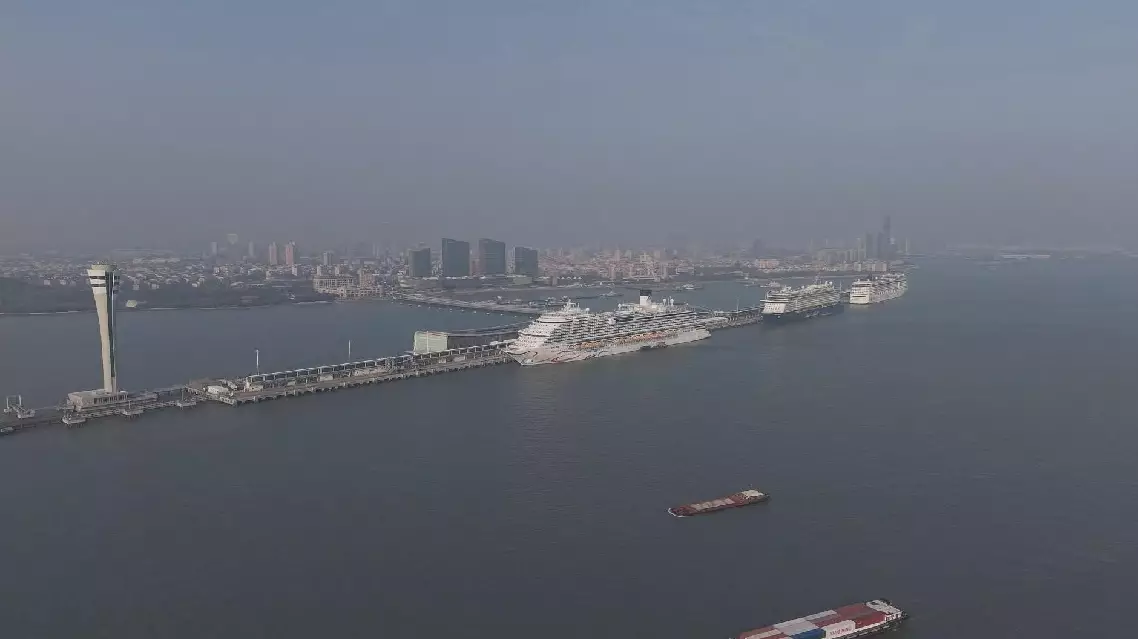
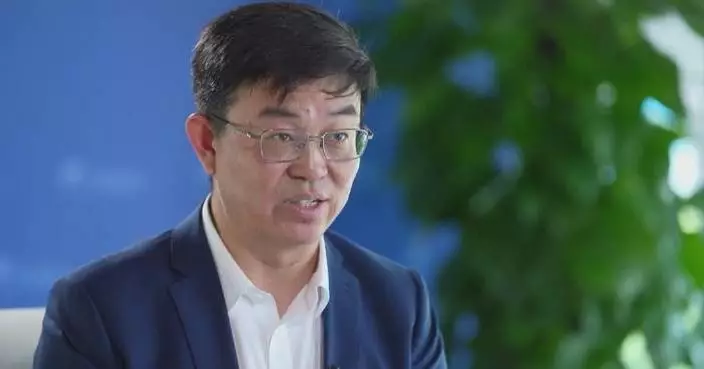
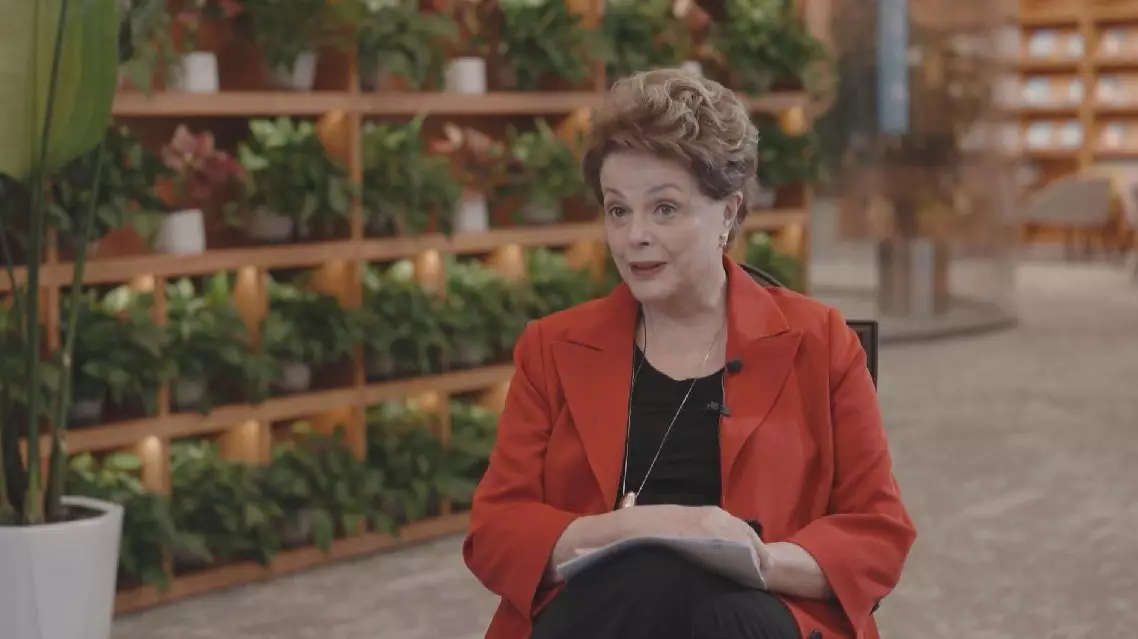
In the headquarters of the NDB in Shanghai, Rousseff told China Central Television (CCTV) that she feels so honored to receive the medal ahead of the National Day.
"I feel incredibly proud and it is a great honor for me personally to receive the highest honor awarded by China, the Friendship Medal. At the same time, in the special context of celebrating the 75th anniversary of the founding of the People's Republic of China, I feel that this honor is even more meaningful to me. Over the past 75 years, China has made great achievements in politics, economy, society and culture. It is not easy for a country to make such a big leap in such a short time. So it's a great honor to receive this medal on this important occasion," she said.
Born in southern Brazil's Minas Gerais, Rousseff took office as the country's first woman president in 2011, and made Brazil the first country in Latin America and the Caribbean Sea to establish the comprehensive strategic partnership with China, a diplomatic milestone that laid the groundwork for increased cooperation in various sectors.
During her tenure, Rousseff has been a strong advocate for cooperation between developing nations. She played a key role for Brazil to join the NDB, also known as the BRICS bank, and becoming a founding member of the Asian Infrastructure Investment Bank (AIIB).
China remains Brazil's largest trading partner over the past 15 years, and Brazil has been China's largest import source of agricultural products over the past seven years.
The joint-venture Belo Monte ultra-high voltage direct transmission (UHVDC) project, notably, has greatly improved energy shortage in Brazil, Rousseff said, highlighting that Chinese enterprises are crucial for Brazil's re-industrialization agenda.
Both Brazil and China are major emerging markets and large developing economies. That explains why Rousseff prioritized employment and poverty alleviation during her tenure, a successful development path which China chose.
"China has always firmly believed in pursuing its own development path, which serves as a good reference for countries in the Global South. I think China's success in lifting nearly 800 million people out of poverty is a pioneering effort. Having worked in my own country to lift people out of hunger, I know how difficult it is for China with such a large population. China provides a way forward for those of us in the Global South, showing us that it is possible for a developing country to come this far. In addition, another very important point is the concept of a community with a shared future for mankind. Many countries in the Global South, including Brazil, have been colonized or invaded in the past. In this regard, China's proposal to jointly build a community with a shared future for mankind is key for creating a new pattern of global governance. Meanwhile, China also provides us with a new vision of globalization in which we can fight against protectionism, against sanctions, against many barriers and obstacles. I have met with President Xi Jinping many times, and have a more truly understanding of this concept's wisdom," Rousseff said.
Rousseff became the NDB chair in 2023. During her inauguration ceremony held in Shanghai, Brazilian President Lula da Silva said that the NDB leadership will be enhanced with Rousseff's rich experience in politics and economy.
In her current role as NDB chair, Rousseff is focusing on promoting sustainable development and increasing the use of local currencies in development financing.
The NDB is trying to build a sustainable development oriented local currency financing platform, and aims to invest 40 percent of fund into projects to combat climate change, helping member countries' sustainable development, she said.
"The BRICS mechanism was founded by emerging economies and developing countries with the mission of benefiting and helping the development of those countries. It is expected to boost the better, steadier development of fellow countries and reduce the impact of crisis. Such partnership is not just about thinking from the perspective of individual countries, but also represents the development vision of more countries in the Global South, so the New Development Bank hopes to have more members," Rousseff said.
After working and living in Shanghai for over one year, Rousseff has got diverse perspectives to observe China by visiting many cities, and the country's dramatic changes have made her feel endless novelty and refreshment. She expressed admiration for China's blend of tradition and modernity as well as its convergence of ancient history with cutting-edge development, she said.
The Friendship Medal is seen as a recognition of Rousseff's efforts in strengthening Brazil-China relations and promoting cooperation among developing countries.
China provides promising development path for Global South: former Brazilian president