A group of Chinese Tibetologists shared Chinese modernization path in southwest China's Xizang Autonomous Region during their visit to France and Norway from Sept. 20 to 25.
During many activities held with local think tanks, experts and scholars, they presented the new journey of Chinese modernization in Xizang from the aspects of the country's efforts to achieve common prosperity, and harmonious co-existence between man and nature, and form new types of civilization.
Attendees from France and Norway said that Xizang has always been a part of China since ancient times, and the international community has reached a consensus on this. The exchange activities are very beneficial to enhancing mutual understanding.
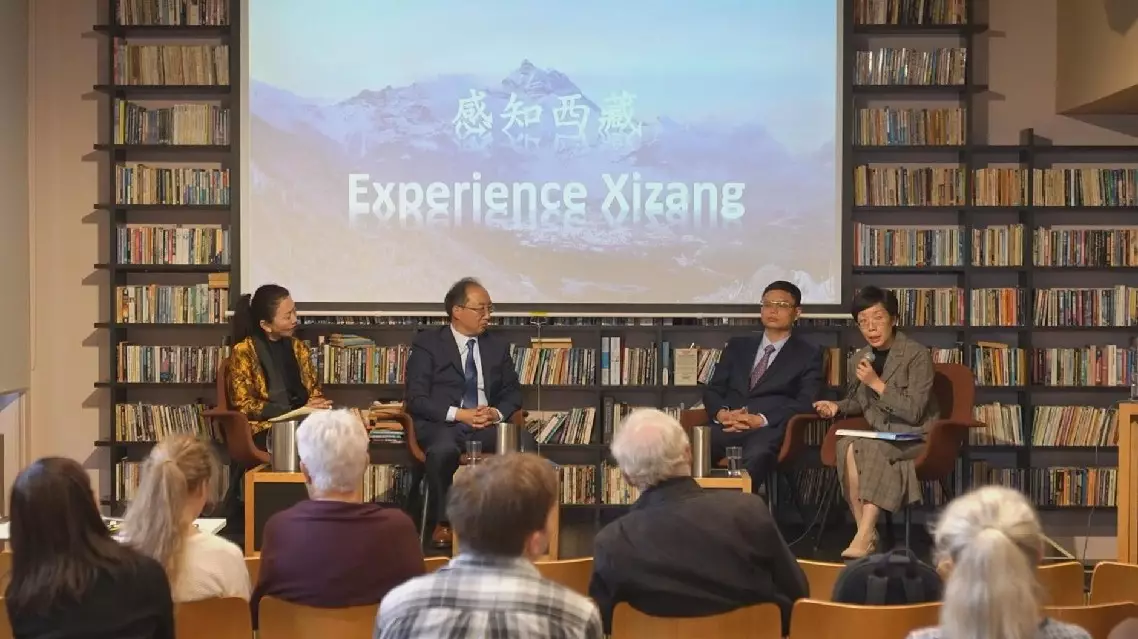
Chinese Tibetologists visit France, Norway to share Chinese modernization path in Xizang
A United Nations Development Programme (UNDP) forum in Hangzhou, east China's Zhejiang Province, explored how developing countries can work together on low-carbon development, digital technology and supply chains.
The two-day event, held in Hangzhou on Friday and Saturday, to mark the United Nations Day for South-South Cooperation, drew about 100 government officials, representatives of UN agencies and academics to discuss ways of translating policy commitments into practical projects.
Observed annually on Sept. 12, the UN day commemorates the 1978 Buenos Aires Plan of Action, which promoted technical cooperation and the exchange of knowledge and resources among developing countries.
UNDP Resident Representative in China Stefan Liller said the agency has worked closely with the Chinese government through the Global Development Initiative and the Global Development and South-South Cooperation Fund.
"[The] UNDP has worked very closely with the Chinese government under the Global Development Initiative, particularly implementing projects under the Global Development and South-South Cooperation Fund -- 39 projects across 26 countries, benefiting 18 million people in Africa, Latin America and Asia-Pacific." Liller said.
For the event's participants, the forum also offered a chance to examine China's experience in technology and development.
"[In the] South-South region, they can cooperate with each other. They could partner in AI, technology, [and] others like that, [and] also see how China is developing or [how] China is leading the South-South cooperation," said Mani R. Lamichhane, chief of the Nepal Tourism Board's Gandaki Province office in Pokhara.
The discussions also examined China's role in UN procurement and humanitarian supply chains.
"A lot of goods that the UN is procuring are made in China. We get to our most cost-efficient supply chain. We're looking at China as also providing those cost efficiencies, allowing us to be more rapid in also our delivery on the ground and to have a reflection on maybe co-creation when it comes to innovation and sustainability," said Sophie Muller, UNHCR representative in China.
The participants also visited a low-carbon industrial park and a Hangzhou company working on embodied artificial intelligence and robotics, connecting the policy discussions with the city's green and digital development efforts.
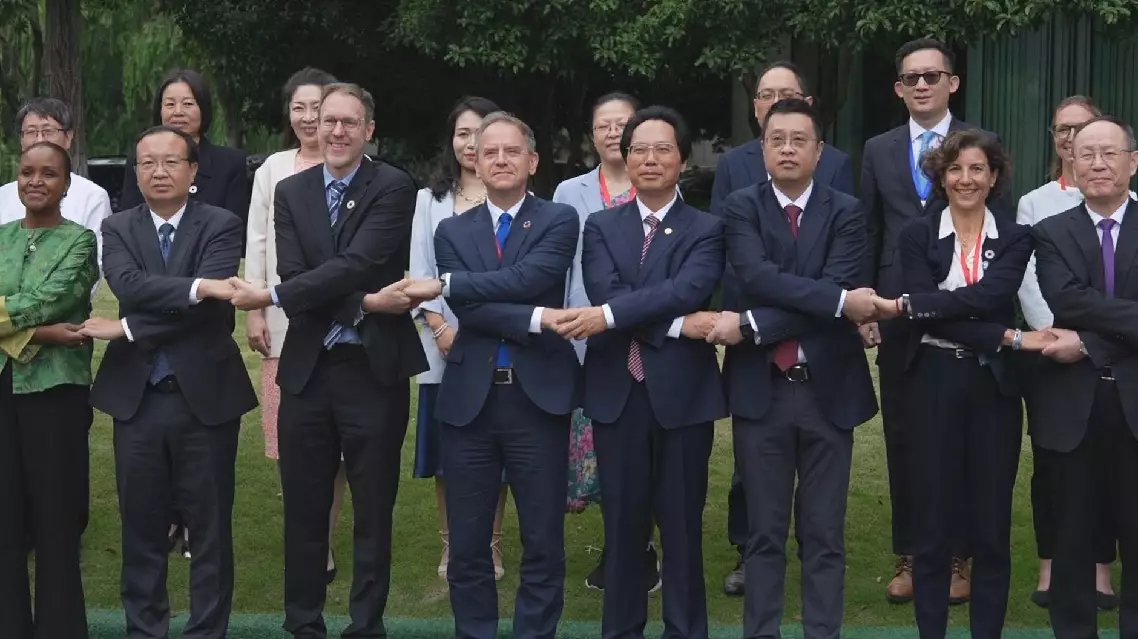
UNDP forum explores green, digital cooperation among Global South countries