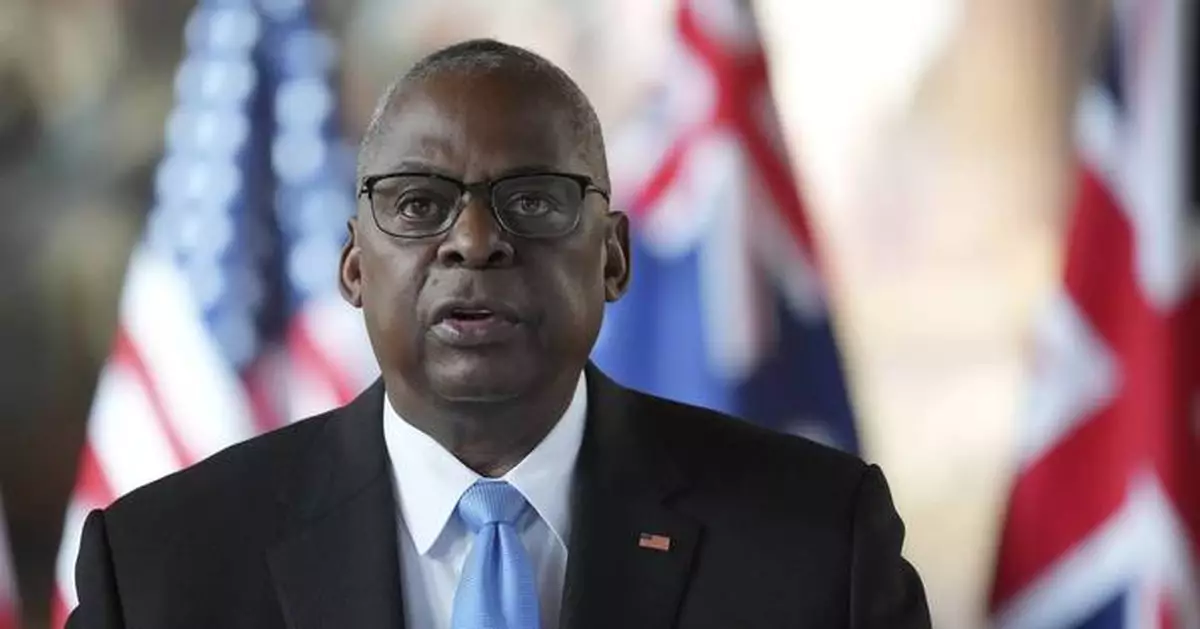
WASHINGTON (AP) — The U.S. is sending a “few thousand” troops to the Middle East to bolster security and to defend Israel if necessary, the Pentagon said Monday. The announcement follows word that Israel has already launched limited raids across the border into Lebanon.
The additional forces would raise the total number of troops in the region to as many as 43,000.
The increased presence will involve multiple fighter jet and attack aircraft squadrons, Pentagon spokeswoman Sabrina Singh told reporters. U.S. officials said the total includes small numbers of other troops to augment the presence as well.
It follows recent strikes in Lebanon and the assassination of Hezbollah leader Hassan Nasrallah, a significant escalation in the war in the Middle East, this time between Israel and Hezbollah.
The additional personnel includes squadrons of F-15E, F-16, and F-22 fighter jets and A-10 attack aircraft, and the personnel needed to support them. The jets were supposed to rotate in and replace the squadrons already there. Instead, both the existing and new squadrons will remain in place to double the airpower on hand.
On Sunday, Defense Secretary Lloyd Austin announced that he was temporarily extending the USS Abraham Lincoln carrier strike group and its embarked air wing in the region. A U.S. official said the extension will be for about a month. A second carrier, the USS Harry S. Truman, departed Virginia last week and is enroute to Europe. It will head to the Mediterranean Sea and will again provide a two-carrier presence in the broader region. It's not expected to arrive for at least another week.
At the White House, President Joe Biden said Monday that “I’m more aware than you might know” about reports that Israel is planning a limited ground incursion into Lebanon after nearly a year of fighting with Hezbollah, and said he wants a cease-fire immediately. Asked about the reports, Biden said, “I’m more aware than you might know, and I’m comfortable with them stopping. We should have a cease-fire now.”
Zeke Miller contributed from Washington.
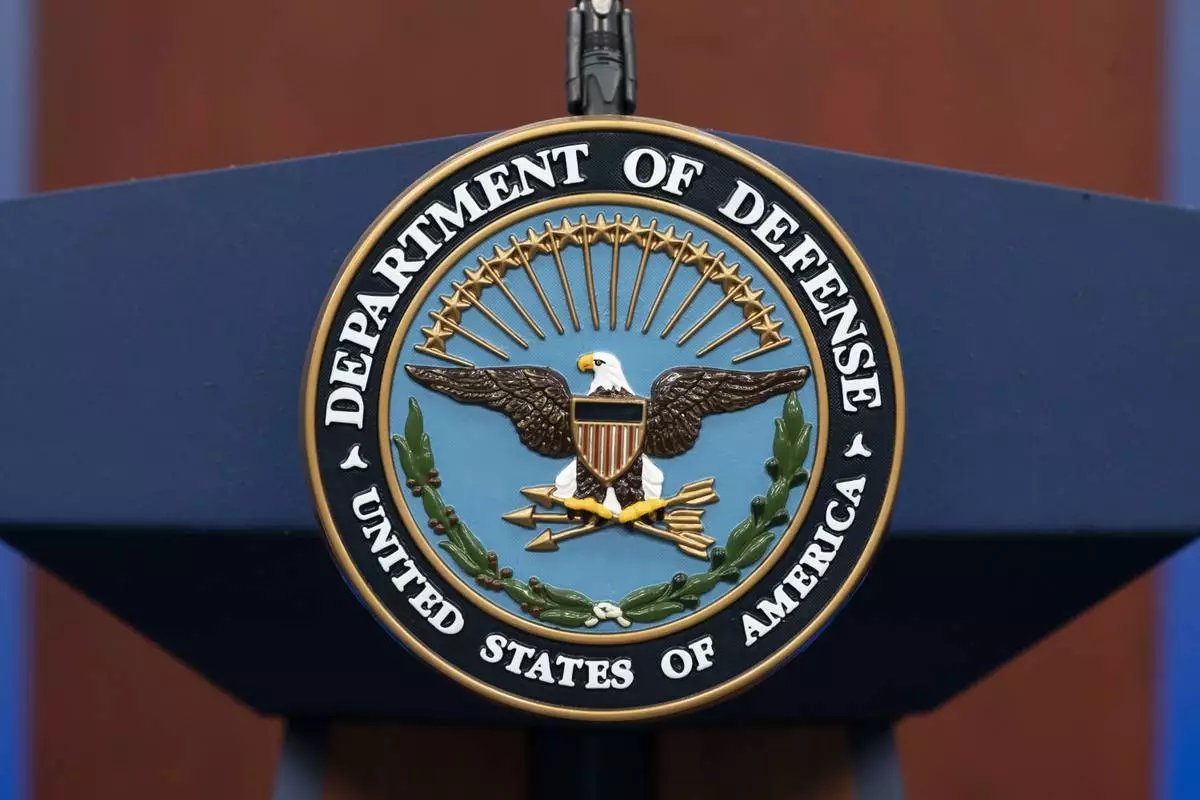
FILE - The seal of the Department of Defense is seen on the podium at the Pentagon, Sept. 27, 2022, in Washington. The Pentagon says the U.S. is sending an additional “few thousand” troops to the Middle East to bolster security and to be prepared to defend Israel if necessary. (AP Photo/Alex Brandon, File)
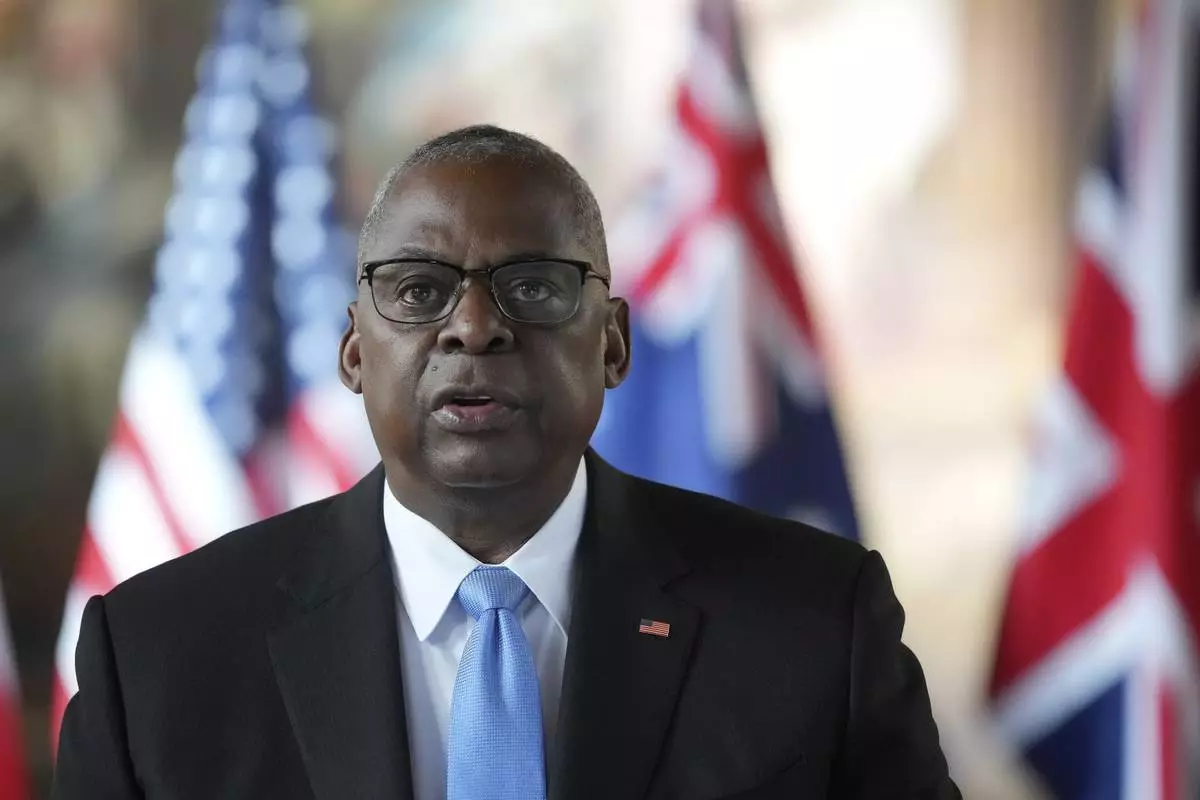
FILE - Secretary of Defense Lloyd Austin speaks in Greenwich, London, Sept. 26, 2024. (AP Photo/Kin Cheung, Pool, File)
WASHINGTON (AP) — It's never a good sign when a report comes with a big red disclaimer at the top of each page, but that's what happened on Thursday when the Democratic National Committee belatedly released its controversial autopsy report on the 2024 election.
“This document reflects the views of the author, not the DNC," the disclaimer said. "The DNC was not provided with the underlying sourcing, interviews, or supporting data for many of the assertions contained herein and therefore cannot independently verify the claims presented.”
It's an inauspicious label on a document that has caused so much heartburn. Ken Martin, the DNC chair, originally promised to release the autopsy, then decided to keep it under wraps because he said he didn't want to cause a distraction ahead of the midterms.
After months of handwringing, Martin released the report on Thursday, saying it was only withheld because it was so shoddily done.
After all that, what's in the report? Here are some takeaways from the 192 pages.
The report is far from comprehensive, and it avoids some of the most critical factors in the 2024 race.
For example, it doesn't address President Joe Biden's decision to run for a second term at 81, despite widespread concerns about his age. Biden dropped out after a faltering debate performance, and Harris was quickly anointed to replace him at the top of the ticket.
After serving as Biden's vice president, Harris was viewed in some corners as the natural choice for a new nominee. But the report does not address lingering concerns that the process was rushed or should have been handled in a more deliberative manner.
Perhaps most notably, the words “Gaza” and “Israel” do not appear anywhere in the text. Democrats suffered from internal disagreements over the conflict, which sapped enthusiasm for Harris among voters who were upset by the Biden administration's support for Israel.
The report found that the Biden White House did not “position or prepare the vice president” in a way that would allow her to lead a successful campaign.
It wasn’t until Biden announced his departure from the race in July that the campaign’s polling team scrambled to get fresh public opinion on three key areas — “one on the Vice President’s biography and record, one on her vision and plan, and another on attacks and responses.”
The team also determined Harris had no answer on a sensitive issue: The Trump campaign's anti-transgender attacks. Specifically, the report highlighted the pollsters’ belief that the Democratic nominee was “boxed” in by Republicans' “very effective” advertisement highlighting Harris’ previous support for taxpayer-funded gender-affirming surgeries for prison inmates.
“Kamala is for they/them, President Trump is for you," the ad said.
The report said: “If the Vice President would not change her position — and she did not — then there was nothing which would have worked as a response.”
There's been no shortage of criticism toward Harris' campaign after her defeat. Some Democrats think she spent too much time campaigning with Republicans like Liz Cheney, others think she lacked a strong economic message.
The autopsy report reaches a different conclusion, saying not enough was done to convince voters that Trump was an unacceptable candidate.
“There was a decision in the 2024 Democratic leadership not to engage in negative advertising at the scale required,” the report states. “The Trump campaign and supportive Super PACs went full throttle against Vice President Harris, but there was not sufficient or similar negative firepower directed at Trump by Democrats.”
At another point, the report says, "Democrats made a mistake by assuming voters were already aware of Trump's various weaknesses.
“The idea Trump’s negatives were ‘baked in’ is a major failure of analysis and reality,” the report says.
DNC leadership did not appear to like these conclusions, adding annotations like “no evidence provided; contradicts claims elsewhere in report” and “no sourcing or evidence provided.”
The report criticized Harris’ outreach to key segments of America while including a handful of derisive references to “identity politics.” The document raises serious concerns about Latinos in particular.
“Democrats can no longer assume Latino voters, especially younger Latino men, are a reliable part of their base," the report says. “The party needs a complete rethink of its Latino outreach strategy, moving beyond traditional approaches like Spanish-language ads and late-cycle surrogates.”
The report points to successful Democratic statewide candidates in Arizona, Nevada and North Carolina, who showed that “economic messaging, and addressing cost-of-living concerns resonate more than identity politics.”
The autopsy also highlighted the Democrats' underperformance with men.
“Male voters require direct engagement. The gender gap can be narrowed," the report says. “Deploy male messengers, address economic concerns, and don’t assume identity politics will hold male voters of color.”
Harris also didn't have any answers for the party's struggle with rural voters.
“Harris wrote off rural America, assuming urban/suburban margins would compensate. The math doesn’t work,” the report says. “You can’t lose rural areas by overwhelming margins and make it up elsewhere when rural voters are a significant share of the electorate. If Democrats are to reclaim leadership in the Heartland or the South, candidates must perform well in rural turf. Show up, listen, and then do it again.”
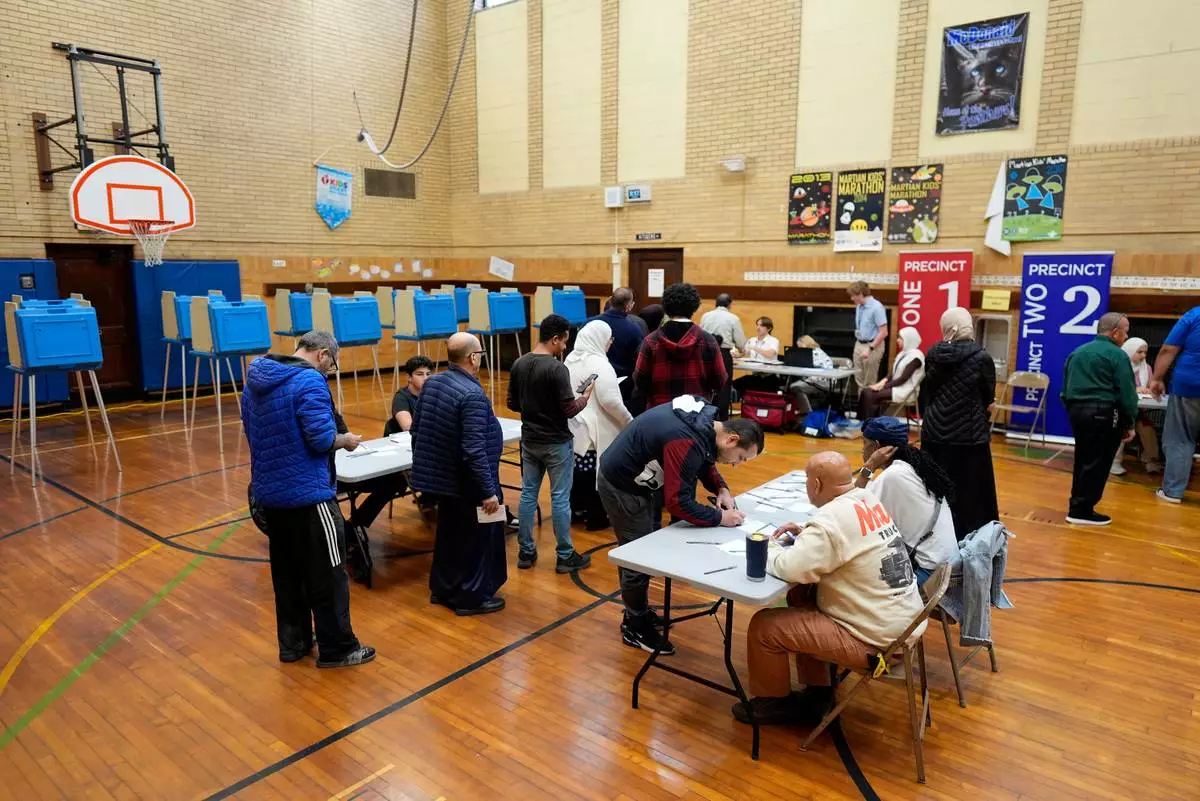
FILE - Voters wait to receive their ballots at a polling place at McDonald Elementary School, Nov. 5, 2024, in Dearborn, Mich. (AP Photo/Charlie Neibergall, File)
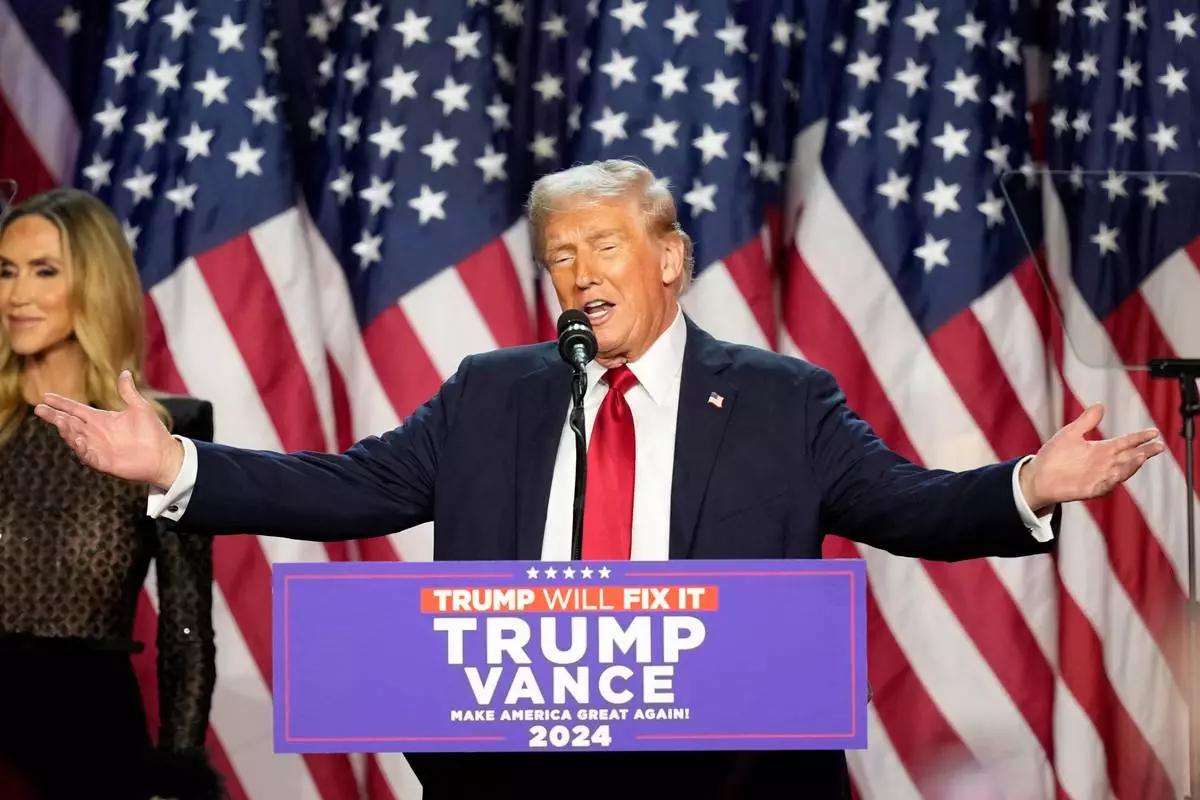
FILE - Republican presidential nominee former President Donald Trump speaks at an election night watch party, Nov. 6, 2024, in West Palm Beach, Fla. (AP Photo/Alex Brandon, File)
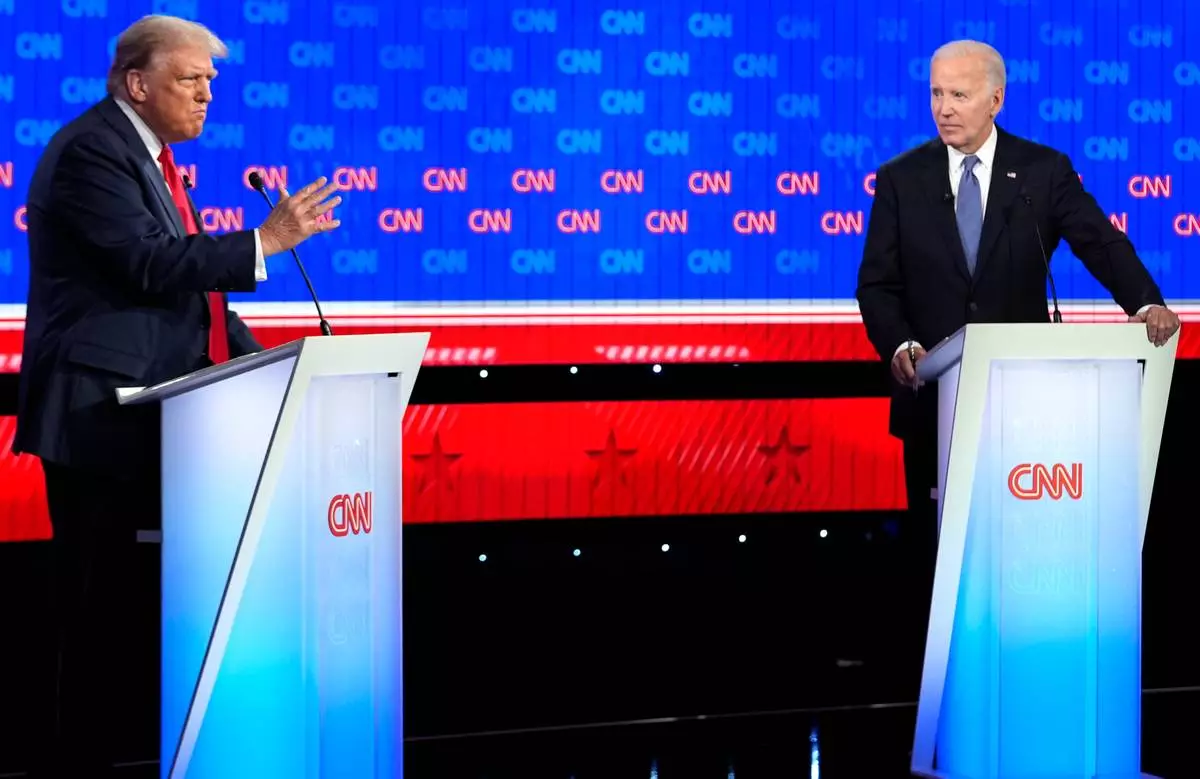
FILE - President Joe Biden, right, and Republican presidential candidate former President Donald Trump, left, participate in a presidential debate hosted by CNN, Thursday, June 27, 2024, in Atlanta. (AP Photo/Gerald Herbert)
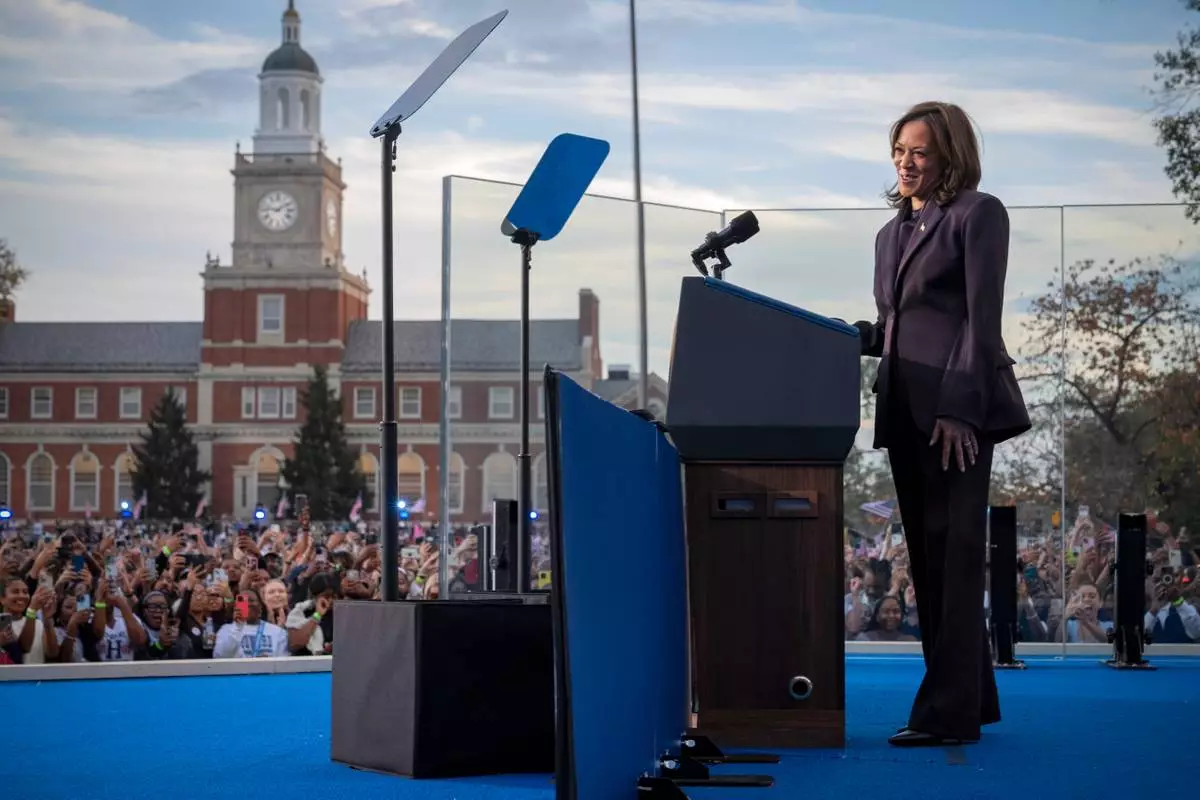
FILE - Democratic presidential nominee Vice President Kamala Harris delivers a concession speech for the 2024 Presidential election, Nov. 6, 2024, on the campus of Howard University in Washington. (AP Photo/Jacquelyn Martin, File)