Skip to Content Facebook Feature Image

Yemen's Houthi rebels are looking to gain from continuing conflict in the Middle East

News

Yemen's Houthi rebels are looking to gain from continuing conflict in the Middle East
News

News

Yemen's Houthi rebels are looking to gain from continuing conflict in the Middle East

2024-10-02 10:24 Last Updated At:10:30

CAIRO (AP) — In the days since Israel intensified its campaign against Hezbollah in Lebanon, including the strike that killed the militant group's leader Hassan Nasrallah, Yemen's Iran-backed Houthi rebels have been quick to show they are an important player in the complex conflicts convulsing the Middle East.

In a brazen attack on Saturday, the Houthis fired a ballistic missile at Israel's main airport as Prime Minister Benjamin Netanyahu was arriving back from New York, where he had addressed the United Nations. On Monday, they threatened “escalating military operations” to target Israel after apparently shooting down a U.S. military drone flying over Yemen.

And on Tuesday, an explosive-loaded drone crashed into one ship in the Red Sea as a missile exploded against another, the British military and private security officials said, the latest in the Houthis' assaults on commercial shipping in the key waterway.

The salvo of Houthi attacks has again drawn attention to the Yemeni rebels and raised questions about their goals and strategies.

The rebels, armed by Iran, seized most of Yemen’s north and its capital, Sanaa, a decade ago, pushing the country's internationally recognized government into exile.

A Saudi-led coalition backing Yemen's government entered the war in 2015 and the Houthis have since been fighting what has become a long-running but now largely stalemated civil war in Yemen.

However, when the Israel-Hamas war erupted in the Gaza Strip a year ago, the Houthis began targeting shipping throughout the Red Sea corridor — part of a campaign they say aims at pressuring Israel and the West over the war.

Analysts and observers say a widening conflict could boost the Houthis militarily and expand their already outsized role across the region — despite retaliatory strikes by Israel, the United States and the United Kingdom.

Ahmed Nagi, a senior Yemen analyst at the Crisis Group, says that before the war in Gaza, the Houthis were seen as an often-forgotten and less-prominent faction in an axis that includes Iran, Syria's government forces, Lebanon's Hezbollah, the Palestinian Hamas and other groups in the region.

That changed when the Houthis began hitting ships in the Red Sea and Gulf of Aden making their way to the Suez Canal, suddenly posing a much wider threat.

“Over the past year, the Houthis have taken center stage,” Nagi said.

After Hamas attacked southern Israel on Oct. 7, killing 1,200 people and taking some 250 hostages, Israel responded with a blistering offensive on the Gaza Strip, a coastal enclave run by the Palestinian militant group.

Israel’s retaliatory invasion of Gaza has killed more than 41,000 Palestinians and wounded more than 95,000, according to Gaza’s Health Ministry, which does not differentiate between civilians and militants in its count but says that over half of those killed are women and children.

The toll the war has taken and the extent of Gaza's destruction have shocked the world.

Meanwhile, the Houthis see the Yemenis’ prevailing solidarity with Palestinians as a useful tool for recruiting new fighters and swelling their ranks, Nagi said

In June, the Houthis unveiled a new, solid-fuel missile in their arsenal that resembles aspects of one earlier one displayed by Iran, which Tehran described as flying at hypersonic speed.

The rebels fired their new “Palestine” missile — complete with a warhead painted like a Palestinian keffiyeh checkered scarf — at the southern port of Eilat in Israel, setting off air raid sirens but causing no damage or injuries.

The extent of the Houthis' actions was a surprise to some, mainly because of their limited resources and Yemen's own costly civil war.

Nagi described their strategy as one of “gradual escalation” towards Israel. As their prominence grows, the Houthis — who have for years relied on portable missile launchers and hit-and-run tactics — will likely be eager to get their hands on more advanced weapons, he added.

The Houthis initially targeted vessels claimed to be linked to Israel and later expanded their campaign to include all commercial shipping in the Red Sea and the Gulf of Aden. They used small boats, short-range missiles and drones to carry out those attacks.

Their campaign prompted a response by an international coalition, led by the U.S. and U.K., which in February launched strikes on “sites associated with the Houthis’ deeply buried weapons storage facilities, missile systems and launchers, air defense systems and radars,” U.S. defense officials said.

In July, an Iranian-made drone launched by the Houthis struck Tel Aviv, killing one person and wounding 10. Israel responded with a wave of airstrikes on Houthi-held areas of Yemen, including the port city of Hodeida.

The Houthis have since warned they could expand their campaign beyond Mideast waters, to target ships using the longer route around the Cape of Good Hope in South Africa, or those in the Mediterranean Sea heading to Israel.

According to Faozi al-Goidi, a fellow at the Middle East Council on Global Affairs, the rebels are not likely to be deterred anytime soon and could also target vessels further out in the Indian Ocean.

They may also seek to "partner with other militias to build an alliance that would threaten security in the region,” al-Goidi said.

The New York-based Soufan Center, a think tank, said in a September report that the Houthis were increasing “operational autonomy” and diversifying their alliances away from Iran by cooperating with Russia, pointing to alleged plans for Russian weapons shipments to the Houthis that fell through.

The Houthis remain in control of most of Yemen's north where they enjoy popular support despite a dire economic situation and a brutal crackdown on dissent that has included humanitarian workers.

Their fight against Israel is likely to play into that. Thousands of Houthi supporters come out to Sanaa streets to rally every Friday, demanding justice for Palestinians and denouncing Israel and the U.S.

“Yemenis of all political backgrounds and ideologies support Palestinians and have a deep connection with them,” said Yemeni political analyst Abdel-Bari Taher. That will help grow support for the Houthis, despite the rebels' "oppressive policies against Yemenis.”

The Houthis may also seek to exploit their newfound stature following strikes against Israel in any potential negotiations with Saudi Arabia over a resolution to Yemen's civil war.

The have raised "their ceiling for negotiations,” said al-Goido. “No one will ignore them anymore.”
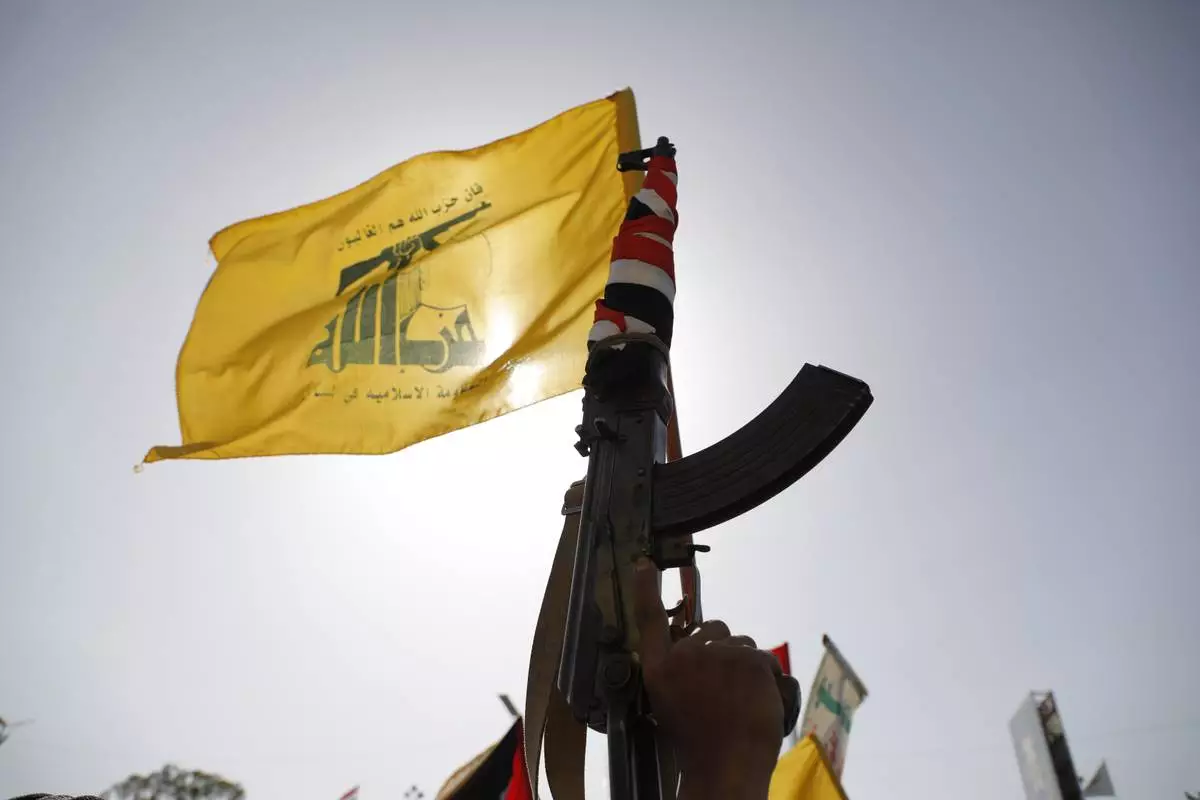
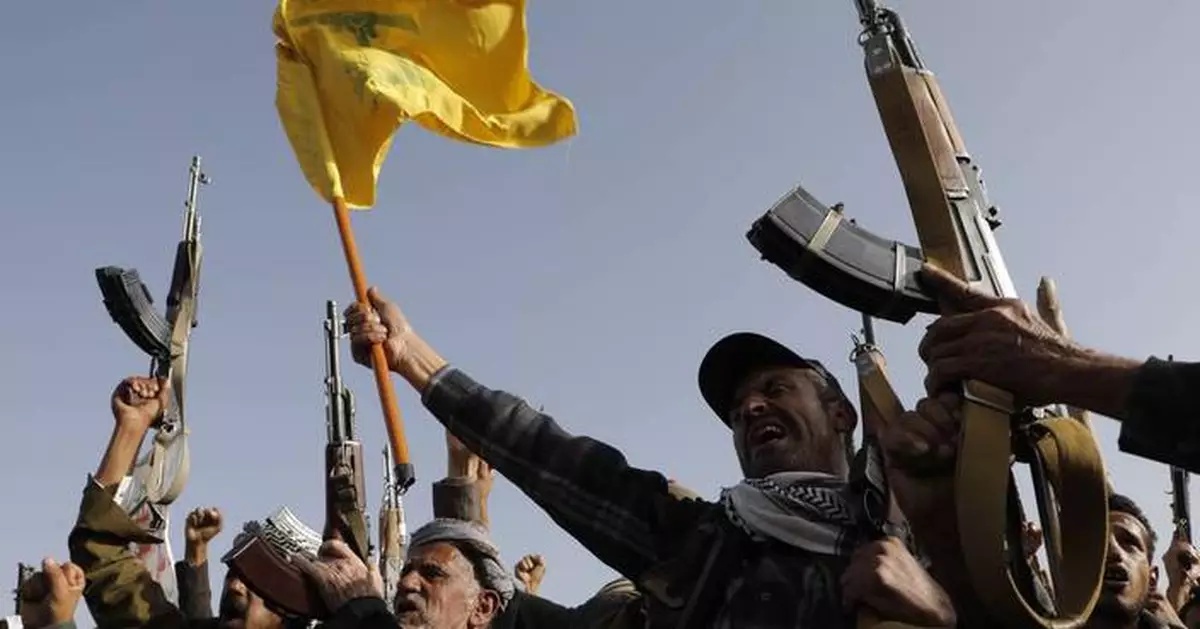
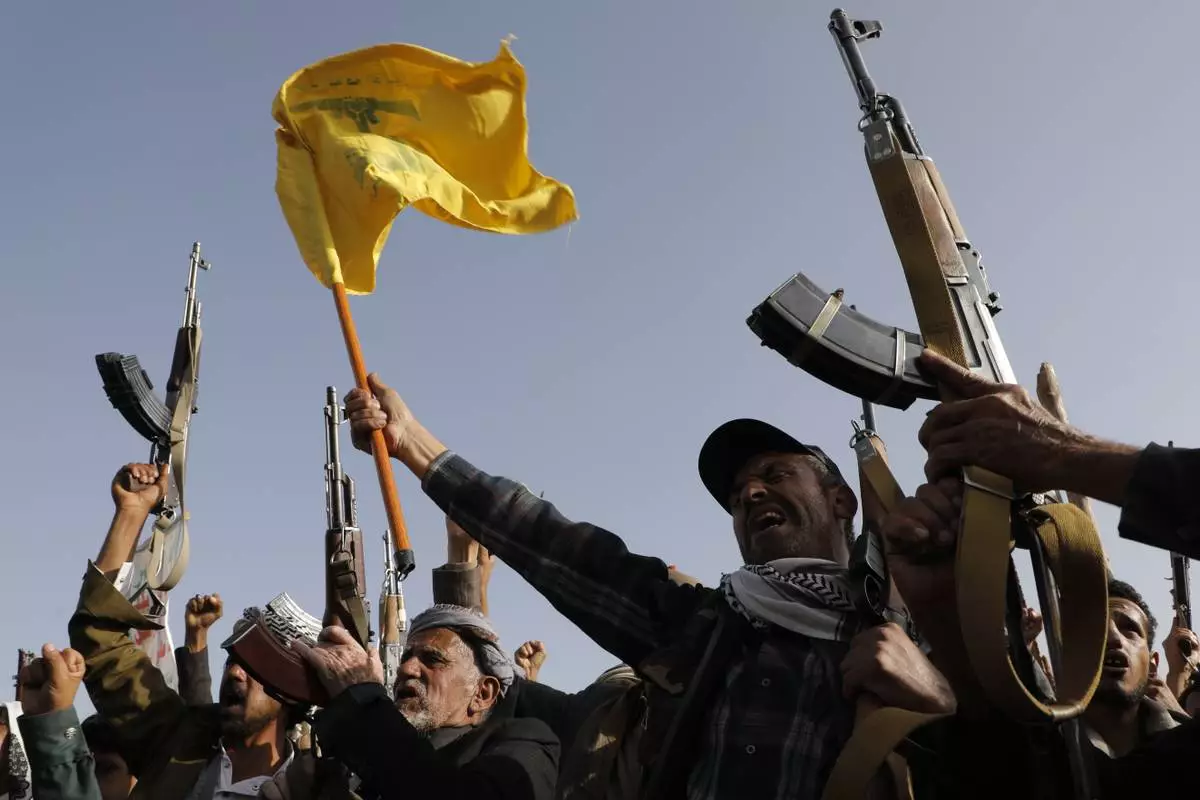
A Houthi supporter raises a Hezbollah flag during an anti-Israel and anti-U.S. rally in Sanaa, Yemen, Friday, Sept. 27, 2024. (AP Photo/Osamah Abdulrahman)
A Houthi supporter raises a Hezbollah flag during an anti-Israel and anti-U.S. rally in Sanaa, Yemen, Friday, Sept. 27, 2024. (AP Photo/Osamah Abdulrahman)

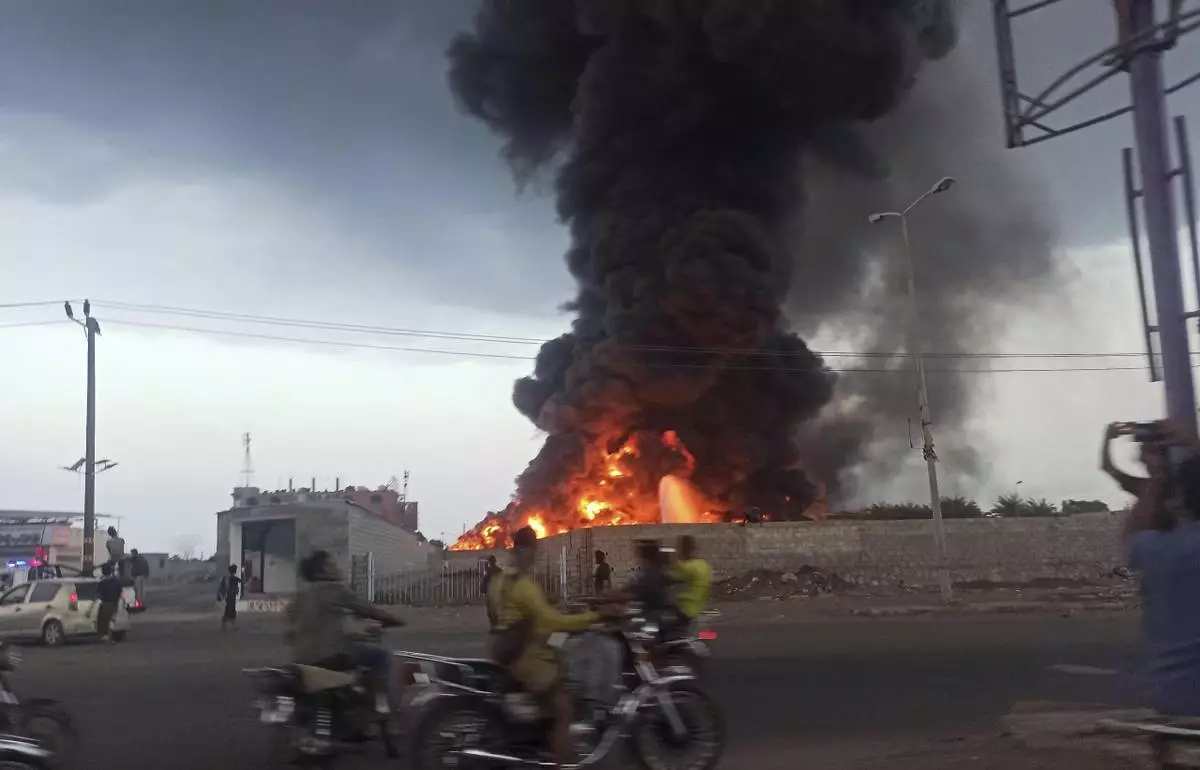
A large fire and plume of smoke is visible in the port city of Hodeida, Yemen, on Sunday, Sept. 29, 2024, after Israeli strikes on the Houthi-controlled city. (AP Photo)
A large fire and plume of smoke is visible in the port city of Hodeida, Yemen, on Sunday, Sept. 29, 2024, after Israeli strikes on the Houthi-controlled city. (AP Photo)

Houthi supporters raise a Hezbollah flag during an anti-Israel and anti-U.S. rally in Sanaa, Yemen, Friday, Sept. 27, 2024. (AP Photo/Osamah Abdulrahman)
Houthi supporters raise a Hezbollah flag during an anti-Israel and anti-U.S. rally in Sanaa, Yemen, Friday, Sept. 27, 2024. (AP Photo/Osamah Abdulrahman)
BUENOS AIRES, Argentina (AP) — Venezuelans on Saturday were scrambling to understand who is in charge of their country after a U.S. military operation that captured President Nicolás Maduro.

President Donald Trump delivered a shocking pick: The United States, perhaps in coordination with one of Maduro's most trusted aides.

Delcy Rodríguez has served as Maduro's vice president since 2018, overseeing much of Venezuela's oil-dependent economy as well as its feared intelligence service. But she is someone the Trump administration apparently is willing to work with, at least for now.

“She’s essentially willing to do what we think is necessary to make Venezuela great again,” Trump told reporters of Rodríguez, who faced U.S. sanctions during Trump’s first administration for her role in undermining Venezuelan democracy.

In a major snub, Trump said opposition leader Maria Corina Machado, who was awarded last year's Nobel Peace Prize, didn't have the support to run the country.

Trump said Rodríguez had a long conversation with Secretary of State Marco Rubio in which Trump claimed she said, “‘We’ll do whatever you need.’”

“I think she was quite gracious,” Trump added. “We can’t take a chance that somebody else takes over Venezuela that doesn’t have the good of the Venezuelan people in mind.”

Rodríguez tried to project strength and unity among the ruling party's many factions, downplaying any hint of betrayal. In remarks on state TV, she demanded the immediate release of Maduro and his wife, Cilia Flores, and denounced the U.S. operation as a flagrant violation of the United Nations charter.

“There is only one president in this country, and his name is Nicolás Maduro," Rodríguez said, surrounded by top civilian officials and military commanders.

There was no immediate sign that the U.S. was running Venezuela.

“What will happen tomorrow? What will happen in the next hour? Nobody knows,” Caracas resident Juan Pablo Petrone said.

Trump indicated that Rodríguez had been sworn in already as president of Venezuela, per the transfer of power outlined in the constitution. However, state television has not broadcast any swearing-in ceremony.

In her televised address, Rodríguez did not declare herself acting president or mention a political transition. A ticker at the bottom of the screen identified her as the vice president. She gave no sign that she would be cooperating with the U.S.

“What is being done to Venezuela is an atrocity that violates international law,” she said. “History and justice will make the extremists who promoted this armed aggression pay.”

The Venezuelan constitution also says a new election must be called within a month in the event of the president’s absence.

But experts have been debating whether the succession scenario would apply here, given the government’s lack of popular legitimacy and the extraordinary U.S. military intervention.

Venezuelan military officials were quick to project defiance in video messages.

“They have attacked us but will not break us,” said Defense Minister Gen. Vladimir Padrino López, dressed in fatigues.

Interior Minister Diosdado Cabello appeared on state TV in a helmet and flak jacket, urging Venezuelans to “trust in the political leadership and military” and “get out on the streets” to defend the country’s sovereignty.

“These rats attacked and they will regret what they did,” he said of the U.S.

A lawyer educated in Britain and France, Rodríguez has a long history of representing the revolution started by the late Hugo Chávez on the world stage.

She and her brother, Jorge Rodríguez, head of the Maduro-controlled National Assembly, have strong leftist credentials born from tragedy. Their father was a socialist leader who died in police custody in the 1970s, a crime that shook many activists of the era, including a young Maduro.

Unlike many in Maduro’s inner circle, the Rodríguez siblings have avoided criminal indictment in the U.S. Delcy Rodríguez has developed strong ties with Republicans in the oil industry and on Wall Street who balked at the notion of U.S.-led regime change.

Among her past interlocutors was Blackwater founder Erik Prince and, more recently, Richard Grenell, a Trump special envoy who tried to negotiate a deal with Maduro for greater U.S. influence in Venezuela.

Fluent in English, Rodríguez is sometimes portrayed as a well-educated moderate in contrast to the military hardliners who took up arms with Chávez against Venezuela's democratically elected president in the 1990s.

Many of them, especially Cabello, are wanted in the U.S. on drug trafficking charges and stand accused of serious human rights abuses. But they continue to hold sway over the armed forces, the traditional arbiter of political disputes in Venezuela.

That presents major challenges to Rodríguez asserting authority. But experts say that Venezuela’s power brokers have long had a habit of closing ranks behind their leaders.

“These leaders have all seen the value of staying united. Cabello has always taken a second seat or third seat, knowing that his fate is tied up with Maduro’s, and now he very well might do that again,” said David Smilde, a sociology professor at Tulane University who has conducted research into Venezuela's political dynamics over the past three decades.

“A lot depends on what happened last night, which officials were taken out, what the state of the military looks like now," Smilde said. "If it doesn’t have much firepower anymore, they’re more vulnerable and diminished and it will be easier for her to gain control.”

Shortly before Trump's press conference, Machado, the opposition leader, called on her ally Edmundo González — a retired diplomat widely considered to have won the country’s disputed 2024 presidential election — to “immediately assume his constitutional mandate and be recognized as commander-in-chief."

In an triumphant statement, Machado promised that her movement would “restore order, free political prisoners, build an exceptional country and bring our children back home.”

She added: “Today we are prepared to assert our mandate and take power."

Asked about Machado, Trump was blunt: “I think it would be very tough for (Machado) to be the leader," he said.

“She doesn’t have the support or respect within the country.”

Venezuelans expressed shock, with many speculating on social media that Trump had mixed up the two women's names. Machado has not responded to Trump's remarks.

Goodman reported from Miami.

Venezuelan Vice President and Oil Minister Delcy Rodriguez gives a press conference at the Miraflores presidential palace in Caracas, Venezuela, March 10, 2025. (AP Photo/Ariana Cubillos, File)

Venezuelan Vice President and Oil Minister Delcy Rodriguez gives a press conference at the Miraflores presidential palace in Caracas, Venezuela, March 10, 2025. (AP Photo/Ariana Cubillos, File)

A supporter of Venezuelan President Nicolas Maduro stands on a median strip waving a national flag in Caracas, Venezuela, Saturday, Jan. 3, 2026, after U.S. President Donald Trump announced that Maduro had been captured and flown out of the country. (AP Photo/Ariana Cubillos)

A supporter of Venezuelan President Nicolas Maduro stands on a median strip waving a national flag in Caracas, Venezuela, Saturday, Jan. 3, 2026, after U.S. President Donald Trump announced that Maduro had been captured and flown out of the country. (AP Photo/Ariana Cubillos)

Recommended Articles