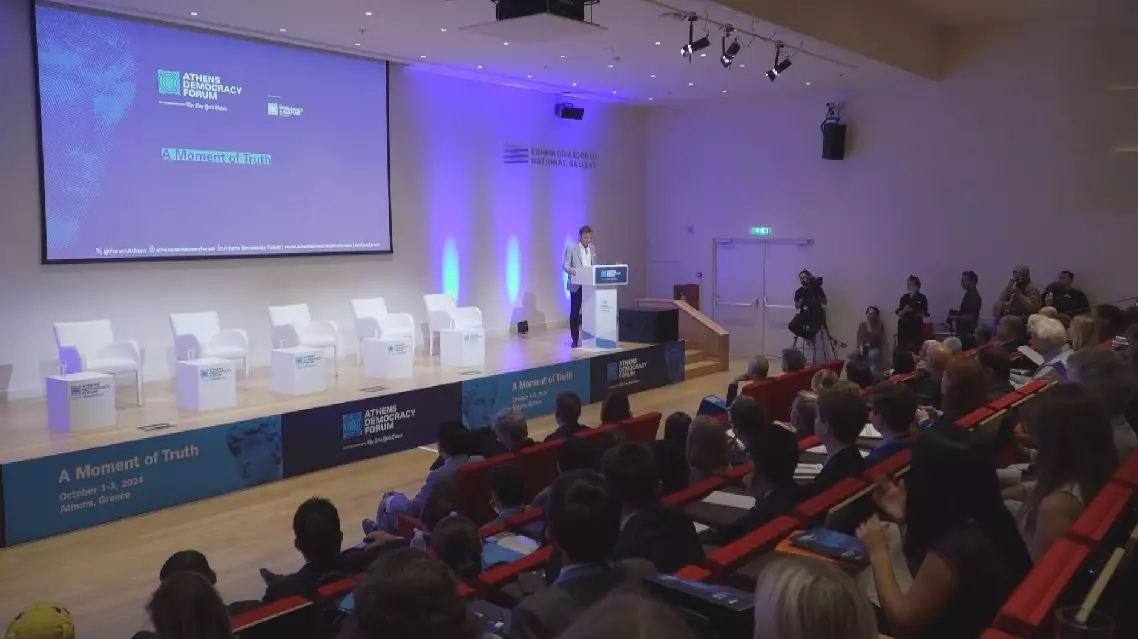
Chinese scholars are spotlighting the concept of whole-process people's democracy at the ongoing Athens Democracy Forum in the Greek capital, presenting China's tried-and-tested approach to engaging citizens in addressing contemporary challenges.
The three-day Athens Democracy Forum opened on Oct 1, featuring a dialog between Wang Huiyao, the founder and president of the Center for China and Globalization, and Jeffrey D. Sachs, the director of the Center for Sustainable Development at Columbia University. Their discussion, titled the Aristotle-Confucius Dialog, explored the similarities and differences between Eastern and Western philosophies.
Wang highlighted the unprecedented challenges posed by the rise of populism and nationalism to globalization, yet maintained that globalization remains a vital and resilient trend. He also advocated for drawing lessons from ancient civilizations to address modern issues.
"I think the meaning of that is very important. We have this ancient philosophy, we seek their wisdom, we seek their ideas. How we can make peace, make our world working and make democracy work," said Wang.
Wang also shared insights on China's successful experience in poverty alleviation.
"A high moral standard, high moral responsibility that the government has really placed [is] a very important task and mandate for officials to perform at all levels. That's why China can lift 800 million people out of poverty and making China the second largest company in just a record time," said Wang.
Mo Jihong, director of the Institute of Law at the Chinese Academy of Social Sciences, further delved into the concept of whole-process people's democracy and its embodiment of socialist democratic principles suited to Chinese characteristics at the forum.
The Athens Democracy Forum, convened since 2013, aims to serve as a guiding beacon for democracy and societal reorientation.
Chinese scholars illuminate whole-process people’s democracy at Athens forum
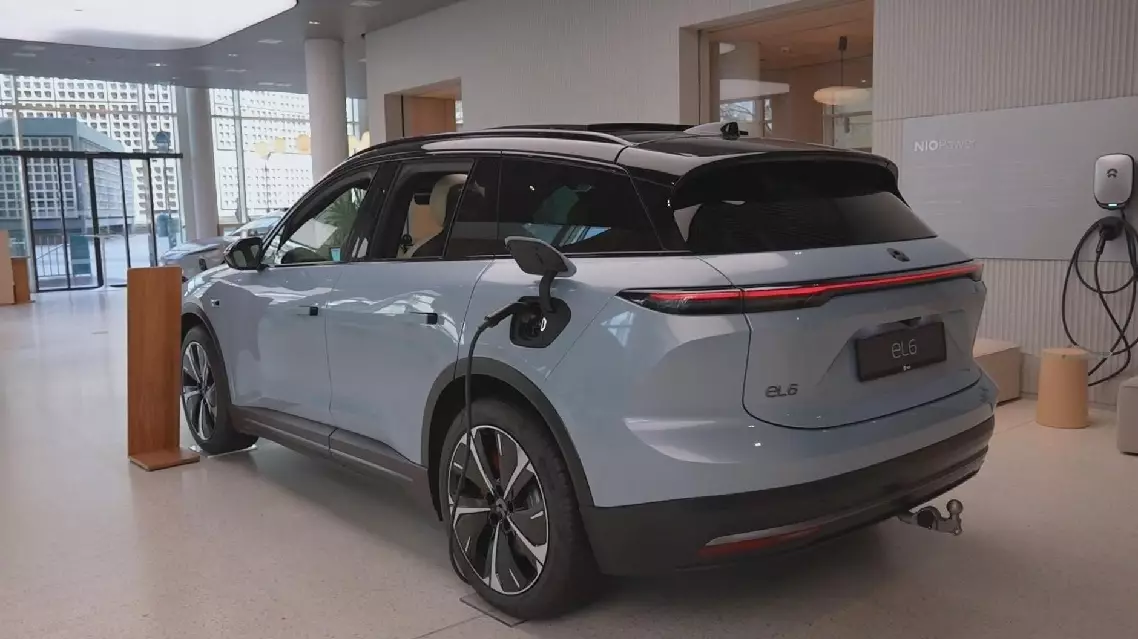
An increasing number of German consumers are considering buying electric vehicles (EVs) in the face of high fuel prices, according to a recent survey by the largest German online car trading platform, mobile.de.
As the Middle East tensions continue to drive up international oil and gas prices, the cost of automotive fuel has been rising steadily in many European countries.
According to fuel price data compiled by the German Association of the Automotive Industry, since the United States and Israel launched military strikes against Iran on February 28, gasoline prices in Germany have risen by nearly 20 percent, while diesel prices have shot up by more than 30 percent.
Results from a recent survey by mobile.de show that if gasoline prices remain at current high levels, 43 percent of respondents said they would switch to EVs, and 36 percent cited long-term cost savings as the most important reason for considering an EV purchase.
Additionally, the platform's data show that inquiries about used EVs surged by 66 percent in the first half of March.
"We are absolutely seeing much more interest on mobile.de for electric cars. What the German energy transition couldn't do, this current geopolitical situation has done in terms of transition to electric cars," said Ajay Bhatia, CEO of mobile.de.
In addition to high oil prices, government subsidies are also a key factor driving German consumers to consider purchasing EVs.
The German government announced the resumption of subsidies in January of this year, planning to invest 3 billion euros over the next few years to provide purchase subsidies for some 800,000 EVs.
Driven by the combined effects of high oil prices and subsidy policies, German consumers' interest in EVs has grown clearly. However, it remains to be seen whether this shift will evolve into a more sustained market trend.
"How long it will stay is anyone's guess, but at the moment we're absolutely seeing an increase, and sometimes these transitions need a catalyst. And this is definitely a catalyst that is seeing the transition to electric cars speed up," said Bhatia.
More Germans interested in buying EVs due to high oil prices: survey