Three generations of an ethnic Miao embroidery family from southwest China's Guizhou Province have dedicated themselves to inheriting and promoting the traditional embroidery techniques and have successfully brought the Chinese intangible heritage to the world stage.
As a province with 49 ethnic minority groups, Guizhou is rich in cultural heritage resources and boasts a diverse range of intangible cultural assets including the celebrated Miao embroidery custom, a folk art belonging to the Miao ethnic group which is known for its varied needlework as well as its bold and bright colors.
Featuring butterflies, dragons, flying birds, crabs and flowers, Miao embroidery works are often referred to as "history books worn on the body" that mostly document local history and culture.
Seventy-three-year-old Shi Yangjiu is one of the inheritors. The Guizhou-native first started to learn the ways of the needle and stitching at the age of 11, carefully under the tutelage of her mother. Ultimately, she passed that down to her own daughter, Shi Chuanying, when she was just eight years old.
Today, Shi Chuanying has grown up and is already well-known throughout the global fashion industry.
"My mother thinks that I do a better job than she did back then. Color and craftsmanship reflect a person's talents. My mother also taught me a lot about them. My maternal grandmother was also a master of embroidery back in her time," said Shi Chuanying.
Ever since the 1990s, Shi Yangjiu has refused to let this generational craft and heritage be lost in the mountains. This sparked an idea of taking her handcrafted pieces to the market.
"My mother started up this business in her 30s. It enabled her to raise four children. My elder sister and I graduated from a junior middle school, and both of my younger brothers graduated from universities. We didn't owe a penny. At that time, most people in the countryside needed to borrow money to send their children to school, but my mother used the money to do business, do embroidery, and even go to the international market to hire embroiders," said Shi Chuanying.
Shi Chuanying has successively developed a series of products such as Miao costumes that combine traditional embroidery handicrafts with fashion trends. These exquisite items are quite the hit with domestic and foreign merchants.
Shi Chuanying now runs a successful embroidery business and has also helped more than 300 local embroiderers. Over the years, the Miao embroidery team has visited many countries including France and Italy to promote Chinese culture.
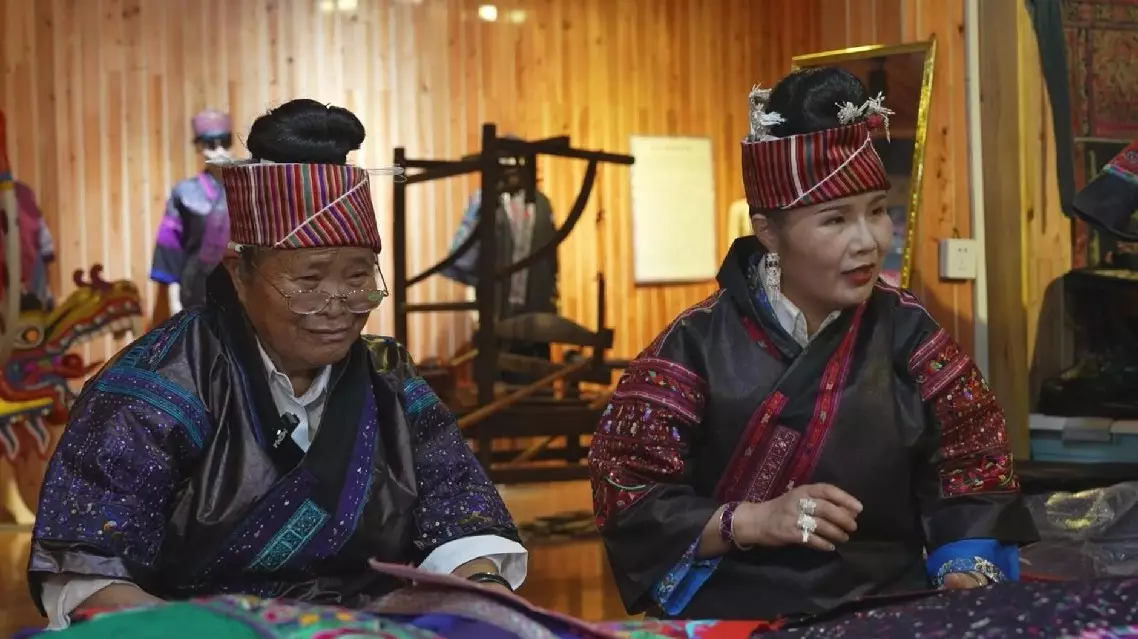
Ethnic Miao embroidery arts pass down from generation to generation