A Chinese envoy to the United Nations (UN) on Thursday called on all Somali parties to keep up the momentum, strengthen dialogue and unity, and stay committed to resolving differences through dialogue.
In remarks at the UN Security Council briefing on Somalia, Dai Bing, China's deputy permanent representative to the United Nations, noted that in recent years, Somalia has made important headway in national reconstruction and peace and security, and both the UN and African Union (AU) missions have entered a critical transition period.
Click to Gallery
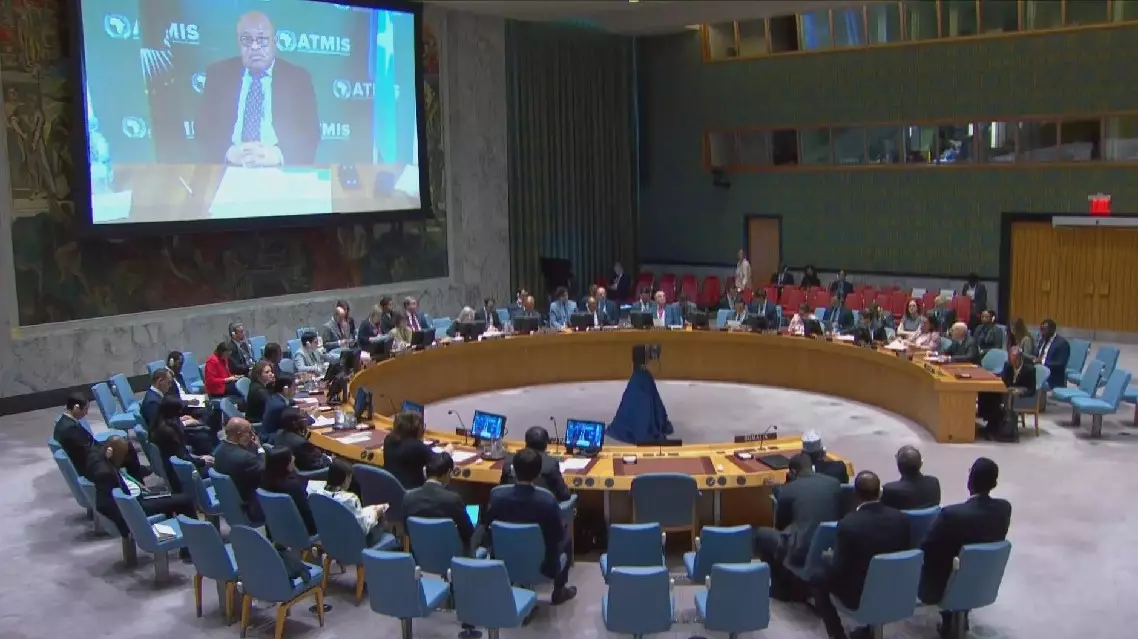
Chinese envoy urges Somali parties to stay committed to resolving differences through dialogue
Chinese envoy urges Somali parties to stay committed to resolving differences through dialogue
Chinese envoy urges Somali parties to stay committed to resolving differences through dialogue
Chinese envoy urges Somali parties to stay committed to resolving differences through dialogue
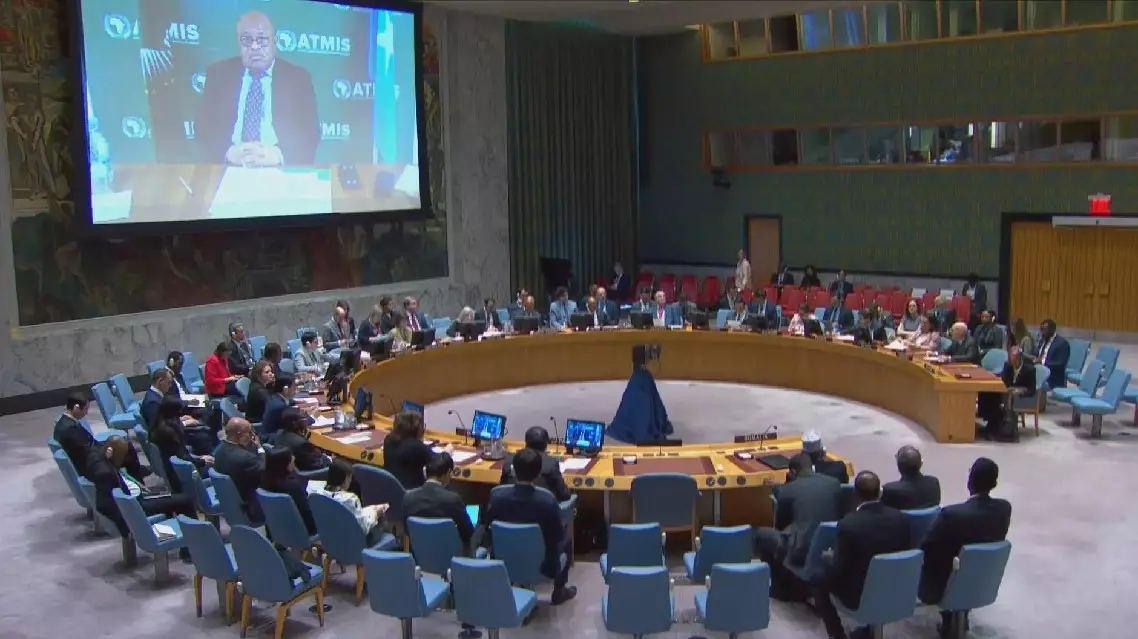
Chinese envoy urges Somali parties to stay committed to resolving differences through dialogue
At this important stage, the support and assistance of the international community cannot relax, Dai said.
He emphasized three points -- maintaining the overall situation of political stability; strengthening the foundation of security transition; and advancing UNSOM (UN Assistance Mission in Somalia) transition in an orderly manner.
Underscoring that the Somali federal government has maintained communication with the governments of federal member states and reached important consensus on the constitution, elections, and political parties, the ambassador said, "We expect all Somali parties to keep up the momentum, strengthen dialogue and unity, and stay committed to resolving differences through dialogue. China has consistently supported the efforts of the Somali government to safeguard national unity, sovereignty, and territorial integrity, and calls on the international community to support the country in exploring a development path that suits its national conditions, and provide guarantees for Somalia to embark on the path of long-term and stable development."
James Swan, acting Special Representative of the Secretary-General and Head of the UN Assistance Mission in Somalia (UNSOM), briefed on the Secretary-General’s latest 120-day report on the implementation of the mission's mandate, in which it documented 850 security incidents, resulting in at least 670 casualties.
The Chinese envoy said that the Secretary-General's report reflects a significant security threat posed by terrorism. China fully recognizes the Somalian government efforts in combating terrorism and calls on the international community to provide more support for Somalia's security capacity building.
Dai noted that in the next phase, ATMIS (African Union Transition Mission in Somalia) will transition into a new AU mission, and expressed the hope that Somalia, the AU, the UN, and others will strengthen their communication and coordination to reach consensus on new mission arrangements and to ensure the smooth progress of the relevant work.
He stated that under-funding is an important challenge to AU missions' mandate performance, and he called on the European Union and other traditional donors to maintain their funding for the new mission and continue to contribute to the security and stability of Somalia.
Dai also urged the Security Council to respond to the initiative of the AU and actively study various effective options to provide sustainable and predictable financial support for the new mission. Noting that the Somali government has repeatedly called for the transition of UNSOM to a UN country team, and has recently submitted a two-year transition proposal to the Security Council, the ambassador called on the council to use this as a base and, in line with Somalia's national development priorities, adjust and streamline UNSOM's mandate, with a view to ensuring a smooth and orderly transition.
"China supports the peace and development process in Somalia, as well as the enhancement of Somalia's capacity for autonomous development, counter-terrorism, and stability. We will continue to provide support to international peacekeeping operations in Somalia. China is willing to work with the international community to continue to contribute to lasting peace and sustainable development in Somalia," Dai stated.
Chinese envoy urges Somali parties to stay committed to resolving differences through dialogue
Chinese envoy urges Somali parties to stay committed to resolving differences through dialogue
Chinese envoy urges Somali parties to stay committed to resolving differences through dialogue
Chinese envoy urges Somali parties to stay committed to resolving differences through dialogue
Chinese envoy urges Somali parties to stay committed to resolving differences through dialogue