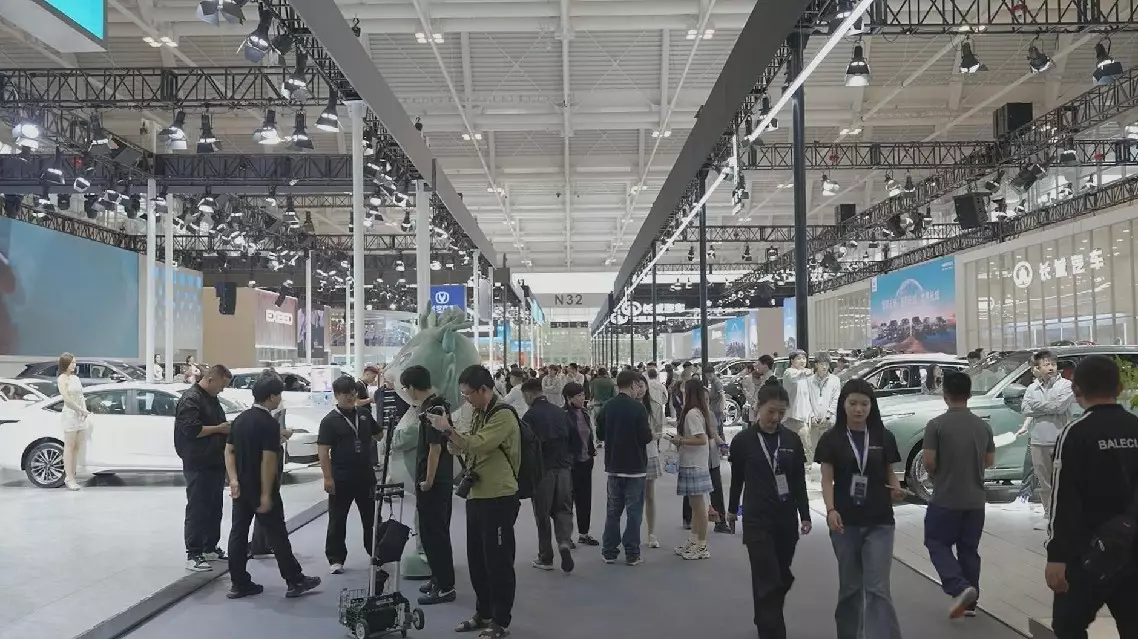
Major auto shows have been held in many Chinese cities for the ongoing National Day holiday, attracting a lot of interested customers to sign orders for new energy vehicles with strong discounts provided by car companies and the national trade-in subsidies.
The China Motor Show 2024 is being held from Sept 29 to 0ct 5 at the National Convention and Exhibition Center in north China's Tianjin Municipality. The exhibition was bustling and hustling on Tuesday, the first day of the week-long National Day holiday.
The seven-day auto show has brought together nearly 100 car brands from across China and all over the world. About half of the vehicles on display are new energy powered. New products and technologies featuring the concept of "green and energy saving" are particularly attractive to possible buyers.
China has been promoting a nationwide trade-in program to support consumers to replace old cars that are high in energy consumption, emissions and safety risks with new energy vehicles or energy-saving ones.
The country rolled out a new round of trade-in policies to further raise subsidies for purchasing passenger cars in late August. Subsidy for trade-ins of new energy passenger vehicles has doubled from 10,000 yuan (about 1,418 U.S. dollars) -- a figure stipulated in an April document -- to 20,000 yuan, and subsidy for trade-ins of fuel passenger vehicles has also risen from 7,000 yuan to 15,000 yuan.
Posters introducing the trade-in policies can be seen everywhere at the motor show in Tianjin. If the buyers order on the spot, they can enjoy both reduced prices and state subsidies.
"We have targeted a car online. There is a motor show right here in Tianjin during the National Day holiday, so we especially come here to learn more about the car. It happened that the country has expanded the trade-in subsidies, so we decide to buy it here today as it is much cheaper," said Sun Mingyue, a local.
The six-day 2024 International Automobile Trade Fair was kicked off on Sunday in Shenyang City, northeast China's Liaoning Province. The event has seen the launch of nearly 30 new car models.
New energy vehicles have occupied most of the booths and also recorded more trading orders at the event.
"New energy vehicles give me a strong sense of science and technology, very cool. And they have lower costs. The government has subsidies, and the car companies have big discounts for each model. So I have placed a decisive order for a car that I like and have a pretty appearance," said Li Man, a local resident.
Trade-in subsidies, benefits from car companies and special discounts at the exhibition have combined to attract more than 450,000 visitors until Friday, with the transaction value exceeding 2.1 billion yuan (about 298 million U.S. dollars).
New energy vehicles highly favored at auto shows across China
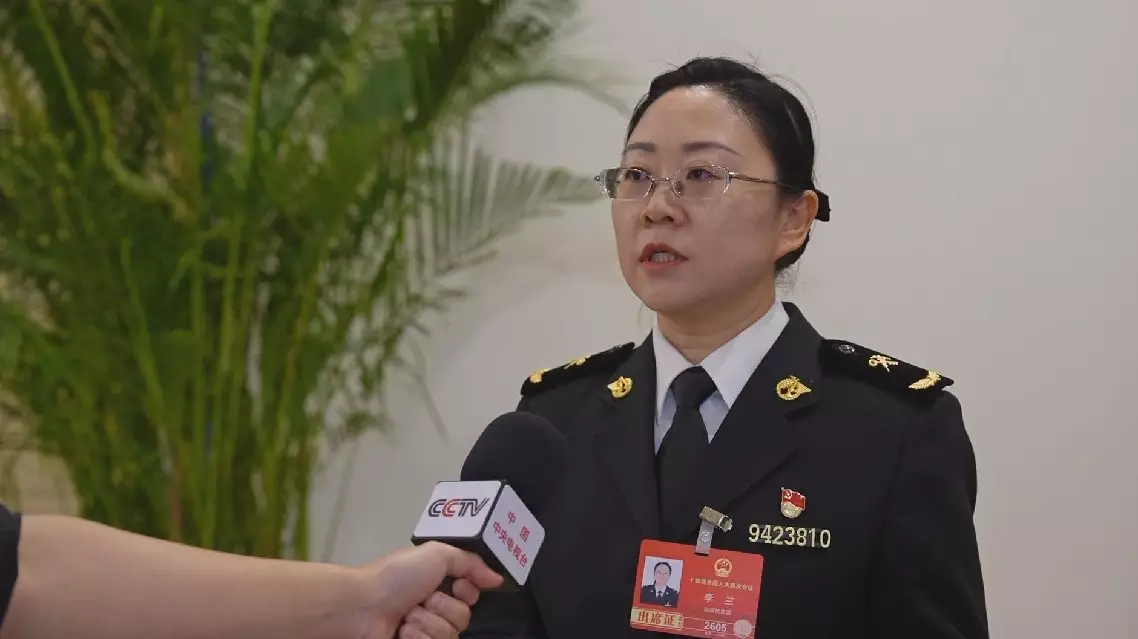
Li Lan, a deputy to the 14th National People's Congress (NPC), said that the infrastructure at the Alashankou port, also known as Alataw Pass, a major railway port in northwest China's Xinjiang Uygur Autonomous Region, should be further upgraded and used intensively and efficiently to better support the high-quality development of foreign trade.
Located on the border with Kazakhstan, the Alashankou port serves as a key transportation corridor linking China with Central Asia and Europe. Freight services passing through Alashankou now cover 128 routes, connecting China with 21 countries. Cargo carried ranges from auto parts and electronic products to daily consumer goods, according to customs data.
Li, director of the port's customs technical center, has witnessed profound changes of the land port amid the country's opening-up drive.
As an important gateway opening up to the west, the Alashankou port has become one of the fastest-growing ports in terms of the foreign trade cargo throughput since the Belt and Road Initiative (BRI) was proposed by China. While performing her duties as an NPC deputy during the past year, Li focused on addressing the pain points facing foreign trade enterprises in their process for customs clearance.
"We have also conducted market research in Central Asia. Initially, we thought that our infrastructure was significantly superior to theirs. However, in recent years, their infrastructure has greatly been modernized and highly efficient. Also, their customs clearance efficiency has improved rapidly. On the other side, I think our infrastructure, including customs clearance capabilities, needs to be enhanced and further improved," said Zheng Jiahong, the person in charge of a local enterprise.
Through field research, Li discovered that a lack of standardized provisions regarding regarding the number of channels at ports of different levels, the configuration of inspection facilities and equipment, the layout of functional areas, operational procedures, and human resource guarantee significantly constrained customs clearance efficiency at the port, thereby adding burdens to logistics companies.
"In international trade, the logistics cycle is a key factor affecting the profits of foreign trade enterprises. It's safe to say that every hour, every minute counts on our cost. Saving time essentially means increasing corporate profits," said Shan Pu, the person in charge of a logistics enterprise in Alashankou City.
Xinjiang boasts 16 of the 101 land ports across China. In Li's research, she found that the primary entities responsible for port construction in various regions are often prefecture-level or even county-level governments, leading to a lack of unified standards for first-class port construction, which makes it more challenging to meet the growing demands of foreign trade development.
In her proposal to this year's NPC session, Li suggests that the National Standards for the Construction of Port Inspection Infrastructure should be revised at a faster pace at the national level, so as to provide scientific guidance for the construction of ports across the country and enable them to adapt to the increasing demands of imports and exports.
"During this year's 'two sessions', while exchanging views with several deputies from the delegation of Xinjiang, I noticed a shared aspiration that everyone is eager for Xinjiang to make greater contributions to the country's overall plan of opening up to the west. Through my thorough and in-depth research, I hope that the relevant ministries and commissions will expedite the formulation of a new edition of the National Standards for the Construction of Port Inspection Infrastructure. This will enable the upgrading of our ports, better equipping them to meet the demands of high-quality development in the country's foreign trade sector in the future," Li said.
The "two sessions" refer to the annual meetings of China's top legislature -- the National People's Congress (NPC), and the top political advisory body -- the National Committee of the Chinese People's Political Consultative Conference (CPPCC).
The 14th NPC opened its fourth session on Thursday in Beijing.
NPC deputy calls for infrastructure upgrades of land ports in Xinjiang