Skip to Content Facebook Feature Image

Enhancing regional connectivity, advancing economic integration high on agenda of ASEAN Summits

China

China

China

Enhancing regional connectivity, advancing economic integration high on agenda of ASEAN Summits

2024-10-08 16:32 Last Updated At:17:37

Enhancing regional infrastructure connectivity and advancing economic integration are high on the agenda of the 44th and 45th ASEAN Summits and Related Summits running from Oct 8 to 11 in Vientiane, the capital of Laos.

Under the theme "ASEAN: Enhancing Connectivity and Resilience," the summits, gathering around 2,000 delegates and approximately 1,000 journalists, feature more than 20 meetings. Discussions will focus on enhancing regional infrastructure connectivity, narrowing the development gap, advancing economic integration, and promoting people-to-people exchanges to strengthen relations between ASEAN member countries and other nations while addressing current opportunities and challenges.

The meetings will be attended by heads of state and government from ASEAN member countries, dialogue partner countries and external partner countries, as well as representatives of regional and international organizations.

Economic and trade exchanges between China and ASEAN have become increasingly closer over the past years, with China remaining as ASEAN's largest trading partner for 15 years since 2009. The latest statistics from China's General Administration of Customs show that ASEAN has been China's largest trading partner in the first eight months of 2024, with a 10 percent year-on-year increase in the volume of imports and exports from China to ASEAN.

Participants said that promoting the high-quality development of the Belt and Road Initiative, strengthening cooperation in various sectors under the Regional Comprehensive Economic Partnership, and advancing negotiations on a new round of upgrades for the China-ASEAN Free Trade Area will create new opportunities for the integration of regional economies.

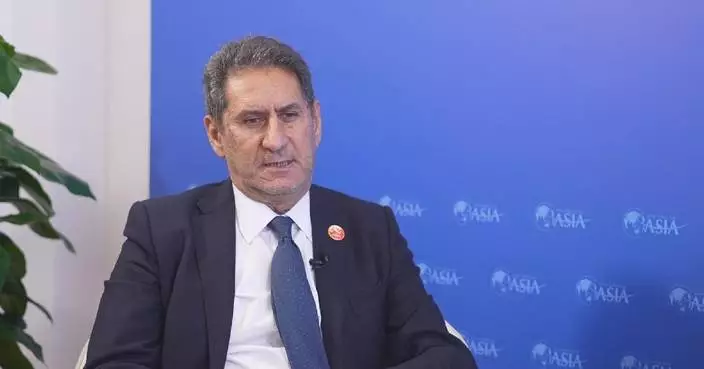
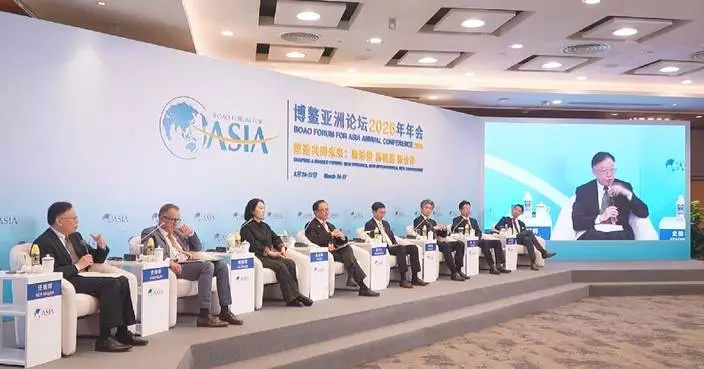
"With this regional integration, with logistics and the Belt and Road Initiative, we can bring ASEAN to be the center point as a hub or center for the big company to open their headquarters or manufacturing hub in ASEAN or Laos. Apart from that it also provides opportunities for technology transfer and human resource development, because integrating with the advanced economies like China, Japan, South Korea, Australia and others will help the local economy learn from the advanced technologies," said Thanongsinh Kanlaya, executive vice chairman of the Lao National Chamber of Commerce and Industry.

"Advancing regional integration could help reduce costs and taxes, which has allowed us to mobilize the entire industrial chain in Laos and the surrounding countries," said Wu Xinghua, executive vice chairman of the Lao-Chinese Chamber of Commerce.

Enhancing regional connectivity, advancing economic integration high on agenda of ASEAN Summits

Enhancing regional connectivity, advancing economic integration high on agenda of ASEAN Summits


Enhancing regional connectivity, advancing economic integration high on agenda of ASEAN Summits
Enhancing regional connectivity, advancing economic integration high on agenda of ASEAN Summits
Iran on Monday publicly rejected a core U.S. demand to cease all uranium enrichment, while projecting a dual-track strategy of guarded diplomatic engagement and reinforced military preparedness.

The moves came as the indirect Iran-US talks in Oman's Muscat last week yielded no breakthrough and regional tensions continued to simmer.

On Monday, Mohammad Eslami, president of the Atomic Energy Organization of Iran, said that while Iran could consider diluting its 60-percent enriched uranium, it would only do so if all international sanctions were first lifted.

Eslami also dismissed past proposals to ship the material abroad for safekeeping.

Iranian President Masoud Pezeshkian and Foreign Minister Seyed Abbas Araghchi echoed this line on Monday, reaffirming Tehran's strategy of engaging in talks while refusing to concede on what Iran views as sovereign rights.

Pezeshkian and Araghchi have described the Muscat talks as a "good start" but warned that diplomacy must be based on "respect, not coercion."

In a televised speech on Monday, Iran's Supreme Leader Ali Khamenei urged Iranians to show unity and "disappoint the enemy" ahead of the 47th anniversary of the 1979 Islamic Revolution, amid rising tensions with the United States.

Meanwhile, Ali Larijani, secretary of Iran's Supreme National Security Council, is set to lead a delegation to visit mediator Oman on Tuesday.

Simultaneously, Iran has signaled a shift toward greater military opacity. Iran's state news agency IRNA said in a report on Sunday that the Defense Ministry has halted all public displays of new weaponry "for security reasons and to safeguard the principle of surprise," a move widely interpreted as preparing for potential conflict.

Positions from the United States and Israel have appeared equally firm. A report on Sunday by Israel's Channel 15 said the United States had privately messaged Iran, seeking Iran's "concessions" in the next round of talks, and expecting "serious and meaningful content."

On Monday, The Jerusalem Post, citing Israeli defense officials, reported that Israel has warned the U.S. it "will strike alone" if Iran crosses its "red lines" on ballistic missiles.

Israeli Prime Minister Benjamin Netanyahu's office said on Sunday that he will meet with U.S. President Donald Trump on Feb 11 in Washington, and will discuss the U.S.-Iran negotiations.

Netanyahu is expected to demand that the U.S. promote the transfer of Iran's enriched uranium out of the country and restrict Iran's ballistic missile capabilities.

Iran rejects zero enrichment, projects dual-track posture amid stalled talks with U.S.

Iran rejects zero enrichment, projects dual-track posture amid stalled talks with U.S.

Recommended Articles