China's cross-border e-commerce imports and exports demonstrated robust growth in the first three quarters of this year, reaching a total of 1.88 trillion yuan (about 260 billion U.S. dollars), up 11.5 percent year on year, according to customs data released on Monday.
Within this period, the e-commerce exports stood at 1.48 trillion yuan (around 210 billion U.S. dollars), marking a 15.2 percent increase year on year, of which the import experienced a slight decline of 0.4 percent to reach 399.16 billion yuan (about 56.21 billion U.S. dollars), according to data from the General Administration of Customs of China.
In terms of product categories, exports were dominated by clothing, footwear, accessories, jewelry, home textiles, and electronic items such as mobile phones. The imports were mainly cosmetics, personal care products, and fresh food items.
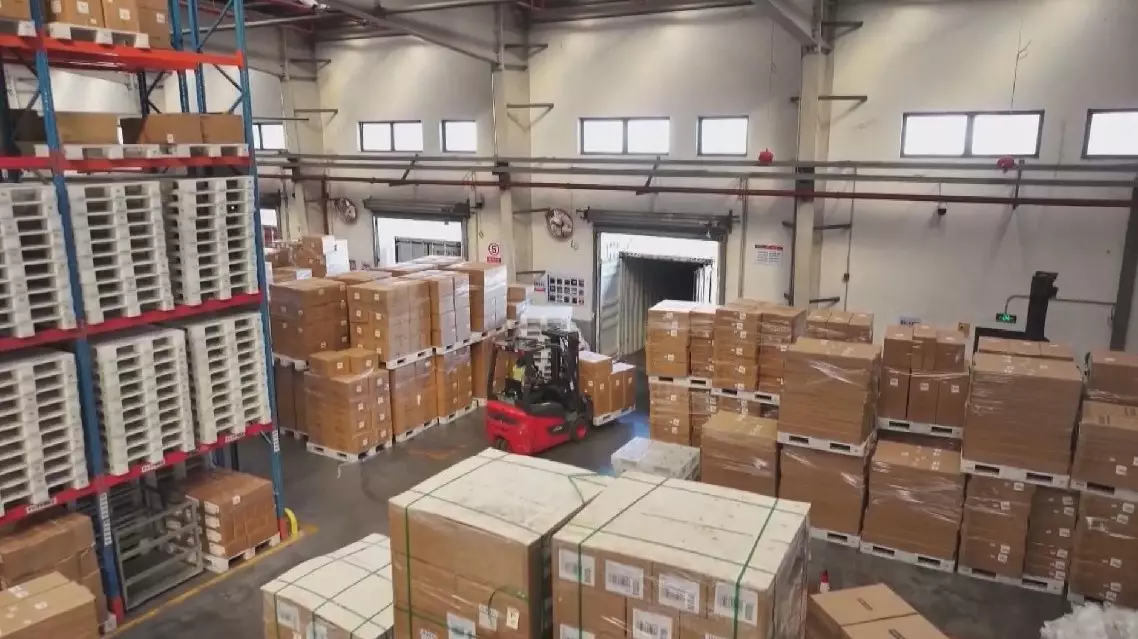
China's cross-border e-commerce trade sees robust growth in first three quarters
China is expected to handle 5.08 billion domestic passenger trips in total as this year's 40-day Spring Festival travel rush period hit its halfway point on Saturday, according to official estimates.
On average, a record 250 million trips are being made daily across different Chinese regions from Feb 2, the start of the 2026 Spring Festival travel rush period, to Feb 21.
More than 360 million cross-regional trips are expected on Saturday, marking the third consecutive day during which passenger flow has exceeded the single-day peak of the same period in the history of the annual holiday travel rush.
Saturday, which is also Day 6 of this year's official nine-day Spring Festival holiday, also saw a rise in the number of return trips across China, as people head back to big cities from their hometowns.
The country's rail network is expected to handle 16.8 million passenger trips on the day.
Southwest China's Guizhou, and central China's Hubei and Hunan provinces on Saturday mobilized more overnight high-speed trains and deployed special train services to meet the increasing travel demand by migrant workers.
The Guangzhou South Railway Station in south China's Guangdong Province, a premier destination for migrant labor, has recently brought an intelligent system online to ensure the smooth high-intensity operations during the return travel rush.
On China's roads, over 339 million trips have been estimated on Saturday, with traffic volume on expressways expected to exceed 65 million.
Meanwhile, Saturday is also expected to see 2.63 million passenger trips made by air and 1.81 million trips made by water, with the maritime authorities monitoring key areas around the clock to ensure the safety of passengers on their return journeys.
"The volume of cross-regional personnel flow is expected to continue increasing tomorrow to reach the peak of overall passenger flow in the 40-day Spring Festival travel rush period this year. We've been continuously improving the comprehensive transportation network, effectively guaranteeing the large-scale travel of the population," said Yang Yong, deputy head of the Transport Services Department of the Chinese Ministry of Transport.
The Spring Festival travel rush, also known as "chunyun," amounts to the world's largest annual human migration as millions embark on journeys across the nation to reunite with loved ones to celebrate the arrival of the Chinese New Year.
The Spring Festival fell on Feb 17 this year. The official holiday lasts nine days from Feb 15 to 23, with the travel rush period lasting through March 13.
China to handle 5.08 billion domestic trips overall as Spring Festival travel rush hits halfway point