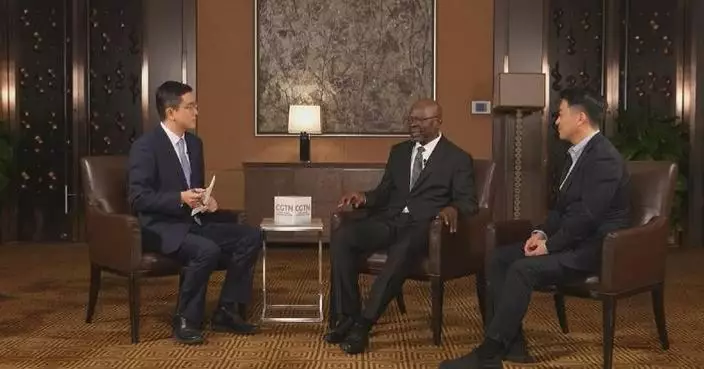
The Chinese economy is poised to make significant contributions to the global economy in the long run, due to its substantial size and robust growth, said Chetan Ahya, chief Asia economist at Morgan Stanley, in a recent interview with China Global Television Network in Beijing.
The economist first commended the Chinese government's recent policy stimulus measures, saying they have boosted market confidence.
"If I were to sort of summarize, I think the actions taken have worked on trying to boost the market sentiment, which would help the private sector's confidence in the economy," he said.
At the Financial Street Forum, which is currently underway in the Chinese capital, China’s central bank governor Pan Gongsheng emphasized the importance of finding a dynamic balance in the Chinese economy, particularly the right mix between investment and consumption.
He noted previously that China had focused more on investment when stimulating the economy, but now there needs to be a balanced emphasis on both investment and consumption.
During the interview, Ahya emphasized the need for China to balance investment and consumption, noting that while investment boosts productivity, it's time to focus more on raising consumption.
"We think China can achieve a balance between investment and consumption. You know you have to ensure that investment still continues because China's demographics are such that it does need to boost productivity with investment. But we also think that the time has come when consumption needs to be lifted. And we think that the way the government can do this next step is by increasing spending on social security- related areas, so particularly healthcare, education, and housing, which can then, in turn, be directed towards migrant workers," he said.
Ahya expressed confidence in the medium-term prospects of the Chinese economy, citing its large size and stable growth rate.
"I think China will still continue in the medium term to be accounting for anywhere between 25 to 30 percent of global growth because, as you know, the size of the economy is pretty big, and we expect its growth rate to be in the range that ensures that kind of share in global growth," said the expert.
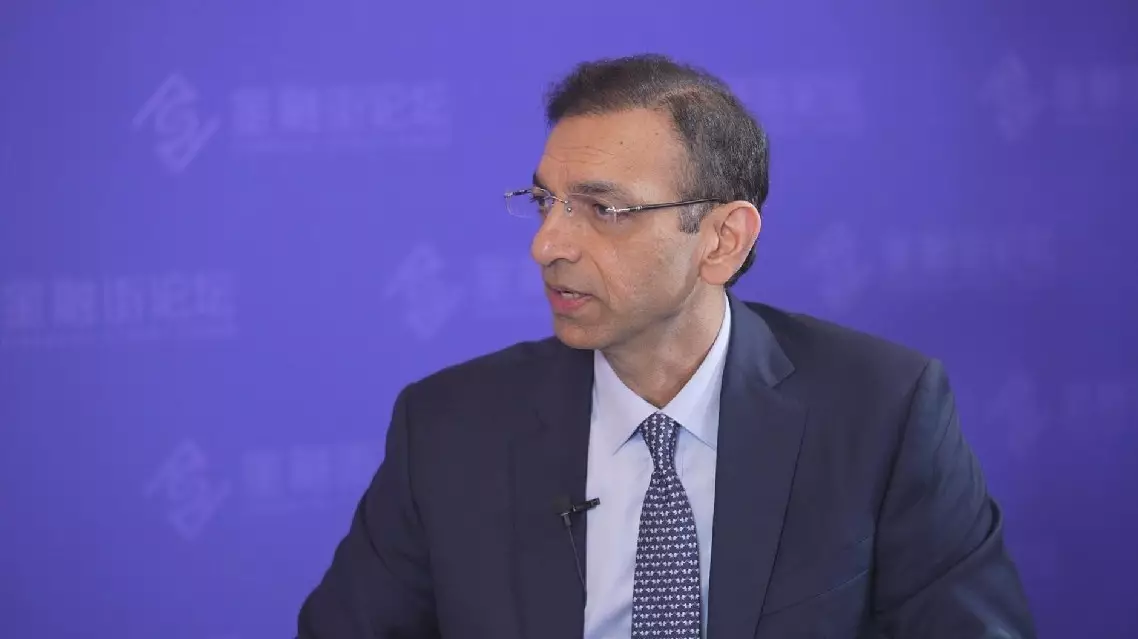
Chinese economy poised to shape global economy in long term: economist
The African Union (AU) and its partners have warned that the ongoing Middle East conflict poses a "serious risk" to African economies.
In a recent joint policy brief, the AU, the United Nations (UN) Economic Commission for Africa, the African Development Bank, and the UN Development Program warned that the longer the conflict lasts and the more severe the disruption of shipping routes, energy, and fertilizer supplies, the greater the risk of a significant growth slowdown across Africa.
With most African countries still growing at rates below pre-COVID levels, the brief projected a 0.2 percentage-point decline in Africa's gross domestic product growth in 2026 if the conflict lasts more than six months.
The organizations stressed that the conflict, which has already triggered a trade shock, could quickly become a "cost-of-living crisis" due to higher fuel and food prices. Rising shipping costs, insurance premiums, exchange rate pressures, and tighter fiscal conditions could further compound the crisis, with vulnerable households bearing the heaviest burden.
The Middle East accounts for 15.8 percent of Africa's imports and 10.9 percent of its exports, underscoring the critical implications of the current situation for African economies, according to the brief.
Highlighting that the fertilizer channel may prove more consequential than oil shocks for some countries, the brief noted that disruptions to Gulf liquid natural gas supply would affect ammonia and urea production, raising fertilizer costs during the crucial March-to-May planting season.
It warned that the phenomenon will put further upward pressure on food prices and hit vulnerable households hardest, with significant negative impacts on food security in Africa.
Expressing concern over potential geopolitical spillover effects that could reshape Africa's security, it also warned that a wider conflict could intensify competition for influence in Africa, with regional conflicts in Sudan, Somalia, and Libya already reflecting external sponsorship.
The brief emphasized the importance of strengthening energy security, safeguarding and restoring fiscal space, accelerating the implementation of the African Continental Free Trade Area, and establishing financial safety nets across Africa as essential strategies for building resilience.
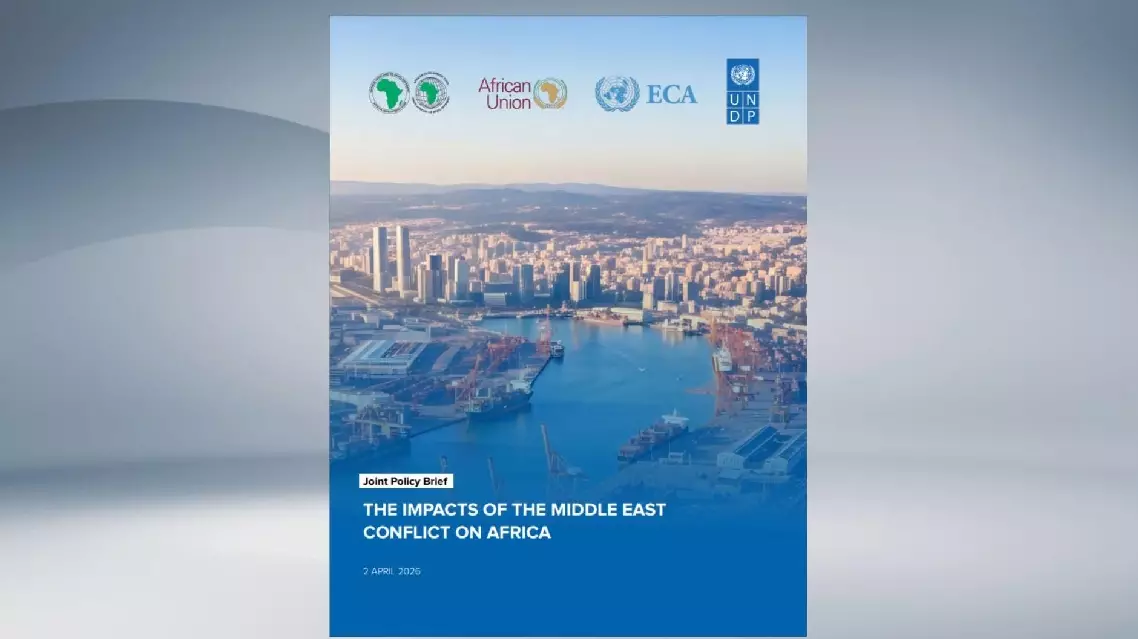
African leading organizations warn Middle East conflict poses "serious risk" to African economies