The total holdings of onshore renminbi (RMB) bonds by foreign investors have exceeded 640 billion U.S. dollars, staying at a historically high level, according to the Administration of Foreign Exchange in Beijing on Tuesday.
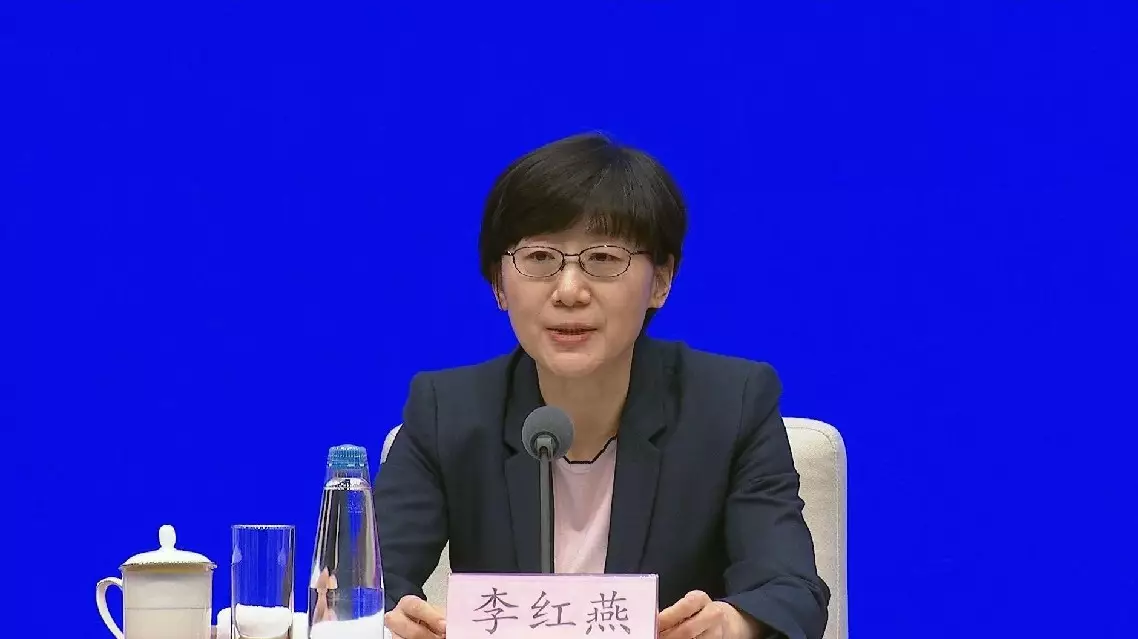
At a press conference, Li Hongyan, deputy head of the administration, stated that China's financial market has made steady progress in opening up, with lavish attention given to foreign investment in China.
"Foreign investment in RMB assets has recently maintained a sound momentum overall. The overall yield rate of RMB bonds has remained robust this year, attracting increased allocation from foreign investors. So far, the total holdings of onshore RMB bonds by foreign investors have exceeded 640 billion U.S. dollars, staying at a high level. In terms of the structure of existing holdings, conservative investors such as central and commercial banks from abroad are the primary holders," Li said.
"Moreover, driven by the uptrend in the domestic stock market, net foreign purchases of domestic stocks have increased overall since late September, further strengthening the willingness of foreign investors to allocate RMB assets," she said.
Meanwhile, the proportion of RMB used in cross-border transactions worldwide is steadily increasing, enhancing its international influence and making it a critical option for global investors seeking diversified asset allocation, according to the official.
Foreign holdings of Chinese bonds stay at high level: official
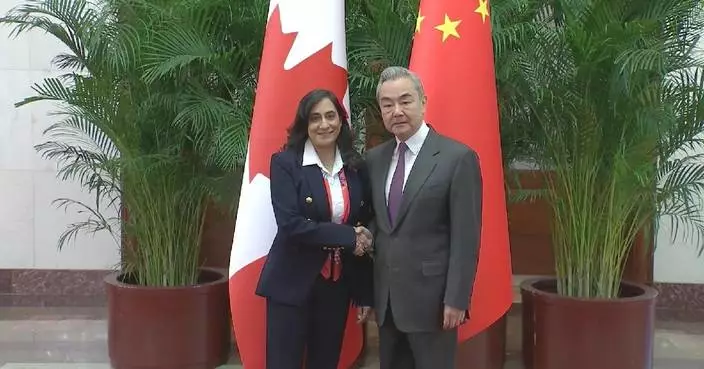
Canadian Prime Minister Mark Carney's official visit to China signals a policy shift towards building a more pragmatic relationship between the two countries, according to a Canadian researcher.
Carney arrived in Beijing on Wednesday to begin an official visit to China through Saturday, which marks the first trip by a Canadian Prime Minister to the country in eight years.
Robert Hanlon, director and principal investigator of Canada and the Asia Pacific Policy Project (CAPPP) at Thompson Rivers University in British Columbia, told the China Global Television Network (CGTN) that Carney's visit indicates Canada is recalibrating its strategic perception of China, which could cement the foundation for the country's economic diversification efforts and boost the development of bilateral cooperation.
"I think it's a clear message that he has moved Canada's strategy to a much more pragmatic, interest-based, -focused relationship with our trading partners, moving away from values-based narratives that we might have heard on previous governments. Canada has spoken about moving from what the Prime Minister's Office is calling "from reliance to resilience", and that means diversifying our economies and our trade everywhere in the world. And so China being our second largest trading partner, it makes perfect sense for our PM to head to Beijing," he said.
The scholar also noted the huge cooperation potential between the two sides in economic and trade fields, citing Canada's efforts to step up shipments of liquefied natural gas (LNG) and the planned construction of an oil pipeline in Alberta which aims to increase export access to Asian markets. "Canada and China both share tremendous economic opportunities together and so finding ways to enhance our exports. Canada specifically looking to build out its LNG and oil, kind of export market. We know Canada is a major producer of critical minerals and China is a buyer. And so there's a lot of synergy between that kind of those kind of markets," he said.

Canadian PM's visit to China paves way for more pragmatic trade ties: scholar