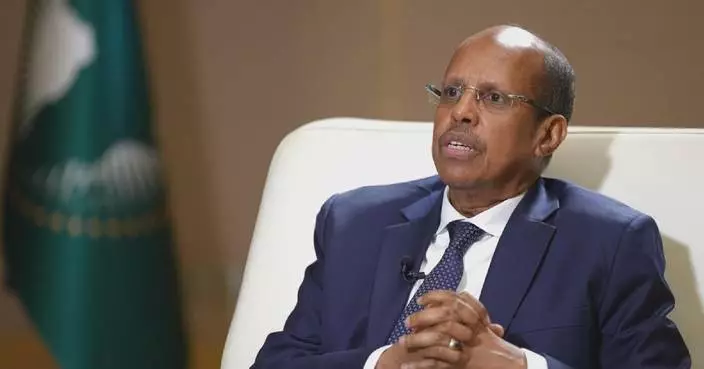
The expansion of the BRICS organization to include new members like Egypt has opened up a wealth of new opportunities for enterprises and accelerated cooperation efforts between member countries, said a Beijing-based Egyptian entrepreneur.
Sarah Khattab has spent five years in the Chinese capital and is the CEO and founder of Beijing Arabesque, a start-up that promotes cultural exchanges between China and the Arab region.
BRICS is the acronym for an emerging-market cooperative mechanism that initially included Brazil, Russia, India, China and South Africa. In January, it expanded its membership to include Saudi Arabia, Egypt, the United Arab Emirates, Iran, and Ethiopia.
The 16th BRICS Summit, which is being held in Russia's Kazan from Tuesday to Thursday, is the first to be held since the group's expansion.
Khattab said Egypt's joining of BRICS not only brings opportunities for the country itself, but also for other developing countries.
"Egypt has a very strategic position on the map. Egypt connects the whole world with Africa. Egypt joining the BRICS is a huge step for Egypt and for all the other countries that actually are finally getting all together for peace, for economic growth, for investment, for actually having a better world, and to fix all the hard things that developing countries [are] facing right now. They all get together to solve this," she said.
She also added that the expansion of the BRICS group helps businesses in finding suitable partners and attracting greater investment.
"First of all, [it makes] networking, finding people easier, having a common ground with all these countries. Second thing, the investment. For example, I'm here, a lot of Chinese people would love to invest in Egypt now just because of the BRICS, because now they know these countries [are] together, then it gives us benefit. The BRICS gives more [of a] push to whatever is happening already right now," she said.
While the BRICS mechanism is helping build economic cooperation, cultural exchanges are also taking on diverse forms, including through food.
A computer game called "Shawarma Legend", in which gamers can make their own version of the popular Middle Eastern food, has sparked increased interest in Middle Eastern cuisine among gamers in China.
"It's nice to hear about it like that. Because having these kinds of games, it makes countries get closer to each other. It makes us closer together. I believe if we have also a Chinese game with the same concept, it will make our regions, our countries understand the love of jiaozi [dumplings] or baozi [buns] for Chinese," Khattab said.
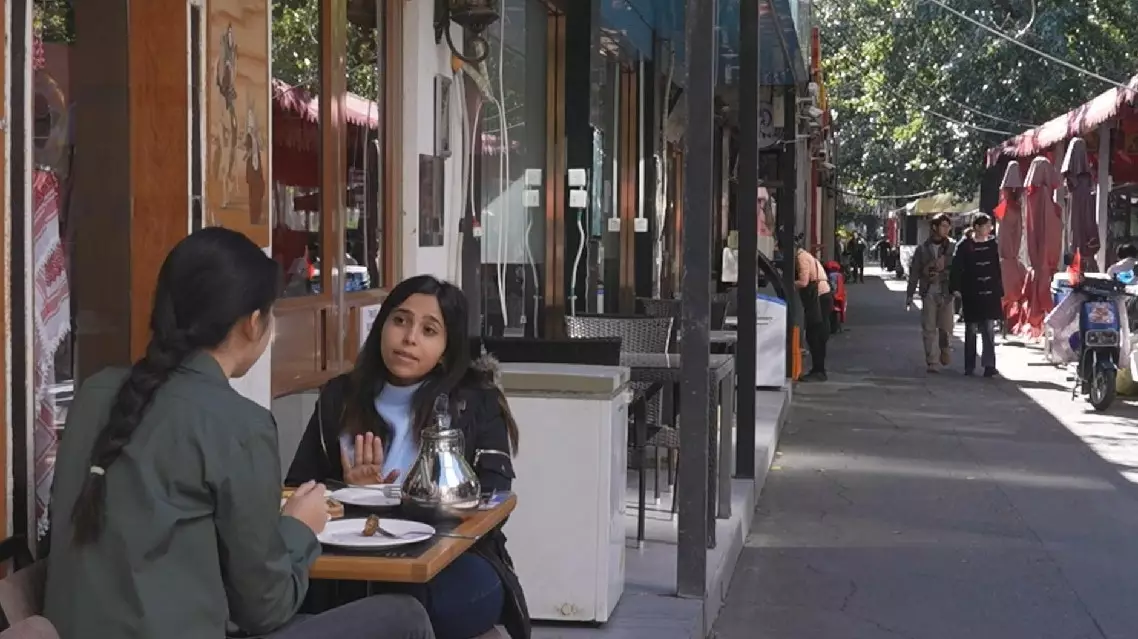
Egyptian entrepreneur hails BRICS expansion for accelerating cooperation efforts
From cutting-edge technology exhibitions to retail stores thousands of kilometers away from Europe and Southeast Asia, China-made robot vacuum cleaners are increasingly becoming a popular choice among consumers worldwide.
At electronics retailers in Berlin, Germany, Chinese brands such as Roborock and Dreame occupy prominent positions in dedicated robot vacuum sections, offering a wide range of products priced between 200 and 2,000 euros.
Many local consumers said that when purchasing smart home appliances including robot vacuum cleaners, they tend to give priority to Chinese-made products.
"It's a good price and good quality. It's also the innovation. I have a feeling that the European brands are not innovating enough," said one customer.
"I think they're always on top of the other technologies. They are getting them out faster. A lot of us are switching to the Chinese technology," another consumer said.
Germany is one of the most important overseas markets for China's floor-cleaning robots.
According to data from market research firm GfK, from January to November 2025, more than six out of 10 robot vacuum cleaners sold in Western Europe were Chinese brands.
Industry data also point to a strong global momentum.
According to the International Data Corporation (IDC), global shipments of smart robot vacuum cleaners reached 17.424 million units in the first three quarters of 2025, representing a year-on-year increase of 18.7 percent.
Chinese brands including Roborock, Ecovacs, Dreame, Xiaomi and Narwal ranked among the world's top five in terms of shipment volume, with a combined share of nearly 70 percent of the global market.
At a robot vacuum cleaner manufacturing plant in Huizhou, south China's Guangdong Province, workers were seen stepping up production of newly launched models that recently debuted at the Consumer Electronics Show in the United States, which concluded Friday in Las Vegas, Nevada.
The factory adjusted its production lines as early as December 2025 and stocked inventory in advance for overseas markets to ensure that new products could be delivered to global consumers at the earliest possible time.
"In 2025, Roborock's global shipments exceeded 7.2 million units. Since 2024, overseas revenue has accounted for more than 50 percent of our total revenue. Our products have now been sold to more than 170 countries and regions, serving more than 20 million households worldwide," said Quan Gang, president of Roborock.
At another robot vacuum cleaner manufacturing facility in Dongguan, Guangdong, rising overseas orders have prompted the company to upgrade its production lines with intelligent technologies to further boost capacity. The factory is currently operating at full load to meet a growing demand.
"For 2026, we have already obtained overseas orders worth at least 300 million to 400 million yuan (around 43 million to 57.3 million U.S. dollars). In addition, we've engaged in strategic cooperation with European home appliance group Cebos Group, and our total confirmed orders have exceeded 600 million yuan (around 86 million U.S. dollars)," said Zhang Junbin, founder and CEO of Narwal Robotics.
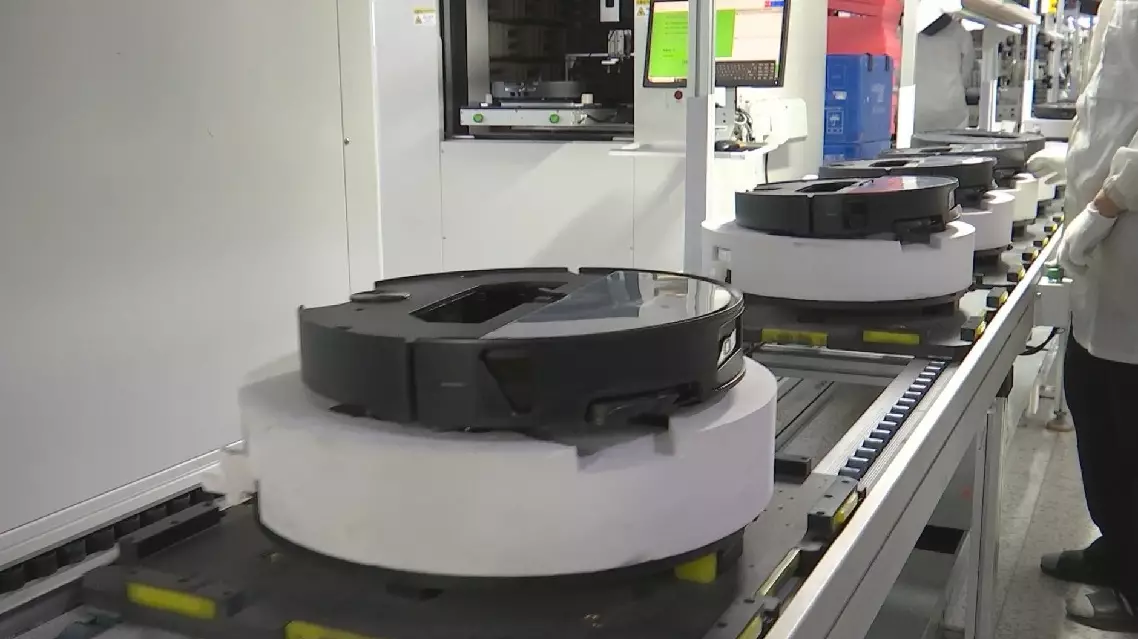
Chinese robot vacuum brands gain strong global traction