Asia, which is contributing 60 percent to global growth, remains the world's engine of growth, said Krishna Srinivasan, director of the International Monetary Fund (IMF)'s Asia and Pacific Department at a Thursday press briefing on IMF's latest economic projections for Asia and Pacific.
Noting that in the first half of this year, Asia's economies grew stronger than expected, Srinivasan said at the briefing that the IMF has upgraded its regional forecast to 4.6 percent in 2024 and to 4.4 percent in 2025.
Asia generates 60 percent of global growth, far more than its share in global GDP of about 40 percent, he added.
Regarding inflation, Srinivasan said that Asia has managed to bring inflation down to low and stable levels faster than other regions, allowing most Asian central banks room to cut interest rates earlier this year.
But he stressed that the external environment in Asia has also become more challenging, reflected in possibly weakened global demand and more trade restrictions.
According to IMF estimation, there were roughly 1,000 trade restrictive measures in 2019, but in 2023, the number had surged to 3,000.
The full report of IMF's Regional Economic Outlook for Asia and Pacific will be available for download on IMF website on October 31.
In its latest World Economic Outlook (WEO) report released on Tuesday, the IMF maintained its global growth forecast in 2024 at 3.2 percent, consistent with its projection in July. Emerging and developing Asia, meanwhile, is expected to grow 5.3 percent.
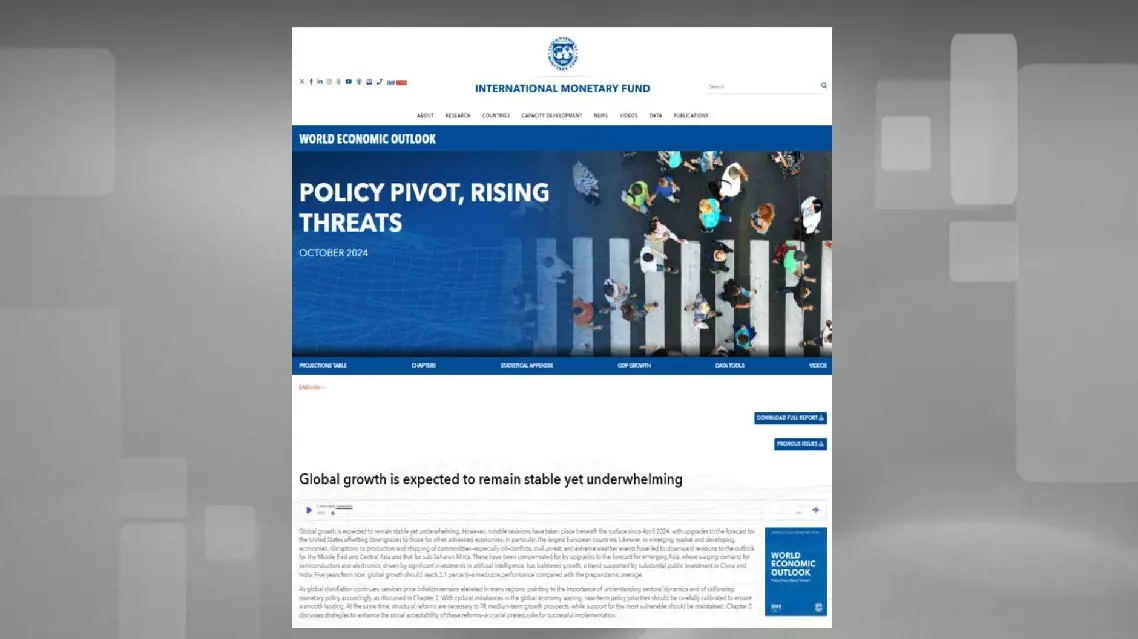
Asia remains powerhouse of global growth: IMF
Chinese Vice Premier He Lifeng has called on China and Belgium to continue the tradition of mutually beneficial and win-win cooperation, and to promote the sound development of China-Belgium and China-EU relations.
He, also a member of the Political Bureau of the Communist Party of China Central Committee, made the remarks during his meeting with Belgium's Deputy Prime Minister and Minister of Foreign Affairs Maxime Prevot at the Great Hall of the People in Beijing on Thursday.
China and Belgium have established a close cooperative relationship featuring mutual benefits and win-win results since the establishment of bilateral diplomatic relations 55 years ago, He said, stressing that both sides have carried out fruitful and practical cooperation in the fields of medicine, the chemical industry, finance and logistics, which has helped the bilateral relations to move forward.
As both defenders of multilateralism and supporters of an open world economy, China and Belgium should continue the tradition of mutually beneficial and win-win cooperation to promote the sound development of China-Belgium and China-EU relations, he added.
Belgium and China are friendly cooperative partners on all fronts, Prevot said, stressing that Belgium is willing to take the 55th anniversary of the establishment of diplomatic relations between the two countries as an opportunity to promote the development of bilateral relations, strengthen cooperation in various fields such as economy and trade, and jointly uphold multilateralism and free trade.
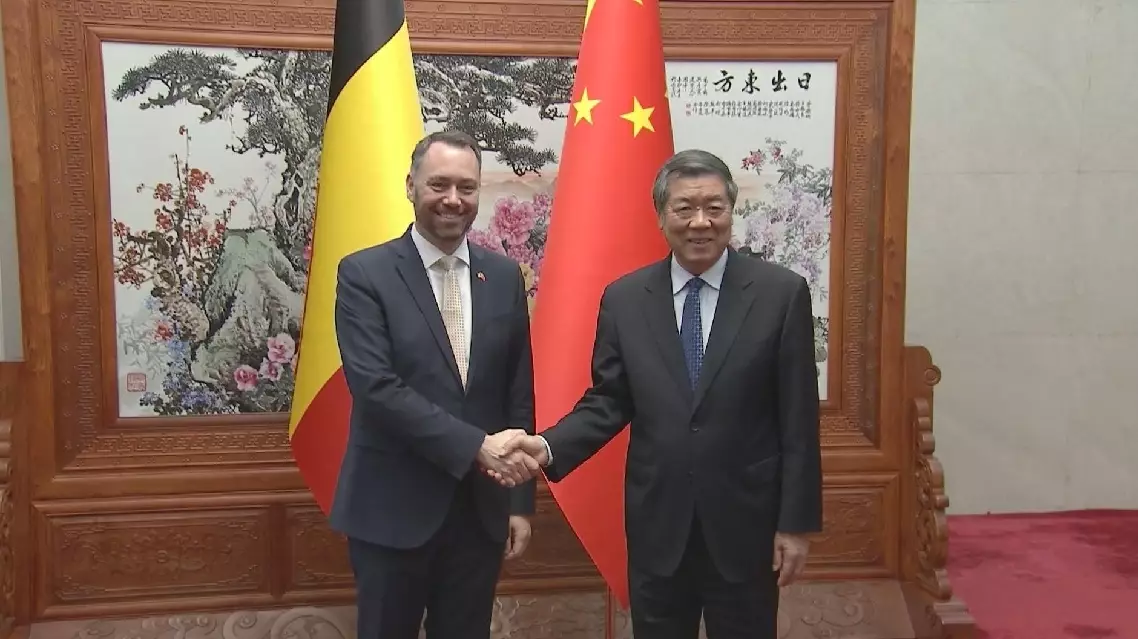
Chinese vice premier meets Belgium's deputy PM on deepening cooperation