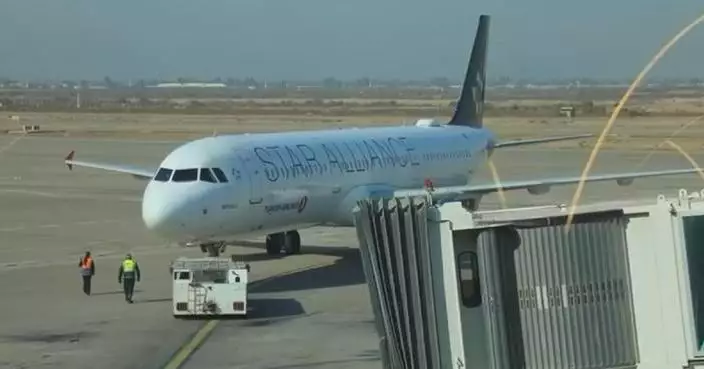
China's expanding high-speed rail network is making Spring Festival travel faster and smoother, easing the journey home for millions of holiday travelers.
In second- and third-tier cities, such as Tonghua in northeast China's Jilin Province, the impact has been clear since the Shenyang-Baihe high-speed railway opened in September 2025, linking the area to the high-speed network.
Previously, Tonghua had no high-speed service, and it was pretty difficult to secure a train ticket during the Spring Festival travel rush.
"In the past, there was only one train per direction each day. During the Spring Festival travel rush, trains to Shenyang, Beijing, or Qingdao were packed on every trip," said Song Jianmin, an engineer from China Railway Shenyang Bureau Group.
"Tickets were so tight that many people from surrounding areas would arrive at the station a day early, sleeping in the ticket hall just to buy a ticket and get home sooner," said Geng Qiusheng, secretary of Communist Party of China (CPC) branch of Tonghua Railway Station.
The opening of the Shenyang-Baihe high-speed railway changed everything. Now, 27 passenger trains are running daily on the Tonghua-Shenyang rail route.
With the 40-day travel rush starting on Feb 2, inter-regional trips are expected to hit a record 9.5 billion. For travelers in Tonghua, the trip has been much more easier this year.
"After the high-speed train service was put into operation, it became incredibly convenient. It now takes just three and a half hours from Tonghua to Beijing. We can go to Beijing anytime and return easily," said a passenger surnamed Cui.
Tonghua's modern new station boasts over 10,000 square meters of waiting space, more than 80 free charging points and smart customer service facilities, enabling smoother and more comfortable trip for travelers.
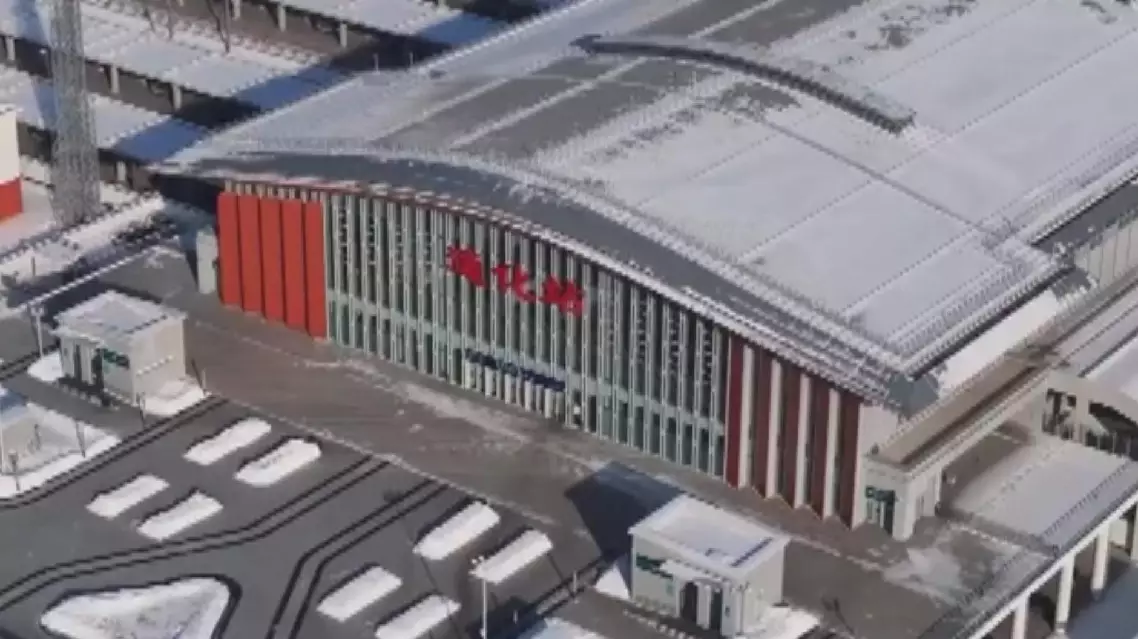
China's expanding high-speed rail makes Spring Festival travel easier
The 24th Mawei-Matsu Lantern Festival, a national-level intangible cultural heritage event, opened on Wednesday in Fuzhou, capital city of east China's Fujian Province, to greet the Year of the Horse, which begins on Feb 17.
The festival is underway at a shipbuilding cultural park, where brilliant lantern installations are artfully integrated into the century-old remains of the former shipbuilding industry, creating a striking contrast that blends maritime heritage with festive light art.
Lanterns shaped like horses and the first steamship built by the shipyard, stand alongside a variety of intricate designs, blending holiday spirit with maritime history.
"This is my first visit here. I have seen lanterns shaped like fish and horses, and I like them very much," said a kid.
The festival originated from the Lantern Festival customs shared between Mawei and Mazu. It is the earliest and now most regularized two-way exchange activity between the two places, with the mutual presentation of lanterns serving as one of its most distinctive traditional features.
The celebration is recognized as China's first cross-Strait national intangible cultural heritage project. In 2024, it, along with the Chinese New Year, was added to the UNESCO Representative List of the Intangible Cultural Heritage of Humanity.
Running till March 8, the 33-day celebration serves as a luminous bridge connecting Fuzhou's Mawei district and Matsu.
"I've been to the festival four or five times, and it has left a deep impression on me. The festival gets better every year, with very distinctive features. We hope to spend more time together with our compatriots from Matsu," said Zhao Ping, a visitor.
"We've incorporated elements of shipbuilding culture, the local culture, and maritime culture into the lantern design. We welcome everyone to Fuzhou and celebrate the Chinese New Year here," said Lin Hebin, deputy director of the Bureau of Culture, Sports and Tourism in Mawei District.
Mawei-Matsu Lantern Festival opens in east China, honoring cross-Strait cultural heritage