China's steel export grew 21.2 percent year on year in the first three quarters this year, according to the data released by China Iron and Steel Industry Association (CISA) Friday.
The data showed that China exported a total of 80.71 million tonnes of steel in the first three quarters.
The increased export is driven by an improved industrial structure, said Jiang Wei, vice president of CISA.
"As the county further advanced its industrial restructuring, the consumption structure of steel was also further improved, with steel consumption expanding rapidly particularly in sectors of new energy industry, high-end equipment manufacturing industry, and electric vehicle industry," said Jiang.
China has been promoting the digitalization and the green transition of its steel industry. The sector will be included in the country's carbon trading market, where the enterprises will be given a certain amount emissions quota over a designated period of time and trade the unused quota if they lower their carbon emissions.
The country is also working on a three-year action plan to digitalize the industry, with the corresponding guidelines issued to give specific plans of transition to links from production to buissness operation.
By early October, 159 steel companies in China had completed or partially completed the transformation and the evaluation of ultra-low carbon emissions.
By the end of 2025, the steel enterprises in the main steel-producing regions would have basically completed their ultra-low carbon emissions transformation.
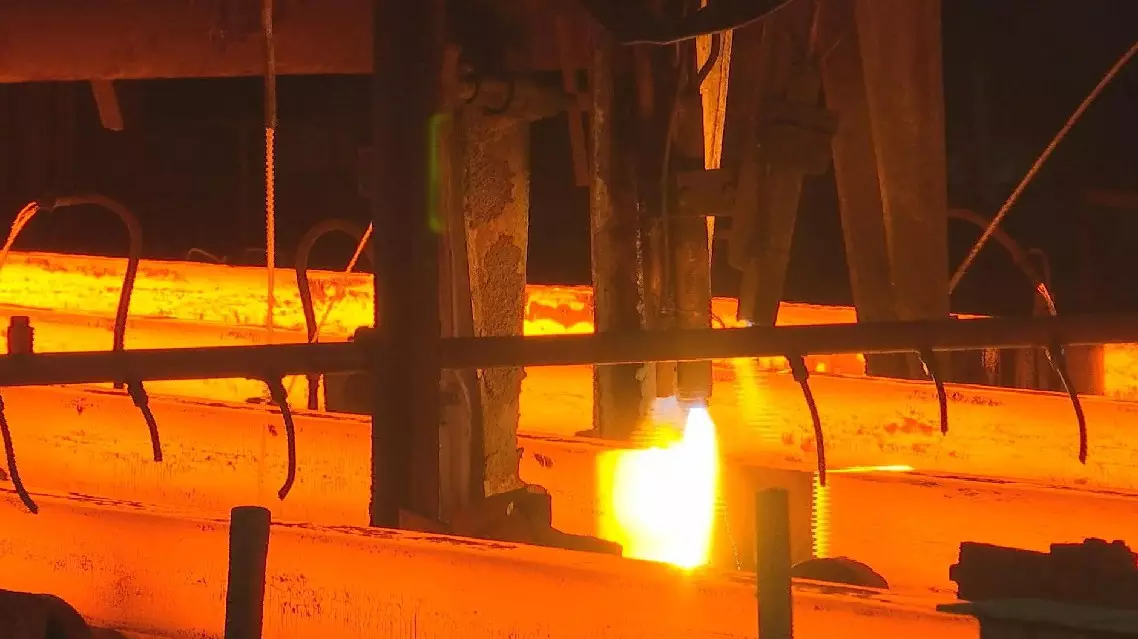
Steel export up 21.2 pct in first three quarters
Visitors can now experience firsthand how artificial intelligence (AI) is reshaping future lifestyles at the newly opened AI Matrix Store "MetAI Hub" in Shanghai's Zhangjiang AI Innovation Town.
Opened on May 11, the nearly 2,000-square-meter space features more than 500 AI products from 100 brands. Unlike traditional "display-only" technology venues, the store encourages visitors to touch, test, and interact with the latest AI products.
The store houses six themed zones, including a curated product space, makers' workshops, and an AI health area. One of the most popular attractions is an AI health screening system that generates a rapid health assessment report within 90 seconds using non-contact sensing technology.
The store also functions as a makerspace for innovators, helping startups test products in real-life scenarios and shorten the time it takes to turn a concept into reality.
"Here we can see the advanced processing equipment, including 3D printer and laser engraver. We also have a highly experienced technical team that helps One-Person Companies quickly bring their ideas to life and conduct model testing," said Lan Chaoxiang, head of the Maker Area of MetAI Hub.
In addition, the AI Matrix Store aims to serve as a global launch platform for AI products and a gateway for startups expanding overseas.
"When their products are still in the prototype stage, we will build a complete funding mechanism for producers, allowing many global geeks to get a sneak peek. We also hope to combine online and offline channels for this overseas expansion platform," said Zhao Tongyang, an executive at the store.
Zhao said the store will be developed into an AI ecosystem center rather than a traditional retail outlet, combining experience, commerce, incubation, and social interaction.
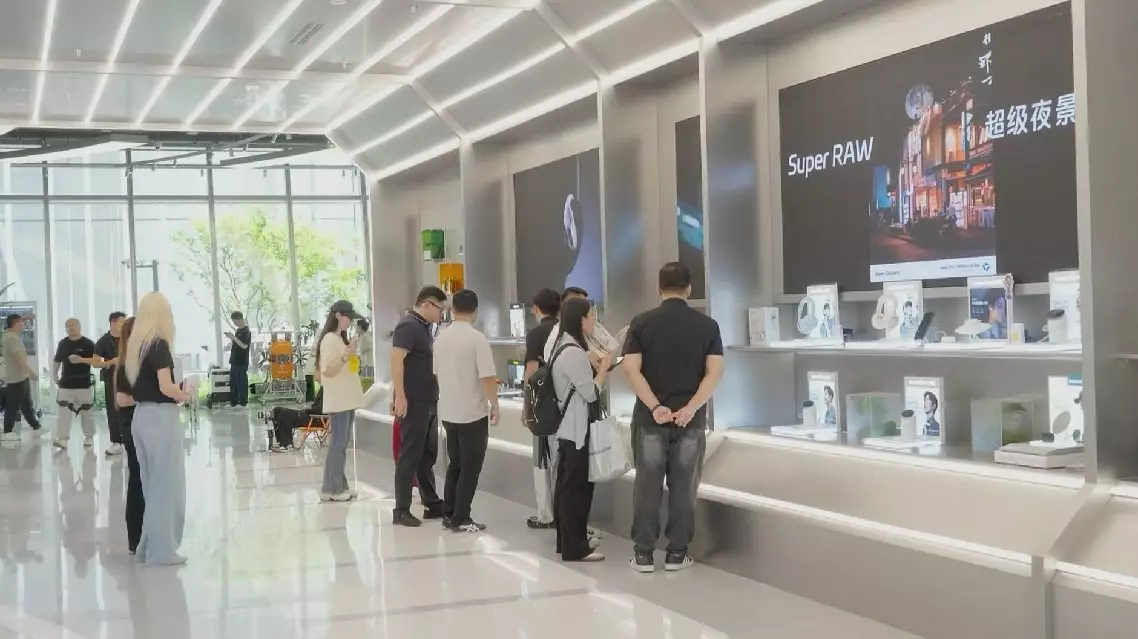
Visitors explore future lifestyles at newly opened AI store in Shanghai