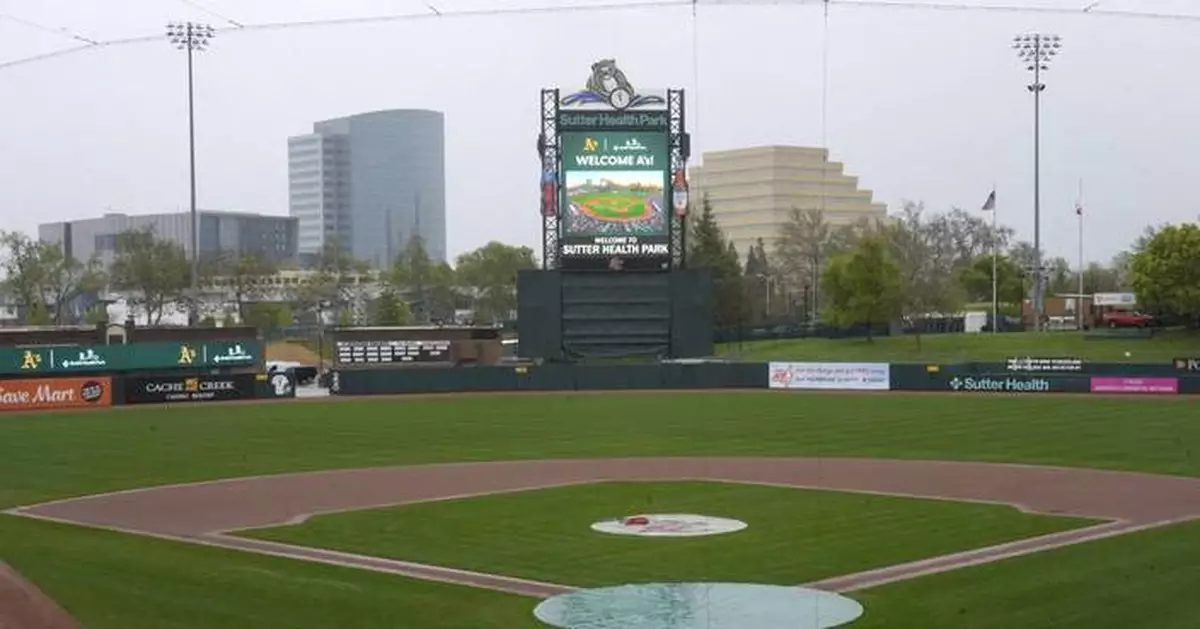
LAS VEGAS (AP) — Athletics owner John Fisher and his family will invest $1 billion into the construction of a stadium in Las Vegas and U.S. Bank and Goldman Sachs will offer a $300 million loan, club executive Sandy Dean said Thursday.
Dean made his remarks to a special meeting of the Las Vegas Stadium Authority board.
Dean said four letters will be presented at the Dec. 5 authority meeting asserting construction details and financing will be in place. Final approvals are expected to be made at that meeting to allow construction of the $1.5 billion, 30,000-seat domed ballpark with a capacity for up to 33,000 fans.
“We feel like we're on the right path and it will become clearer in the months ahead,” Dean told the board.
Construction is expected to begin in the spring with a targeted opening before the 2028 season. As much as $380 million in public funding will go into building the stadium, which will be on the Las Vegas Strip on the site of where the recently demolished Tropicana stood.
Dean said Fisher is still pursuing partners in the Las Vegas area who can purchase stakes in the franchise, which in turn goes toward paying for the stadium.
“We've been consistent in saying it would be good coming to Las Vegas to have outside partners from Las Vegas,” Dean said after the meeting. “That process has just begun. The ability to finance the stadium is independent of that.”
As for the financing, the four letters that will be presented at the December meeting will better address that.
The first is the loan commitment from U.S. Bank and Goldman Sachs. Dean said it probably would be a five-year term “that would be replaced by a permanent loan once construction is done.”
Another letter, Dean said, asserts the Fisher and his family have the ability to meet their financial commitment. Dean said the third letter from U.S. Bank will show that through a review of the owner's finances that it “concludes the Fisher family has more than sufficient resources to fund the equity investment that's required to build the stadium.”
The fourth laid out the commitments to Athletics StadCo LLC, an entity created to handle the private capital investment.
Also, the draft lease agreement and deed were presented to the board.
“We feel like these documents are on track for the schedule that we have been talking about for a number of months,” said Steve Hill, president and CEO of the Las Vegas Convention and Visitors Authority. “We feel like there's a real possibility we'll be able to reach a conclusion on all of them on Dec. 5.”
Dean said an updated construction budget will be presented at that day's meeting, and he acknowledged the final cost likely will rise “by something.”
Hill said documents would be made public several days before the December meeting and he didn't anticipate any issues regarding approval.
“There are a couple of places where we need to get the language right, but we've had enough of a conversation to understand that everybody understands what the outcome is intended to be," Hill said.
He cited ensuring details regarding parking as an example of getting all the proper wording in place.
The A's will play at least the next three seasons in West Sacramento, California. The club announced it will play 60 of its 81 home games next season at night, tying the 1968 A's for the most in their history. That includes 25 of 28 games at night in June and July when temperatures are often 100 degrees (37.8 Celsius) or hotter.
Their first game in Sacramento is March 31 against the Chicago Cubs.
The A's played their last of 57 seasons in Oakland, California.
AP MLB: https://apnews.com/hub/MLB
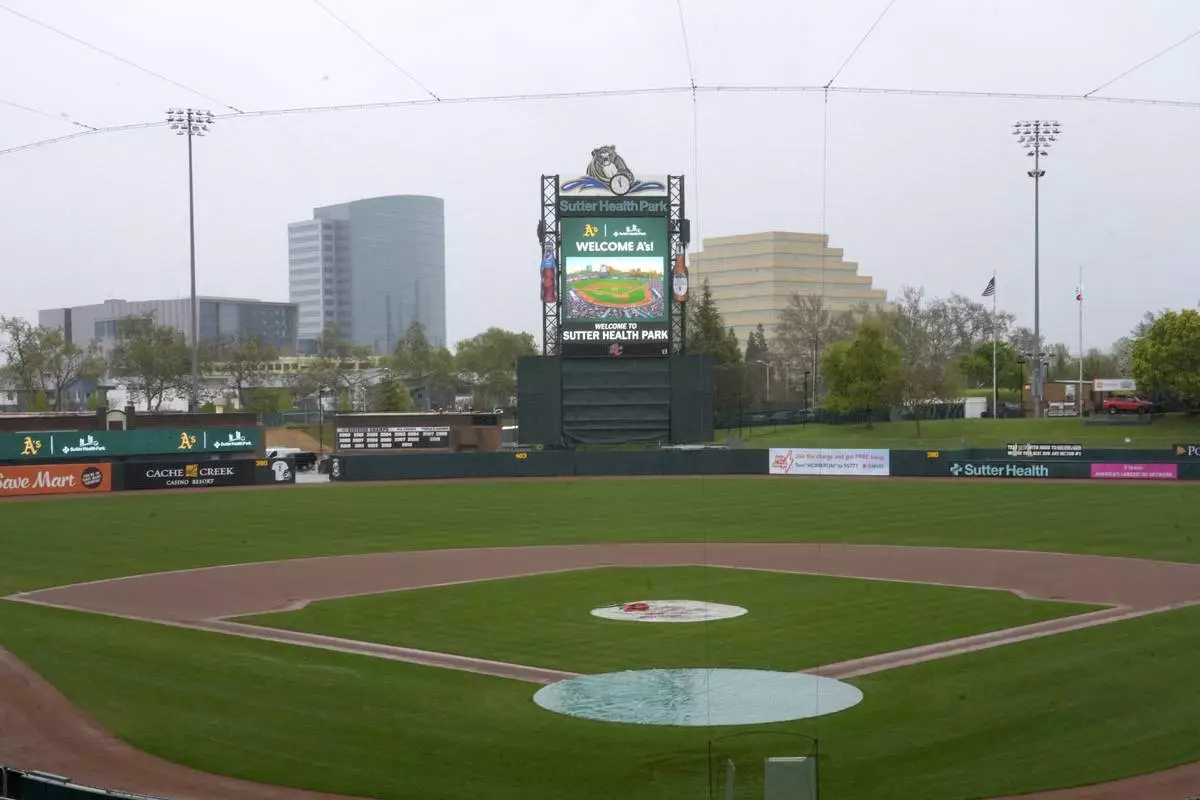
FILE - Sutter Health Park, home of the Triple A team Sacramento River Cats, is shown in West Sacramento, Calif., April 4, 2024. (AP Photo/Rich Pedroncelli, File)
HAMIMA, Syria (AP) — A trickle of civilians left a contested area east of Aleppo on Thursday after a warning by the Syrian military to evacuate ahead of an anticipated government military offensive against Kurdish-led forces.
Government officials and some residents who managed to get out said the Kurdish-led Syrian Democratic Forces prevented people from leaving via the corridor designated by the military along the main road leading west from the town of Maskana through Deir Hafer to the town of Hamima.
The SDF denied the reports that they were blocking the evacuation.
In Hamima, ambulances and government officials were gathered beginning early in the morning waiting to receive the evacuees and take them to shelters, but few arrived.
Farhat Khorto, a member of the executive office of Aleppo Governorate who was waiting there, claimed that there were "nearly two hundred civilian cars and hundreds of people who wanted to leave” the Deir Hafer area but that they were prevented by the SDF. He said the SDF was warning residents they could face “sniping operations or booby-trapped explosives” along that route.
Some families said they got out of the evacuation zone by taking back roads or going part of the distance on foot.
“We tried to leave this morning, but the SDF prevented us. So we left on foot … we walked about seven to eight kilometers until we hit the main road, and there the civil defense took us and things were good then,” said Saleh al-Othman, who said he fled Deir Hafer with more than 50 relatives.
Yasser al-Hasno, also from Deir Hafer, said he and his family left via back roads because the main routes were closed and finally crossed a small river on foot to get out of the evacuation area.
Another Deir Hafer resident who crossed the river on foot, Ahmad al-Ali, said, “We only made it here by bribing people. They still have not allowed a single person to go through the main crossing."
Farhad Shami, a spokesman for the SDF, said the allegations that the group had prevented civilians from leaving were “baseless.” He suggested that government shelling was deterring residents from moving.
The SDF later issued a statement also denying that it had blocked civilians from fleeing. It said that “any displacement of civilians under threat of force by Damascus constitutes a war crime" and called on the international community to condemn it.
“Today, the people of Deir Hafer have demonstrated their unwavering commitment to their land and homes, and no party can deprive them of their right to remain there under military pressure,” it said.
The Syrian army’s announcement late Wednesday — which said civilians would be able to evacuate through the “humanitarian corridor” from 9 a.m. to 5 p.m. Thursday — appeared to signal plans for an offensive against the SDF in the area east of Aleppo. Already there have been limited exchanges of fire between the two sides.
Thursday evening, the military said it would extend the humanitarian corridor for another day.
The Syrian military called on the SDF and other armed groups to withdraw to the other side of the Euphrates River, to the east of the contested zone. The SDF controls large swaths of northeastern Syria east of the river.
The tensions in the Deir Hafer area come after several days of intense clashes last week in Aleppo city that ended with the evacuation of Kurdish fighters and government forces taking control of three contested neighborhoods.
The fighting broke out as negotiations have stalled between Damascus and the SDF over an agreement reached last March to integrate their forces and for the central government to take control of institutions including border crossings and oil fields in the northeast.
Some of the factions that make up the new Syrian army, which was formed after the fall of former President Bashar Assad in a rebel offensive in December 2024, were previously Turkey-backed insurgent groups that have a long history of clashing with Kurdish forces.
The SDF for years has been the main U.S. partner in Syria in fighting against the Islamic State group, but Turkey considers the SDF a terrorist organization because of its association with Kurdish separatist insurgents in Turkey.
Despite the long-running U.S. support for the SDF, the Trump administration has also developed close ties with the government of interim Syrian President Ahmad al-Sharaa and has so far avoided publicly taking sides in the clashes in Aleppo.
Ilham Ahmed, head of foreign relations for the SDF-affiliated Kurdish-led administration in northeast Syria, at a press conference Thursday said SDF officials were in contact with the United States and Turkey and had presented several initiatives for de-escalation. She said that claims by Damascus that the SDF had failed to implement the March agreement were false.
——
Associated Press journalist Hogir Al Abdo in Qamishli, Syria, contributed.
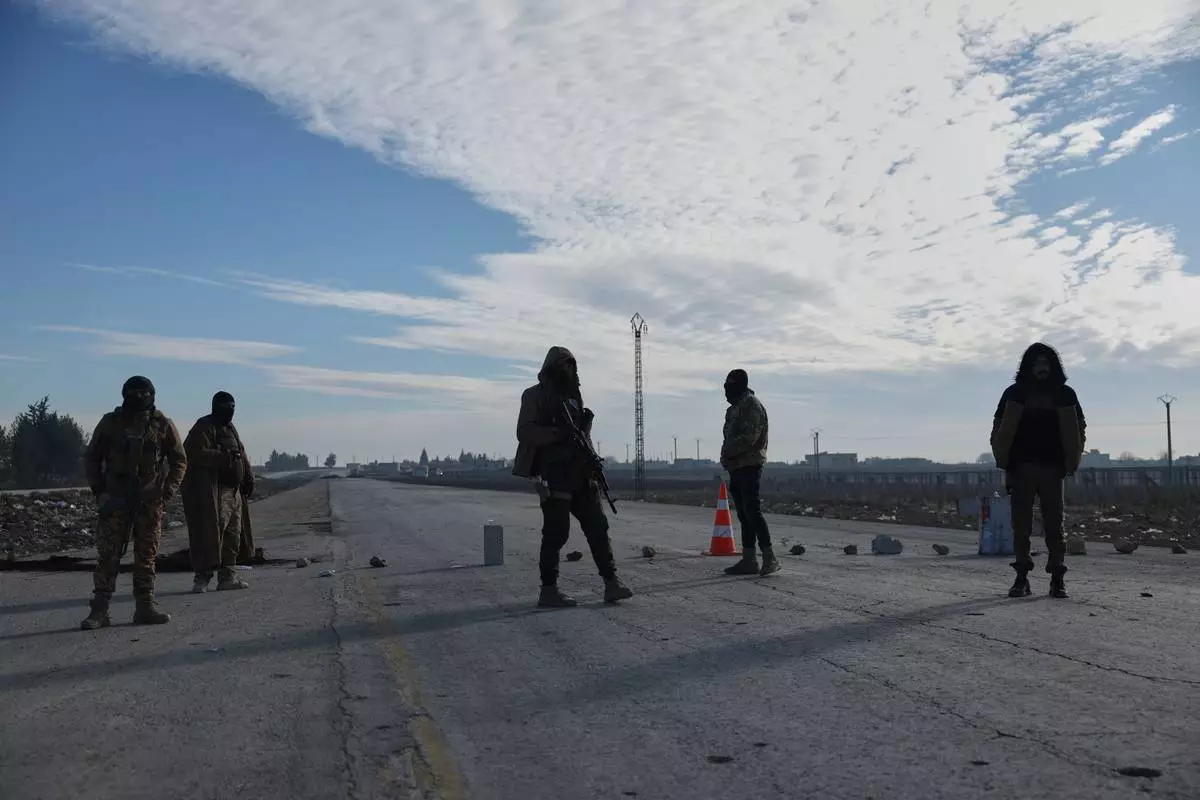
Members of the Syrian military police stand at a humanitarian crossing declared by the Syrian army in the village of Hamima, in the eastern Aleppo countryside, near the front line with the Kurdish-led Syrian Democratic Forces in Deir Hafer, Syria, Thursday, Jan. 15, 2026. (AP Photo/Ghaith Alsayed)
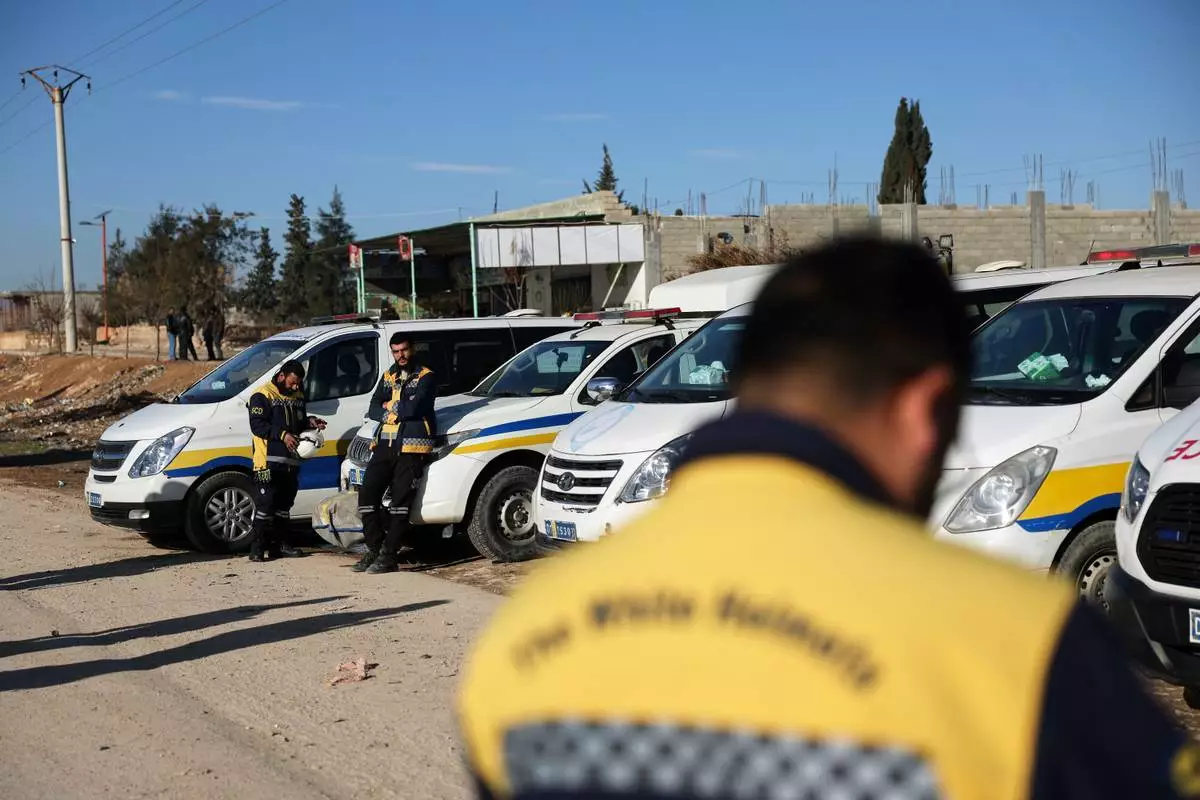
Members of the Syrian Civil Defense, stand next to their vehicles at a humanitarian crossing declared by the Syrian army in the village of Hamima, in the eastern Aleppo countryside, near the front line with the Kurdish-led Syrian Democratic Forces in Deir Hafer, Syria, Thursday, Jan. 15, 2026. (AP Photo/Ghaith Alsayed)
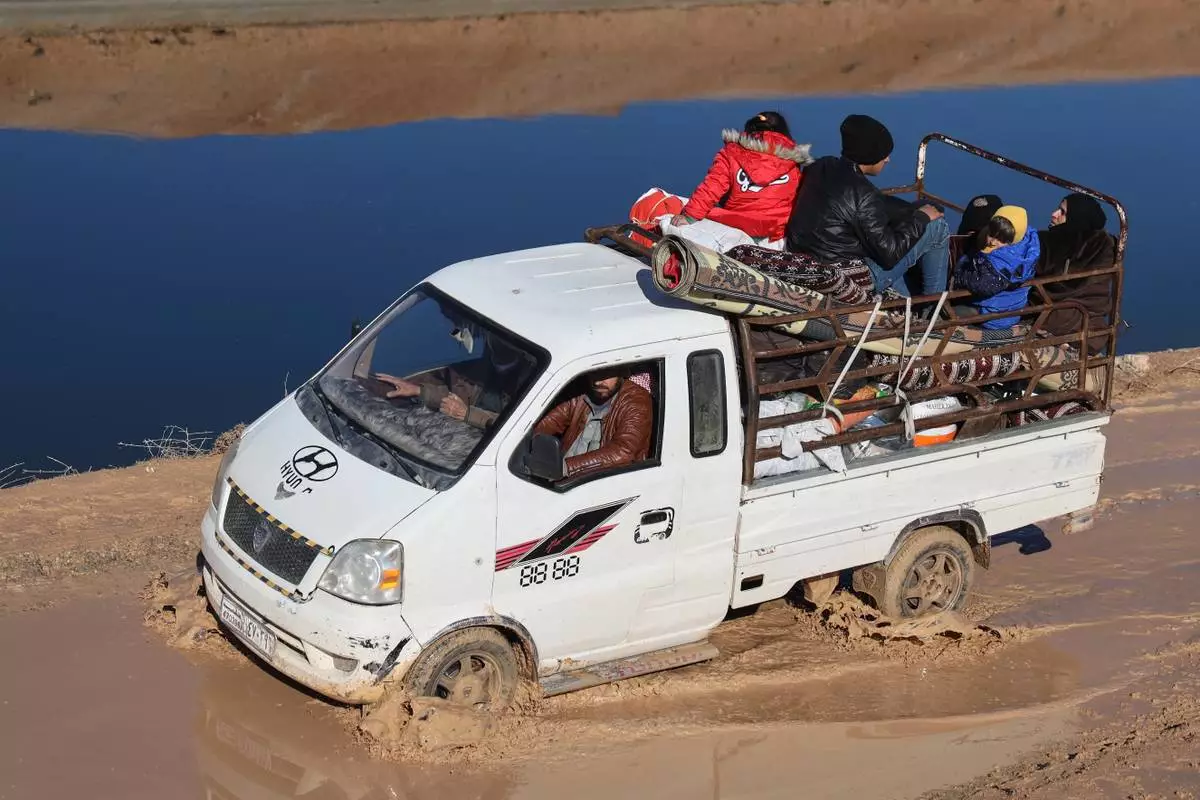
A displaced Syrian family rides in the back of a truck near a humanitarian crossing declared by the Syrian army next to a river in the village of Rasm Al-Abboud, in the eastern Aleppo countryside, near the front line with the Kurdish-led Syrian Democratic Forces in Deir Hafer, Syria, Thursday, Jan. 15, 2026. (AP Photo/Omar Albam)
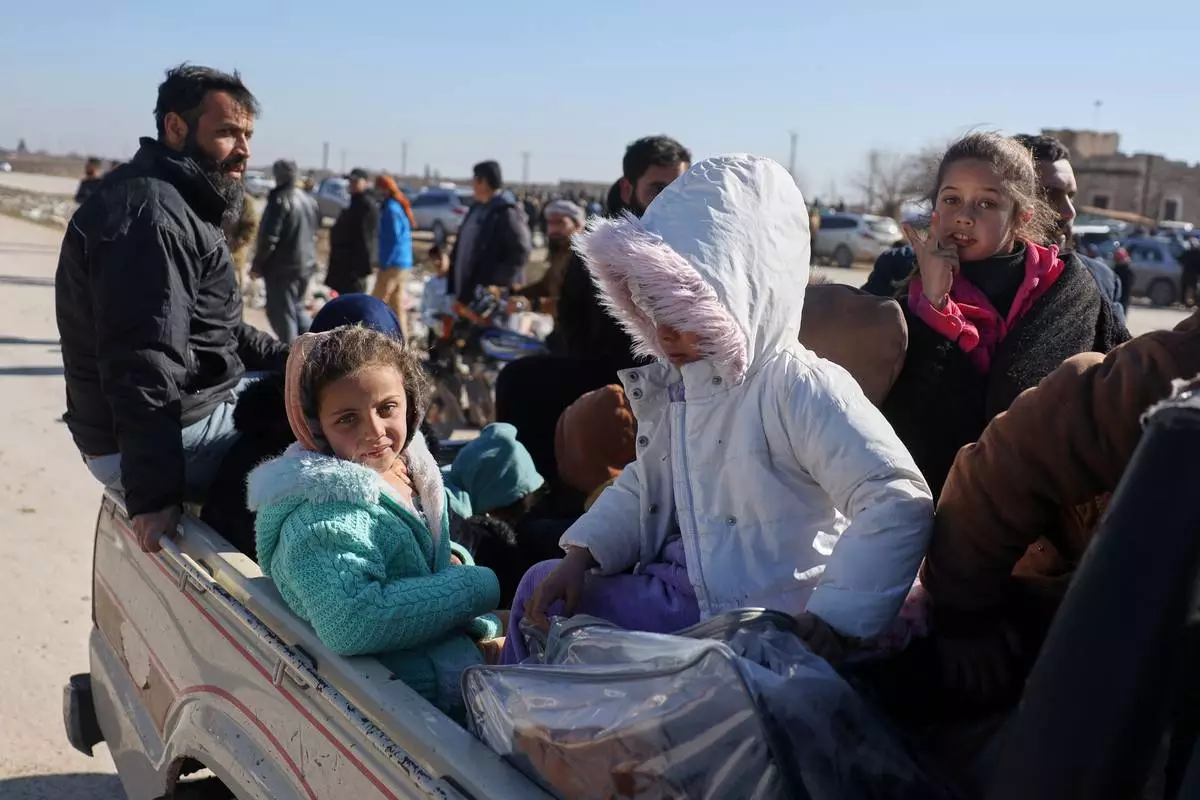
Displaced Syrian children and women ride in the back of a truck near a humanitarian crossing declared by the Syrian army in the village of Hamima, in the eastern Aleppo countryside, near the front line with the Kurdish-led Syrian Democratic Forces in Deir Hafer, Syria, Thursday, Jan. 15, 2026. (AP Photo/Omar Albam)
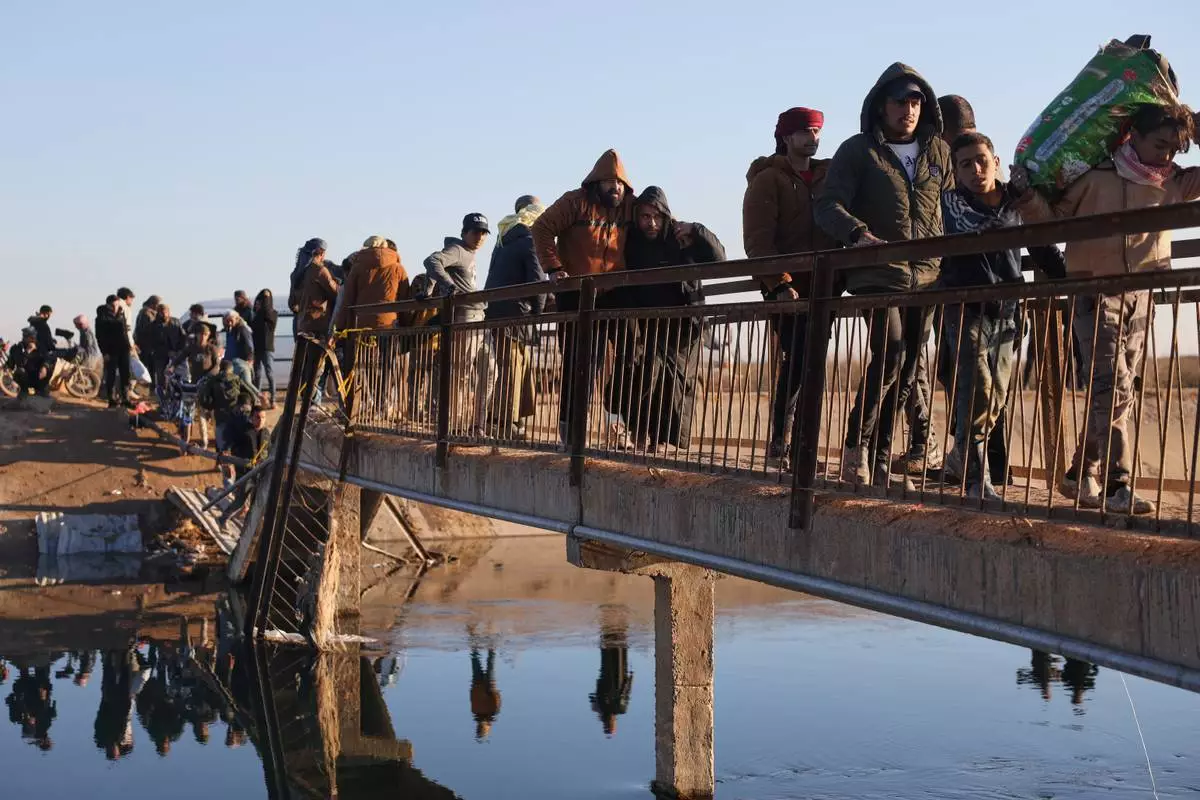
Displaced Syrians at a river crossing near the village of Jarirat al Imam, in the eastern Aleppo countryside, near the front line with the Kurdish-led Syrian Democratic Forces in Deir Hafer, Syria, Thursday, Jan. 15, 2026. (AP Photo/Omar Albam)