China expressed strong disagreement with the European Union's decision to increase tariffs on Chinese electric vehicles, while Chinese car manufacturers are considering adjustments and alternative strategies in response to the tariffs.
China on Thursday reiterated its disagreement with the EU's decision to impose hefty extra tariffs on electric vehicles (EVs) originating from China, saying that it does not align with regulations of the World Trade Organization (WTO).
Click to Gallery
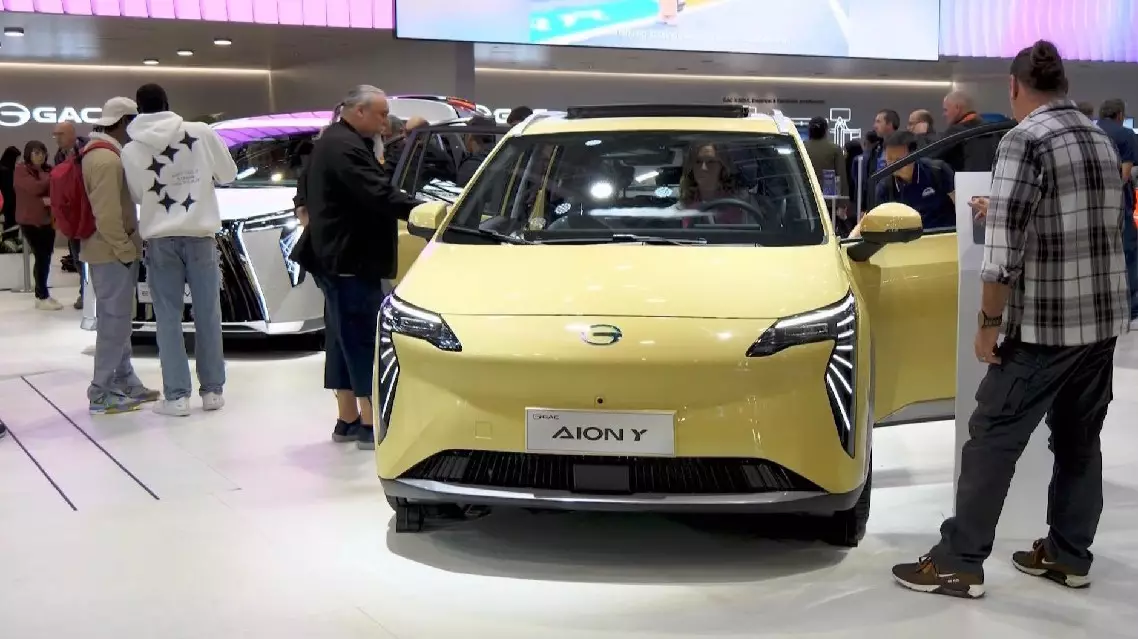
China disapproves EU EV tariffs, carmakers prepare alternative strategies
China disapproves EU EV tariffs, carmakers prepare alternative strategies
China disapproves EU EV tariffs, carmakers prepare alternative strategies
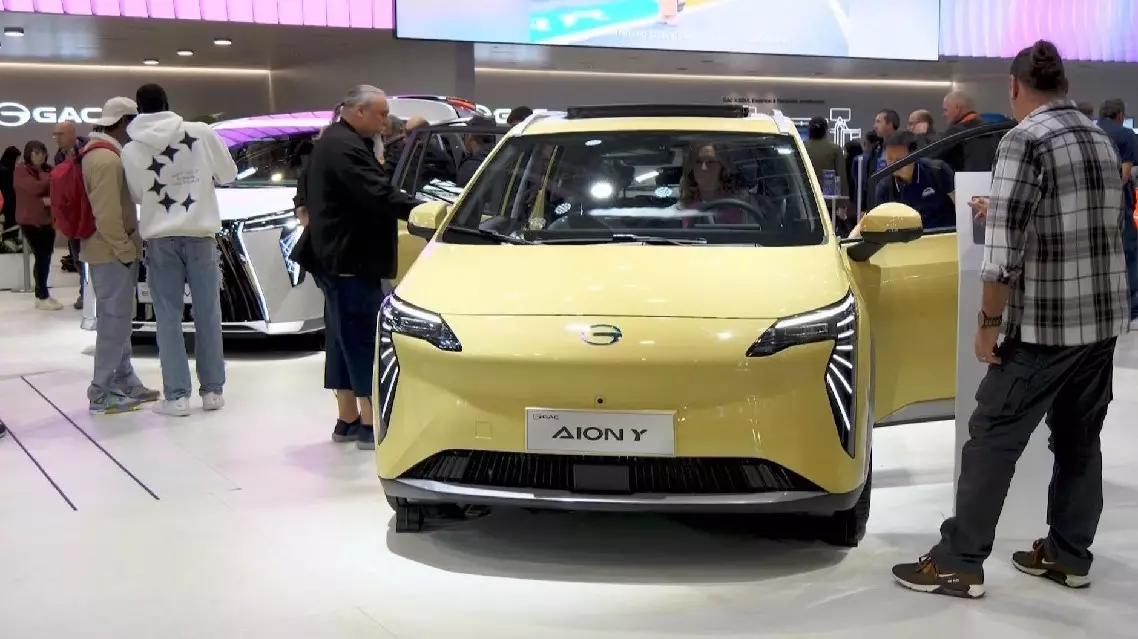
China disapproves EU EV tariffs, carmakers prepare alternative strategies
Starting Wednesday, the EU's extra tariffs on Chinese EVs, which have been raised from 10 percent to as high as 43.5 percent, will apply for a period of five years.
"There are numerous unreasonable and non-compliant practices in the EU's investigation into Chinese electric vehicles. The Chinese side has rejected all the allegations, and provided substantial feedback and evidence, but the EU has failed to give full thought to these submissions. The ruling does not align with WTO regulations and fails to address the core concerns of the Chinese and European automobile industries," He Yadong, a spokesman of the Ministry of Commerce (MOC), told a press briefing.
The EU's decision will have immediate and significant impacts on the prices and competitiveness of Chinese EVs, according to experts.
While speaking at the 2024 Paris Auto Show, car manufacturer executives said they have not given up on the European market and are considering adjustments.
"You can't change the wind, but you can certainly adjust the sails. We'll definitely make some adjustments based on the tariffs," said Feng Xingya, president of the Guangzhou Automobile Group Co., Ltd. or the GAC Group.
In light of the EU's recent trade measures, they are becoming more cautious about setting up production plants in Europe.
"Whether local production can resolve the issue of tariffs is a complex question, to which we do not yet have an answer. The reasoning behind producing locally due to higher tariffs doesn't hold, but I believe the logic of producing where there is demand is valid," said Feng.
Dolly Zhang, a trade specialist who has helped Chinese car-makers go international for over 20 years, said that Chinese automakers have always been preparing for risks and challenges.
"Before the [EU's] trade remedy, they (Chinese car-makers) had already actively [been] looking for different route to the market, different production options, different ecosystem and cooperation, in order to prepare for different trade challenges," said Zhang, a partner of indirect tax customs and global trade of Deloitte China.
Despite of the trade tariffs, the Ministry of Commerce said China will continue to cooperate with other countries to maintain the stability of the global EV supply chain and pursue the green transformation.
China disapproves EU EV tariffs, carmakers prepare alternative strategies
China disapproves EU EV tariffs, carmakers prepare alternative strategies
China disapproves EU EV tariffs, carmakers prepare alternative strategies
China disapproves EU EV tariffs, carmakers prepare alternative strategies