Chongqing, a major city in southwest China, has been leveraging financial tools to fuel consumption, with an initiative bringing together dozens of financial institutions to unveil new measures aimed at stimulating consumer spending.
On Wednesday, the Financial Support to Boost Consumption Action Conference was held in Chongqing's Nan'an District, in which 41 financial institutions jointly launched an action plan and released detailed measures to boost consumer confidence and their willingness to spend.
The city's financial regulator said it will continue to guide financial institutions to ramp up support for consumer spending. It will allocate at least 1.6 billion yuan, or around 224 million U.S. dollars worth of resources designed for reducing costs and providing incentives for consumers in 2024, which is expected to drive individual consumption loans to surpass 2.5 trillion yuan (about 350 billion U.S. dollars) for the year.
"As of the end of the third quarter, the balance of loans for consumption use in Chongqing's banking sector had reached 628.54 billion yuan (about 88 billion U.S. dollars), up 21 percent year on year. This resulted in direct savings of over 1.2 billion yuan for customers, contributing a 3.8-percent increase to the city's total retail sales of consumer goods, which is 0.5 percentage points higher than the national average," said Jian Weibo, deputy director of the No.2 Non-bank Services Section under Chongqing Municipal Financial Regulatory Bureau.
Local authorities say campaigns in the first three quarters in support of green renewals and upgrades in consumer goods have been extremely successful.
"In the next phase, we will optimize the allocation of financial resources, offer more diverse financial products, strengthen the support for consumption on both the supply and demand sides, and guide financial institutions to help boost consumption," said Jian.
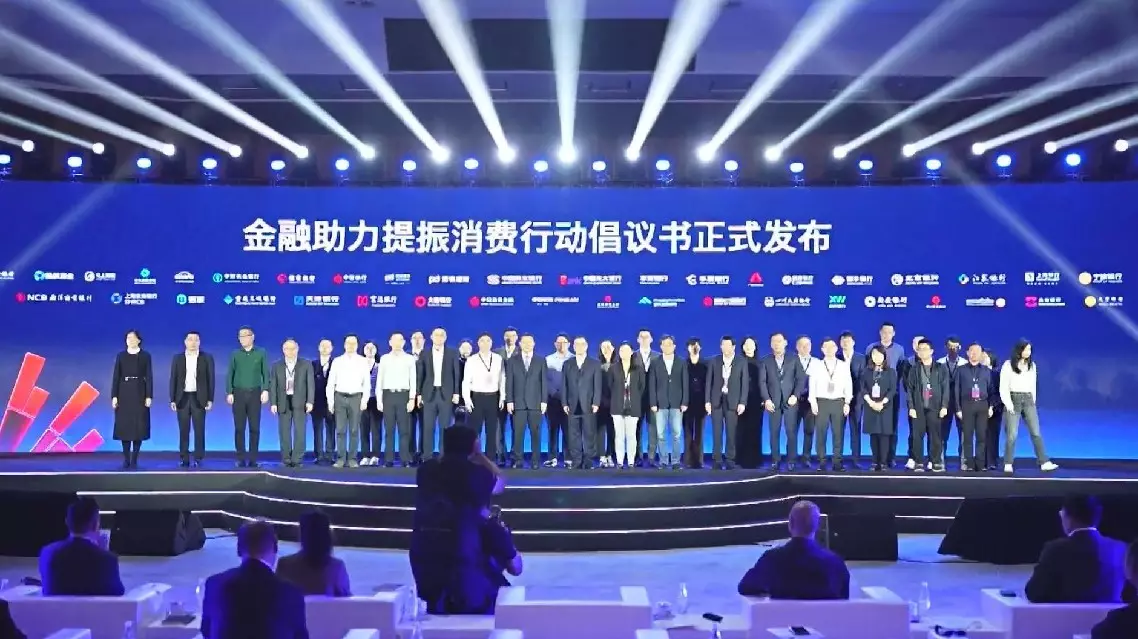
China's Chongqing unleashes fresh financial stimulus to boost consumption
Li Lan, a deputy to the 14th National People's Congress (NPC), said that the infrastructure at the Alashankou port, also known as Alataw Pass, a major railway port in northwest China's Xinjiang Uygur Autonomous Region, should be further upgraded and used intensively and efficiently to better support the high-quality development of foreign trade.
Located on the border with Kazakhstan, the Alashankou port serves as a key transportation corridor linking China with Central Asia and Europe. Freight services passing through Alashankou now cover 128 routes, connecting China with 21 countries. Cargo carried ranges from auto parts and electronic products to daily consumer goods, according to customs data.
Li, director of the port's customs technical center, has witnessed profound changes of the land port amid the country's opening-up drive.
As an important gateway opening up to the west, the Alashankou port has become one of the fastest-growing ports in terms of the foreign trade cargo throughput since the Belt and Road Initiative (BRI) was proposed by China. While performing her duties as an NPC deputy during the past year, Li focused on addressing the pain points facing foreign trade enterprises in their process for customs clearance.
"We have also conducted market research in Central Asia. Initially, we thought that our infrastructure was significantly superior to theirs. However, in recent years, their infrastructure has greatly been modernized and highly efficient. Also, their customs clearance efficiency has improved rapidly. On the other side, I think our infrastructure, including customs clearance capabilities, needs to be enhanced and further improved," said Zheng Jiahong, the person in charge of a local enterprise.
Through field research, Li discovered that a lack of standardized provisions regarding regarding the number of channels at ports of different levels, the configuration of inspection facilities and equipment, the layout of functional areas, operational procedures, and human resource guarantee significantly constrained customs clearance efficiency at the port, thereby adding burdens to logistics companies.
"In international trade, the logistics cycle is a key factor affecting the profits of foreign trade enterprises. It's safe to say that every hour, every minute counts on our cost. Saving time essentially means increasing corporate profits," said Shan Pu, the person in charge of a logistics enterprise in Alashankou City.
Xinjiang boasts 16 of the 101 land ports across China. In Li's research, she found that the primary entities responsible for port construction in various regions are often prefecture-level or even county-level governments, leading to a lack of unified standards for first-class port construction, which makes it more challenging to meet the growing demands of foreign trade development.
In her proposal to this year's NPC session, Li suggests that the National Standards for the Construction of Port Inspection Infrastructure should be revised at a faster pace at the national level, so as to provide scientific guidance for the construction of ports across the country and enable them to adapt to the increasing demands of imports and exports.
"During this year's 'two sessions', while exchanging views with several deputies from the delegation of Xinjiang, I noticed a shared aspiration that everyone is eager for Xinjiang to make greater contributions to the country's overall plan of opening up to the west. Through my thorough and in-depth research, I hope that the relevant ministries and commissions will expedite the formulation of a new edition of the National Standards for the Construction of Port Inspection Infrastructure. This will enable the upgrading of our ports, better equipping them to meet the demands of high-quality development in the country's foreign trade sector in the future," Li said.
The "two sessions" refer to the annual meetings of China's top legislature -- the National People's Congress (NPC), and the top political advisory body -- the National Committee of the Chinese People's Political Consultative Conference (CPPCC).
The 14th NPC opened its fourth session on Thursday in Beijing.
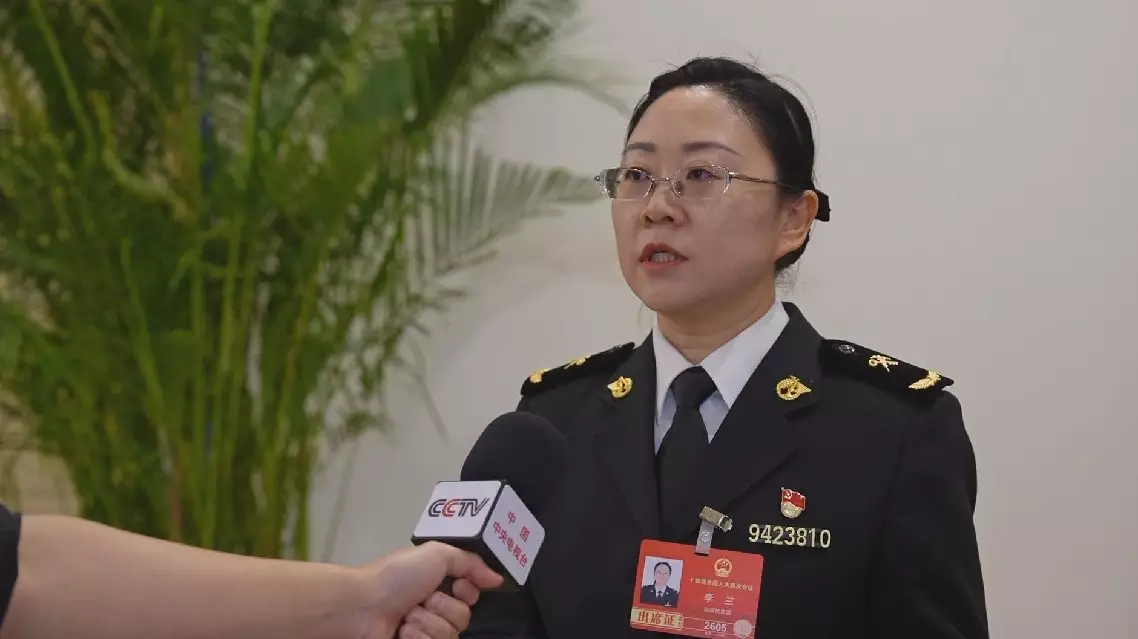
NPC deputy calls for infrastructure upgrades of land ports in Xinjiang