Skip to Content Facebook Feature Image

Yunmeng Xiangshan Museum offers insight into ancient China's governance

China

China

China

Yunmeng Xiangshan Museum offers insight into ancient China's governance

2024-11-08 01:23 Last Updated At:02:17

The Yunmeng Xiangshan Museum in central China's Hubei Province has more than 5,000 pieces of cultural relics with the most famous collection being bamboo and wooden slips, the main medium for writing documents in China before the widespread use of paper, offering a rare glimpse into the nation's administrative, legal and social structures 2,200 years ago.

Among the museum's collection are 49 under national first-class protection, 64 second-class, and 242 third-class.

Over 1,000 bamboo slips were discovered in a Qin tomb in Yunmeng County in 1975. The artifacts are of great value to the historical analysis of the politics and law of the late Warring States Period (475-221 BC) to the Qin Dynasty (221-206 BC).

The bamboo slips detailed the legal system, local governance, and medical practices of the period. Containing about 40,000 characters, these slips represent the first known documentation of Qin Dynasty laws and administrative systems.

Among them, The Eighteen Types of Qin Laws is the earliest and most complete ancient legal document discovered in China to date. It provides detailed regulations on various aspects from agricultural production to warehouse management, currency, and provisions for the postal system. These legal texts and their underlying principles hold significant value for studying the history of China's ancient legal system.

Ancient bamboo and wooden slips are slender, rectangular pieces on which ancient Chinese recorded information using brush and ink before the invention of paper. Every slip measures 23.1 to 27.8 centimeters in length and 0.5 to 0.8 centimeters in width. They're a symbol of Chinese heritage and provide detailed and reliable information for further research focusing on ancient China.

Next to each of the displayed slips is the original text of the ancients and its translation into modern terms. The handwriting is clear and the translation is easy to understand. It records the social order, wisdom and family affairs thousands of years ago.

"Yunmeng is the first place where Qin Dynasty bamboo slips were discovered. It not only fills a gap in archaeological history, but the content recorded in it, especially the legal content, is the earliest and most complete evidence of legal code seen so far in China. In addition, the earliest wooden slips of family letters discovered so far and the longest document in China were also unearthed here," said Zhang Hongkui, curator of the museum.

Chinese President Xi Jinping, also general secretary of the Communist Party of China Central Committee and chairman of the Central Military Commission, visited the museum earlier this week to learn about the local efforts to enhance the protection, research and use of cultural relics in Yunmeng County.

President Xi said ancient bamboo slips are precious and important physical evidence of ancient China which should be well protected and carefully studied. He emphasized that archaeological work must be continued to gather more materials depicting the country's history.
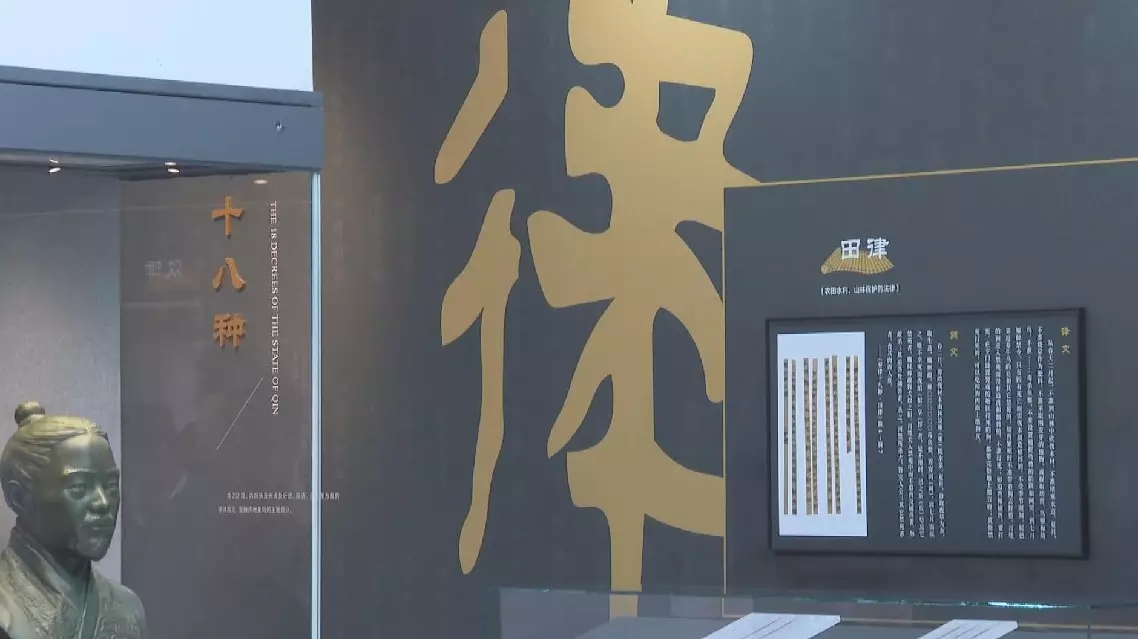
Yunmeng Xiangshan Museum offers insight into ancient China's governance


Yunmeng Xiangshan Museum offers insight into ancient China's governance

An industry observer said that 2026 is poised to be a "year of sequels and cultural stories" in global animation, following a strong 2025 where such films dominated box offices worldwide.

With heavyweights like Toy Story 5, Minions 3, and China's perennial favorite Boonie Bears set for release, along with culturally rooted productions such as The Three Kingdoms: War 1 Luoyang, the coming months are expected to draw large audiences and reinforce animation's central role in cinema.

This optimism is built on a solid foundation from the previous year.

Looking back at China's film market in 2025, animated features emerged as a powerful driving force. Four of the year's top 10 highest-grossing films were animations, three of which were domestic productions.

Total animation revenue exceeded 25 billion yuan (around 3.58 billion U.S. dollars), capturing nearly 50 percent of the annual box office. As the new year unfolds, the animation sector continues to shine with promising highlights.

A key trend driving this momentum is the surge of sequels from major franchises.

"One notable trend is the abundance of sequels to classic animated films, particularly from Hollywood. Several iconic series are releasing new installments, making 2026 a year of animated sequels. Given their strong IP foundation, these sequels are expected to attract more audiences' attention and achieve solid box office results," said Hu Jianli, secretary general of the Chinese Film Critics Society.

Alongside these international sequels, domestic animation IPs are also deepening their influence and expanding their reach. The annual Boonie Bears series will welcome its latest installment, while the popular TV series The Immortal Ascension is set for its big-screen debut.

"It's fair to say that the Boonie Bears series has maintained the most consistent quality among domestic animated film franchises over the years. Its expansion from television to movies, merchandise, and theme parks represents a fully developed industrial chain, greatly strengthening the IP's presence in the public consciousness. As for The Immortal Ascension, it's the first time that the animation IP is adapted for the big screen, which naturally generates exceptional attention—especially following the successful live-action web series last year. If this first animated film adaptation succeeds, it has the potential to become a major film IP in its own right," said Hu.

Beyond the reliance on established franchises, another significant creative trend is the growing number of animated films drawing inspiration from China's rich classical literature and historical epics. This approach aims to connect with audiences through deeply rooted cultural narratives.

A leading example is a prominent Chinese animation studio Light Chaser Animation's upcoming "The Three Kingdoms: War 1 Luoyang", which dramatizes the early power struggles from the famed historical period.

"We are seeing a clear increase in animated films adapted from classic Chinese novels and myths. Light Chaser Animation Studios' 'New Culture Series' has performed exceptionally well in our animated film market—for example, 30,000 Miles from Changan earned over 1.8 billion yuan (around 257.98 million U.S. dollars) at the box office. This series has truly succeeded in creatively transforming and innovatively developing China's outstanding traditional culture for the big screen, while also resonating emotionally with today's young audiences through its storytelling and character adaptations," said Hu.

Beyond sequels and adaptations rooted in traditional culture, original animated films are also carving out their space with unique concepts and distinctive styles, showcasing further creative possibilities.

Titles such as Arco, a 2025 animated science-fantasy film, and Pixar's Hoppers exemplify this trend of innovation.

"I believe animated films will remain a major force in the global box office in 2026. The worldwide top-grossing film of 2024 was Inside Out 2, and in 2025 it was China's Ne Zha 2. So I'm confident that animated films will once again rank among the highest-grossing releases globally this year," Hu said.

Animated films set to dominate 2026 global box office with strong lineup

Animated films set to dominate 2026 global box office with strong lineup

Recommended Articles