More than just cuddly creatures, pandas are serving as China's charming cultural ambassadors, boosting tourism both domestically and internationally.
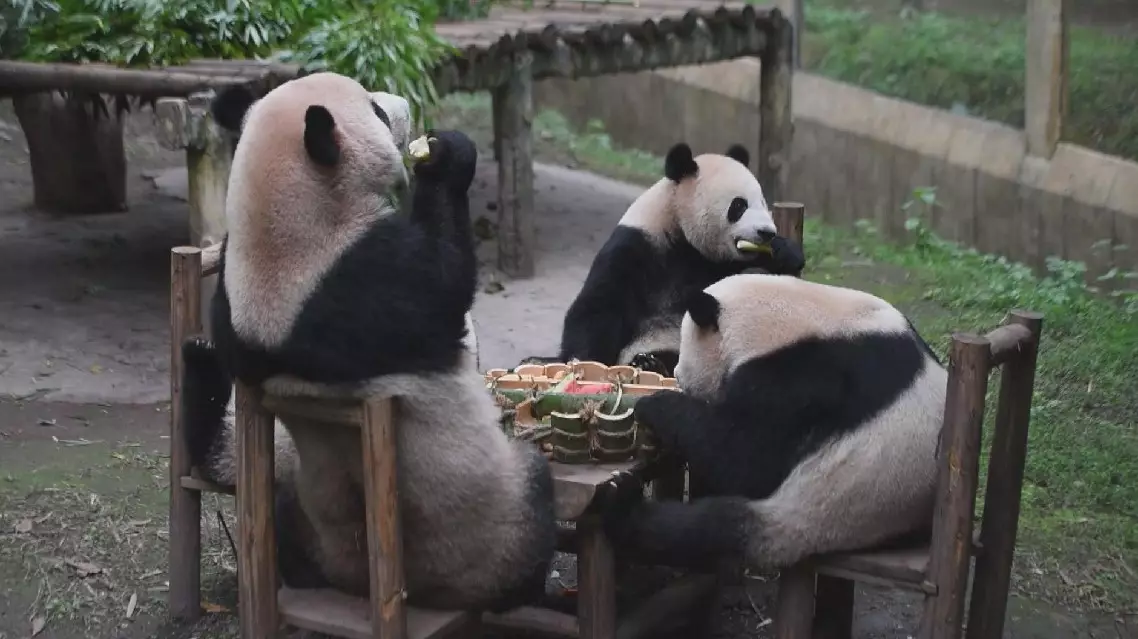
A panda sanctuary in southwest China's Chongqing Municipality is welcoming visitors to meet its 23 furry residents, captivating both locals and tourists alike.
Visitors are flocking to the zoo to catch a glimpse of the famous twin pandas, Yu Ke and Yu Ai, and the newest addition, the charming cub Qi San Mei, born in June.
“(I love) both Yu Ke and Yu Ai,” said Huang Yi, a local tourist.
“I saw Qi San Mei on a short video platform. She is so cute that I came to take a look at her with my own eyes,” said Xu Sicong, another tourist.
“Pandas they are great animals. I see them on the TV. Now I'm seeing them live. I'm very excited,” said a U.S. tourist.
“I love pandas. They are so cute. I wish we could pat a baby. Is it possible?” said another U. S. tourist.
Meanwhile, visitors can indulge their love for pandas by purchasing cute panda merchandise or enjoying panda-themed snacks and drinks.
The fascination with pandas extends far beyond China's borders. In Moscow, the Chinese Fauna Pavilion, with its panda exhibit, draws in over 15,000 visitors daily, fostering cultural exchange and understanding.
Recently, Russia's own panda superstar, Katyusha, was spotted frolicking in the snow at the Moscow Zoo, melting hearts with her adorable antics
Moreover, the Chinese pavilion at the World Travel Market (WTM) London 2024 used the undeniable charm of pandas to attract global attention, incorporating panda imagery into their decorations and marketing materials. WTM London is one of the world's most influential travel and tourism events.
Pandas shape China's global image, boost tourism
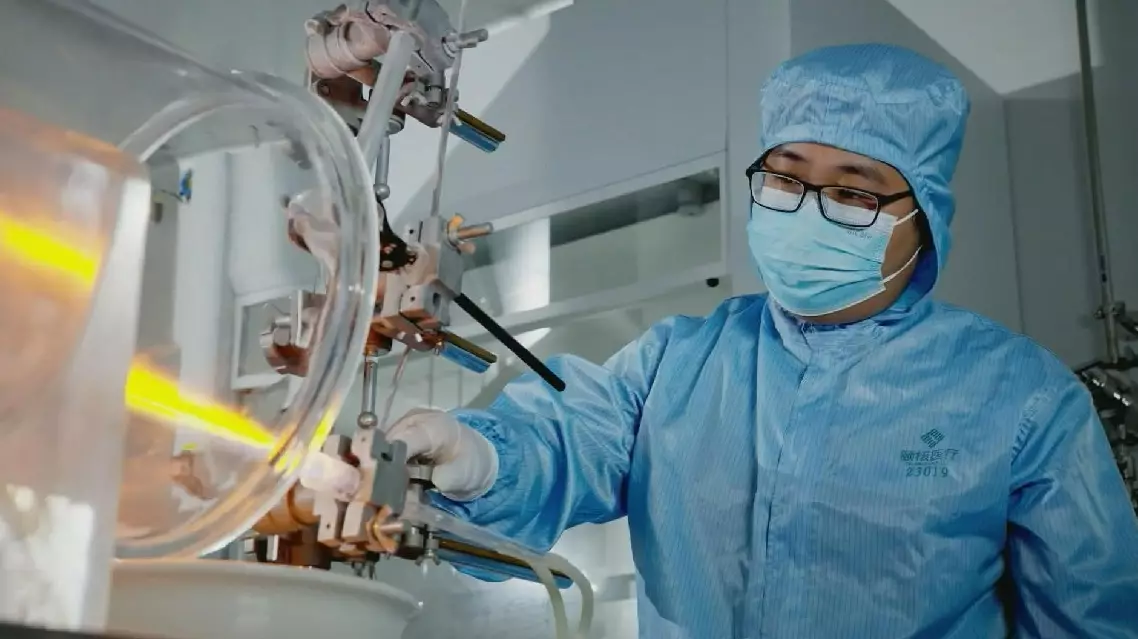
China's outline of the 15th Five-Year Plan (2026-2030), adopted on Thursday, maps out a systematic path toward high-quality development by building new growth drivers through the fostering of emerging and future industries.
In the latest five-year blueprint, the emerging strategic industries China will nurture have been expanded to include new sectors like intelligent connected new-energy vehicles (NEVs) and robotics. It also outlines plans to establish emerging strategic industry clusters tailored to local conditions, each with its own distinctive features and complementary strengths.
Experts suggested that this marks a shift for emerging industries -- from isolated breakthroughs to scaled, clustered development.
"During the 15th Five-Year Plan period, we aim to further promote and expand emerging industries in both scale and quality. The development of industrial clusters is a clear reflection of economies of scale. Building on the existing foundation, this will further sharpen the international competitiveness of our emerging industries. The blueprint's emphasis on new application scenarios and innovative business models will also help steer these industries toward a higher quality of development," said Wei Qijia, a researcher at the State Information Center, which is under China's National Development and Reform Commission.
The plan also identifies key frontiers to reach, including quantum technology, biomanufacturing, hydrogen and nuclear fusion energy, brain-computer interfaces, embodied artificial intelligence (AI) and 6G. Moving beyond mere technological roadmaps, it also stresses the need to build a full-chain incubation system for future industries.
"This forward-looking approach reflects a keen sense of foresight. The plan introduces mechanisms for identifying and monitoring emerging industries and making dynamic adjustments accordingly. If a particular new area or arena shows potential to foster emerging future technologies, it needs to be identified as early as possible. The blueprint's specific references to initiatives such as pilot zones for future industries and research institutes dedicated to their development also signal an important direction in terms of working methodology -- providing clear guidance on how to nurture the industries of the future," he said.
China's five-year blueprint set to foster emerging, future industries