Skip to Content Facebook Feature Image

Swiss villagers pack up for evacuation over fears of another rockslide

News

Swiss villagers pack up for evacuation over fears of another rockslide
News

News

Swiss villagers pack up for evacuation over fears of another rockslide

2024-11-13 23:32 Last Updated At:23:41

GENEVA (AP) — Families in a tiny Swiss village were packing up Wednesday after authorities issued an evacuation order with a weekend deadline because of the threat of a possible rockslide from an Alpine mountainside overhead.

Authorities in charge of the eastern village of Brienz said in a statement Tuesday that they analyzed the potential danger with geology and natural-hazards specialists and recommended the precautionary evacuation by 1 p.m. Sunday.

Christian Gartmann, a member of the crisis management board in the town of Albula, which counts Brienz in its jurisdiction, said inhabitants of the village, with a population of 90, were making quick preparations.

A similar evacuation took place in May last year. The following month, a rockslide sent 2 million cubic meters of stone tumbling down the mountainside — but it missed the village. Another 1.2 million cubic meters still loom, leading to the new order for evacuation.

“It has begun, immediately actually. People in the village organized themselves,” Gartmann said by phone. Some were “a little bit aggressive towards us" for ordering the evacuation, he said, adding that he understood their discontent.

“No one is in favor of his own evacuation. They would love to stay in their houses. They have been living in these houses for generations and they don’t want to leave their village,” Gartmann said. “But actually, it’s the mountain that orders us to evacuate them.”

In recent days, authorities have been advising villagers to take essential items, like computers, winter wear and school and work materials, for up to six months out of town, he said.

“It's not a total moving-out,” Gartmann said, summarizing the order to locals as “take everything that you need for the next few months. If you have some cheap ... sofa at home, leave it.”

Temporary lodging out of the village, which sits in between Italian and German-speaking parts of southeastern Switzerland, has already been arranged for about three-quarters of residents, and some were staying nearby with friends or family, he said.

The main threat is posed by rocks that are already strewn along the mountainside, not a larger breakage, Gartmann said.

A controlled explosion to trigger a rockslide to reduce the risk of an uncontrolled one has been ruled out, in part because 300 tons of explosives would be needed, he said. Blasting crews would face risks, and a detonation could also affect a nearby mountain.

A severe rockslide would almost certainly destroy the village anyway, Gartmann said. Instead, work is under way to relieve water pressure under the land that has unsettled the rocks in a bid to reduce the risk and give peace of mind to residents.

The gradual erosion has taken place over 12,000 years, since the end of the last Ice Age, he said.

While authorities plan to compensate evacuees for extra costs related to their departure, no payouts are planned for damage to personal belongings “because it's no one's fault. It's nature that dictates the evacuation," Gartmann said.
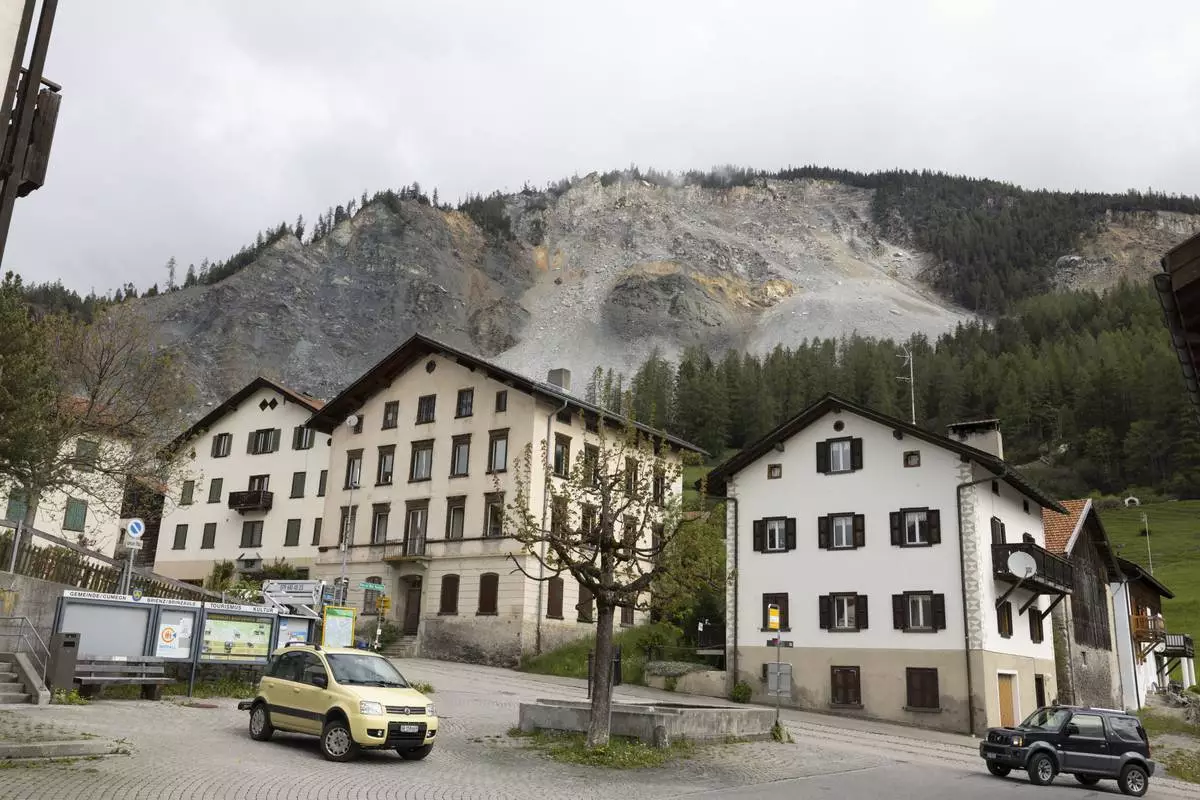
FILE - Residential buildings stand in front of the "Brienzer Rutsch" the rockfall danger zone in Brienz-Brinzauls, Switzerland, Friday, May 12, 2023. (AP Photo/Arnd Wiegmann, file)
FILE - Residential buildings stand in front of the "Brienzer Rutsch" the rockfall danger zone in Brienz-Brinzauls, Switzerland, Friday, May 12, 2023. (AP Photo/Arnd Wiegmann, file)

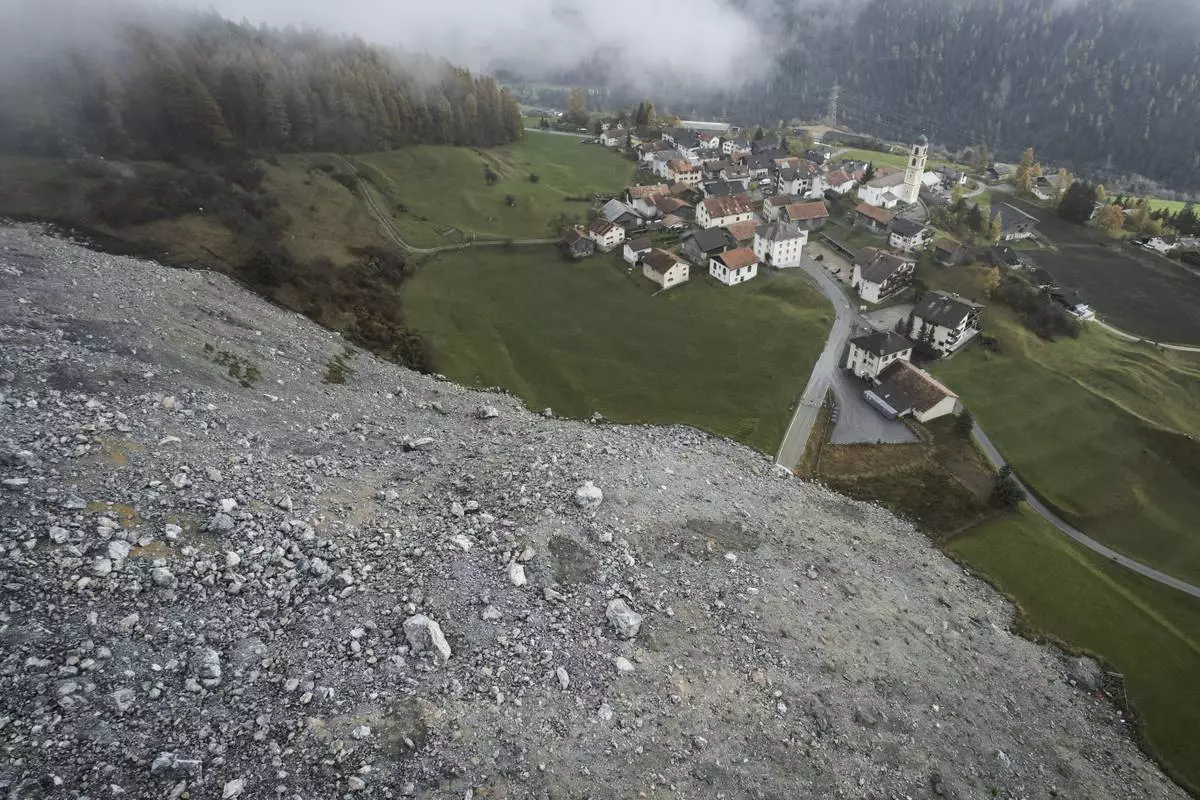
A view of a landslide next to Brienz, Tuesday, Nov. 12, 2024, in Brienz-Brinzauls, Switzerland. (Gian Ehrenzeller/Keystone via AP)
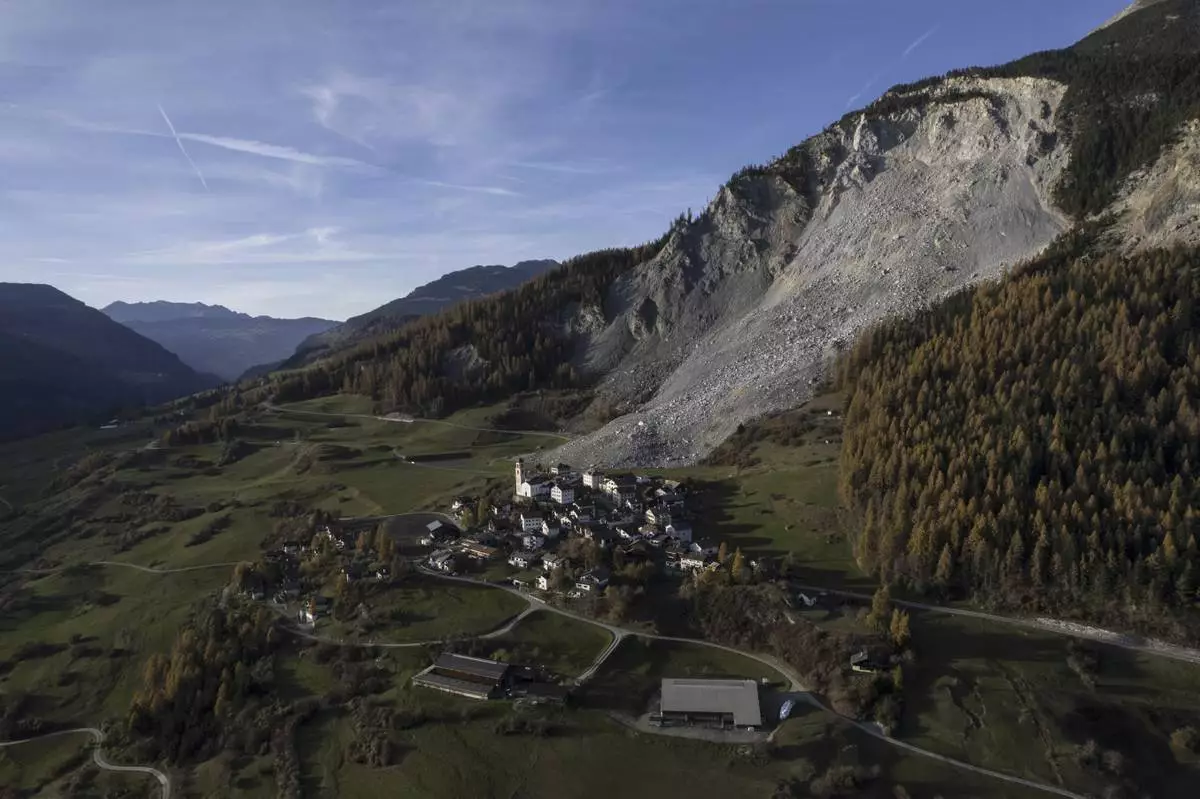
A view of a landslide next to Brienz, Tuesday, Nov. 12, 2024, in Brienz-Brinzauls, Switzerland. (Gian Ehrenzeller/Keystone via AP)

A view of the village of Brienz, Switzerland, on Saturday, Nov. 9, 2024. (Gian Ehrenzeller/Keystone via AP)


A view of the village of Brienz, Switzerland, on Saturday, Nov. 9, 2024. (Gian Ehrenzeller/Keystone via AP)

CARACAS, Venezuela (AP) — Venezuela’s government accused the United States of attacking civilian and military installations in multiple states after at least seven explosions and low-flying aircraft were heard around 2 a.m. local time Saturday in the capital, Caracas.

The Pentagon and White House did not immediately respond to requests for comment.

Smoke could be seen rising from the hangar of a military base in Caracas. Another military installation in the capital was without power.

People in various neighborhoods rushed to the streets. Some could be seen in the distance from various areas of Caracas.

“The whole ground shook. This is horrible. We heard explosions and planes,” said Carmen Hidalgo, a 21-year-old office worker, her voice trembling. She was walking briskly with two relatives, returning from a birthday party. “We felt like the air was hitting us.”

Venezuela’s government, in the statement, called on its supporters to take to the streets.

“People to the streets!” the statement said. “The Bolivarian Government calls on all social and political forces in the country to activate mobilization plans and repudiate this imperialist attack.”

The statement added that President Nicolás Maduro had “ordered all national defense plans to be implemented” and declared “a state of external disturbance.”

This comes as the U.S. military has been targeting, in recent days, alleged drug-smuggling boats. On Friday, Venezuela said it was open to negotiating an agreement with the U.S. to combat drug trafficking.

Maduro also said in a pretaped interview aired Thursday that the U.S. wants to force a government change in Venezuela and gain access to its vast oil reserves through the monthslong pressure campaign that began with a massive military deployment to the Caribbean Sea in August.

Maduro has been charged with narco-terrorism in the U.S. The CIA was behind a drone strike last week at a docking area believed to have been used by Venezuelan drug cartels in what was the first known direct operation on Venezuelan soil since the U.S. began strikes on boats in September.

U.S. President Donald Trump for months had threatened that he could soon order strikes on targets on Venezuelan land. The U.S. has also seized sanctioned oil tankers off the coast of Venezuela, and Trump ordered a blockade of others in a move that seemed designed to put a tighter chokehold on the South American country’s economy.

The U.S. military has been attacking boats in the Caribbean Sea and the eastern Pacific Ocean since early September. As of Friday, the number of known boat strikes is 35 and the number of people killed is at least 115, according to numbers announced by the Trump administration.

They followed a major buildup of American forces in the waters off South America, including the arrival in November of the nation’s most advanced aircraft carrier, which added thousands more troops to what was already the largest military presence in the region in generations.

Trump has justified the boat strikes as a necessary escalation to stem the flow of drugs into the U.S. and asserted that the U.S. is engaged in an “armed conflict” with drug cartels.

Meanwhile, Iranian state television reported on the explosions in Caracas on Saturday, showing images of the Venezuelan capital. Iran has been close to Venezuela for years, in part due to their shared enmity of the U.S.

Pedestrians walk past the Miraflores presidential palace after explosions and low-flying aircraft were heard in Caracas, Venezuela, Saturday, Jan. 3, 2026. (AP Photo/Cristian Hernandez)

Pedestrians walk past the Miraflores presidential palace after explosions and low-flying aircraft were heard in Caracas, Venezuela, Saturday, Jan. 3, 2026. (AP Photo/Cristian Hernandez)

Residents evacuate a building near the Miraflores presidential palace after explosions and low-flying aircraft were heard in Caracas, Venezuela, Saturday, Jan. 3, 2026. (AP Photo/Cristian Hernandez)

Residents evacuate a building near the Miraflores presidential palace after explosions and low-flying aircraft were heard in Caracas, Venezuela, Saturday, Jan. 3, 2026. (AP Photo/Cristian Hernandez)

Smoke raises at La Carlota airport after explosions and low-flying aircraft were heard in Caracas, Venezuela, Saturday, Jan. 3, 2026. (AP Photo/Matias Delacroix)

Smoke raises at La Carlota airport after explosions and low-flying aircraft were heard in Caracas, Venezuela, Saturday, Jan. 3, 2026. (AP Photo/Matias Delacroix)

Pedestrians run after explosions and low-flying aircraft were heard in Caracas, Venezuela, Saturday, Jan. 3, 2026. (AP Photo/Matias Delacroix)

Pedestrians run after explosions and low-flying aircraft were heard in Caracas, Venezuela, Saturday, Jan. 3, 2026. (AP Photo/Matias Delacroix)

Smoke raises at La Carlota airport after explosions and low-flying aircraft were heard in Caracas, Venezuela, Saturday, Jan. 3, 2026. (AP Photo/Matias Delacroix)

Smoke raises at La Carlota airport after explosions and low-flying aircraft were heard in Caracas, Venezuela, Saturday, Jan. 3, 2026. (AP Photo/Matias Delacroix)

Smoke raises at La Carlota airport after explosions and low-flying aircraft were heard in Caracas, Venezuela, Saturday, Jan. 3, 2026. (AP Photo/Matias Delacroix)

Smoke raises at La Carlota airport after explosions and low-flying aircraft were heard in Caracas, Venezuela, Saturday, Jan. 3, 2026. (AP Photo/Matias Delacroix)

Pedestrians run after explosions and low-flying aircraft were heard in Caracas, Venezuela, Saturday, Jan. 3, 2026. (AP Photo/Matias Delacroix)

Pedestrians run after explosions and low-flying aircraft were heard in Caracas, Venezuela, Saturday, Jan. 3, 2026. (AP Photo/Matias Delacroix)

Recommended Articles