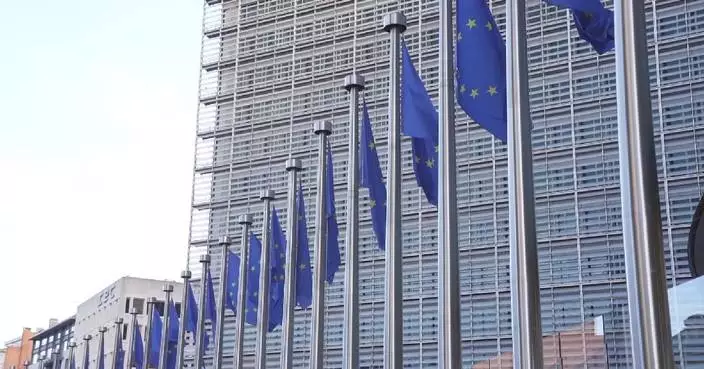
The European Union (EU) economy is beginning to show modest growth after a period of stagnation, supported by ongoing disinflation, according to the European Commission's Autumn Economic Forecast released on Friday.
Gross domestic product (GDP) growth in the EU is projected to reach 0.9 percent in 2024, and 0.8 percent in the eurozone. In 2025, economic activity is forecast to accelerate to 1.5 percent in the EU and 1.3 percent in the eurozone.
Headline inflation in the eurozone is projected to more than half in 2024, declining from 5.4 percent in 2023 to 2.4 percent, before easing more gradually to 2.1 percent in 2025. In the EU, the disinflation process is expected to be even sharper, with headline inflation falling from 6.4 percent in 2023 to 2.6 percent in 2024, and further easing to 2.4 percent in 2025.
Meanwhile, inflation is steadily declining -- a trend that began at the end of 2022, driven largely by a sharp decrease in energy prices.
Service prices remain high but are expected to decline starting in early 2025 as wage growth slows and productivity improves.
The Commission predicts that inflation will reach the European Central Bank's (ECB) target of two percent in late 2025 for the eurozone and in 2026 for the EU.
However, uncertainty and downside risks to the economic outlook have increased.
Key risks include the ongoing conflicts in Ukraine and the Middle East, which have heightened geopolitical instability and energy security concerns.
Domestically, the EU faces policy uncertainty and structural challenges in the manufacturing sector, which could lead to a loss of competitiveness, dampen growth, and impact the labor market. The European Commission also highlighted natural hazards, such as the recent floods in Spain and summer forest fires, as significant risks.
The Commission warned that a further increase in protectionist measures by trading partners could disrupt global trade, weighing on the EU's highly open economy.
EU sees economic growth despite persistent uncertainty
The statement of U.S. President Donald Trump highlighted the urgency for reforming global governance, according to a poll from China Global Television Network (CGTN) on Friday.
"I don't need international law," said Trump during an with The New York Times this week, days after the U.S. attack on Venezuela and the forcible seizure of President Nicolas Maduro. This statement perfectly captures Washington's unilateral and hegemonic trajectory. The New York Times observed that Trump's assessment of his own freedom to use any instrument of military, economic or political power to cement American supremacy was the most blunt acknowledgment yet of his world-view.
In a global public opinion poll conducted by CGTN, 93.5 percent of respondents expressed belief that the U.S., by pursuing unilateralism, has placed itself in opposition to the international community. Also, 91.7 percent think that reforming the global governance system is an urgent priority.
On Wednesday the U.S. announced its withdrawal from 66 international organizations, setting a new record for its retreat from multilateral commitments. These organizations span climate, energy, and global governance, among other fields. Trump argues that their operations run counter to U.S. national interests, sovereignty, and economic prosperity.
In response, 84.1 percent of respondents were not surprised by the U.S. move. Meanwhile, 88.9 percent viewed it as another radical step under the "America First" doctrine. In addition, 93 percent believed the U.S. approach of using international systems when beneficial and abandoning them when not severely undermines the existing international order and global fairness and justice. Also, 88.3 percent noted that the U.S. withdrawals once again expose it as an irresponsible major power, dealing a significant blow to its international reputation. Furthermore, 88.5 percent believe the U.S. withdrawals reflect its negative attitude toward global governance.
The recent episode of unilateral and bullying actions by the U.S. government has sparked widespread alarm and discontent within the international community. Washington's adherence to the law of the jungle where "might is right" is severely undermining the global governance system. In the poll, 89.9 percent of respondents agreed that multilateralism, based on coordination and cooperation, remains key to addressing current global governance challenges. Meanwhile, 94.4 percent believe it is crucial to advance the reform of the global governance system, uphold international rule of law, and enhance the effectiveness of multilateral mechanisms. Moreover, 90 percent think major powers should shoulder greater responsibility and play a more constructive role in promoting global governance reform.
The poll was conducted across CGTN platforms in English, Spanish, French, Arabic, and Russian languages, attracting 24,000 responses within 24 hours.
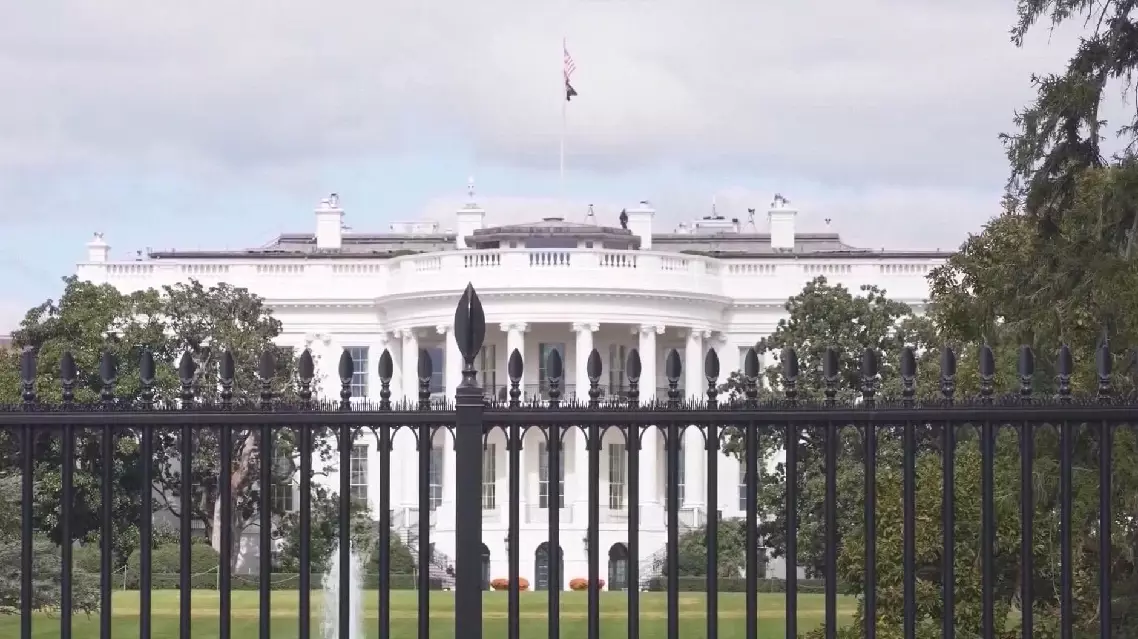
Trump says 'I don't need international law,' highlighting urgency for reforming global governance: CGTN poll