China's Permanent Representative to the United Nations Fu Cong on Monday urged the U.N. Security County to take all necessary actions as fast as possible to deal with the ongoing Palestinian-Israeli conflict.
Addressing a Security Council meeting, Fu said facts have proved that any delay of the U.N. Security Council only means greater damage and more civilian deaths and injuries.
Click to Gallery
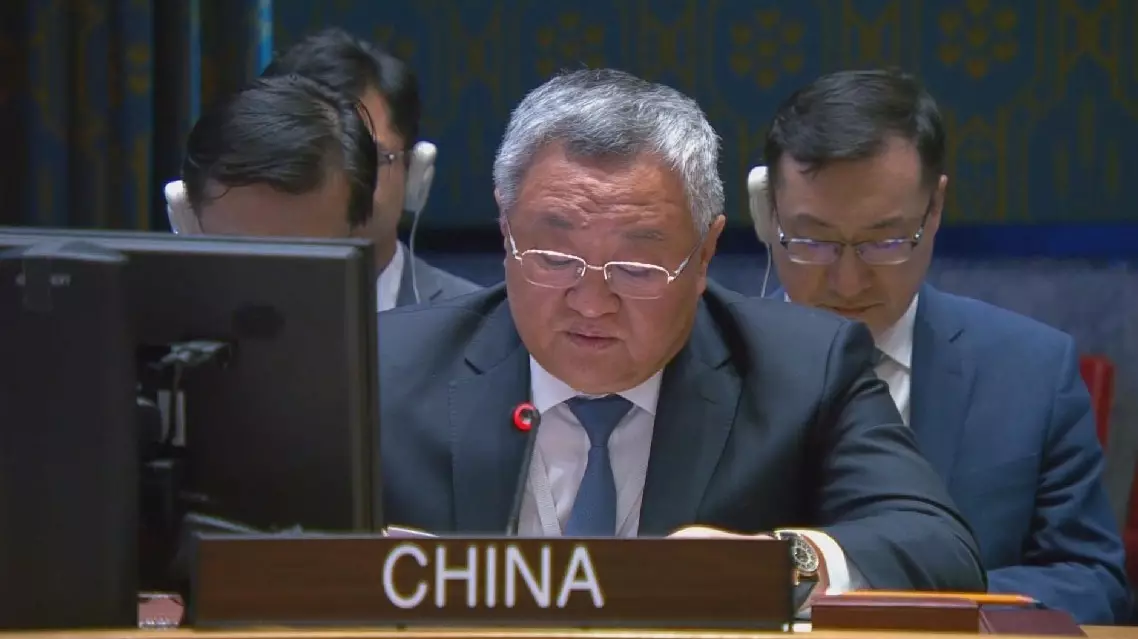
China urges swift actions from U.N. Security Council on Middle East situation
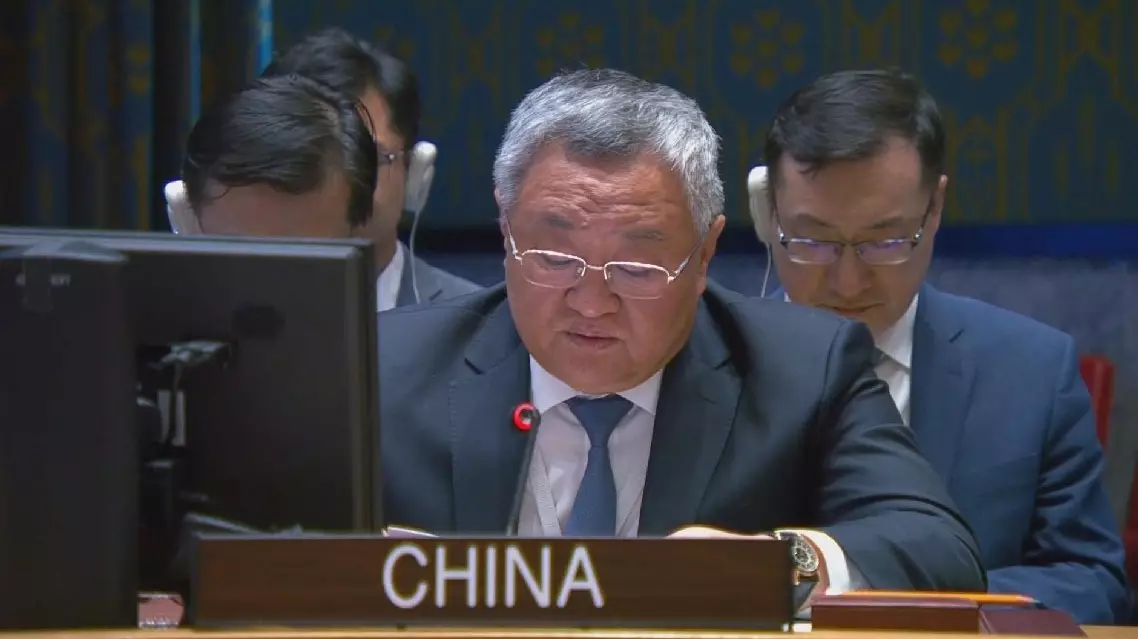
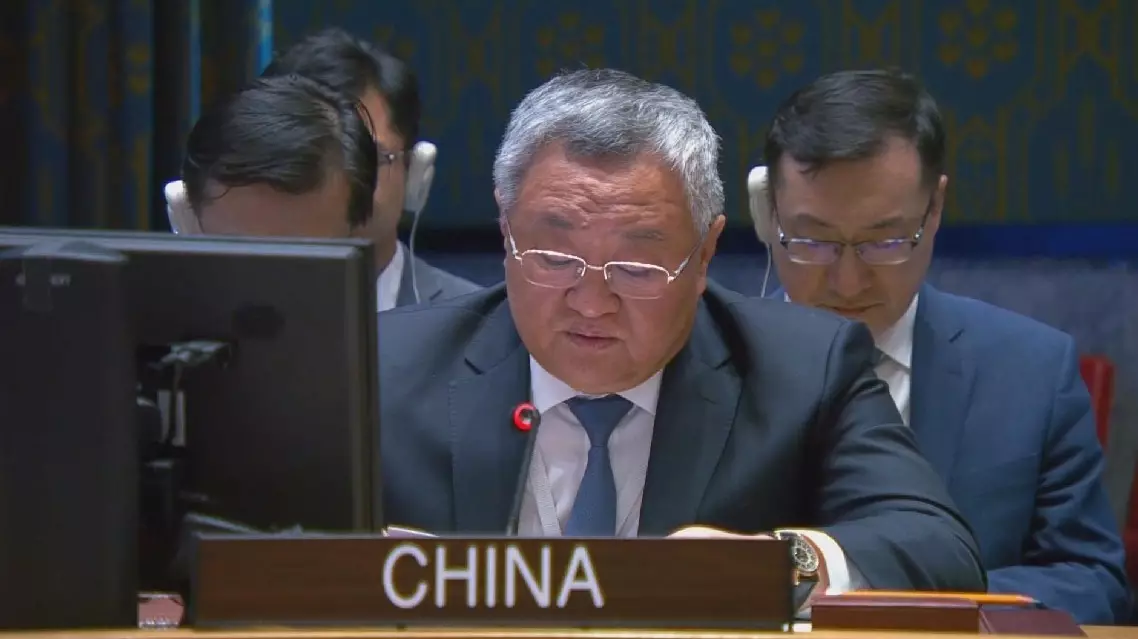
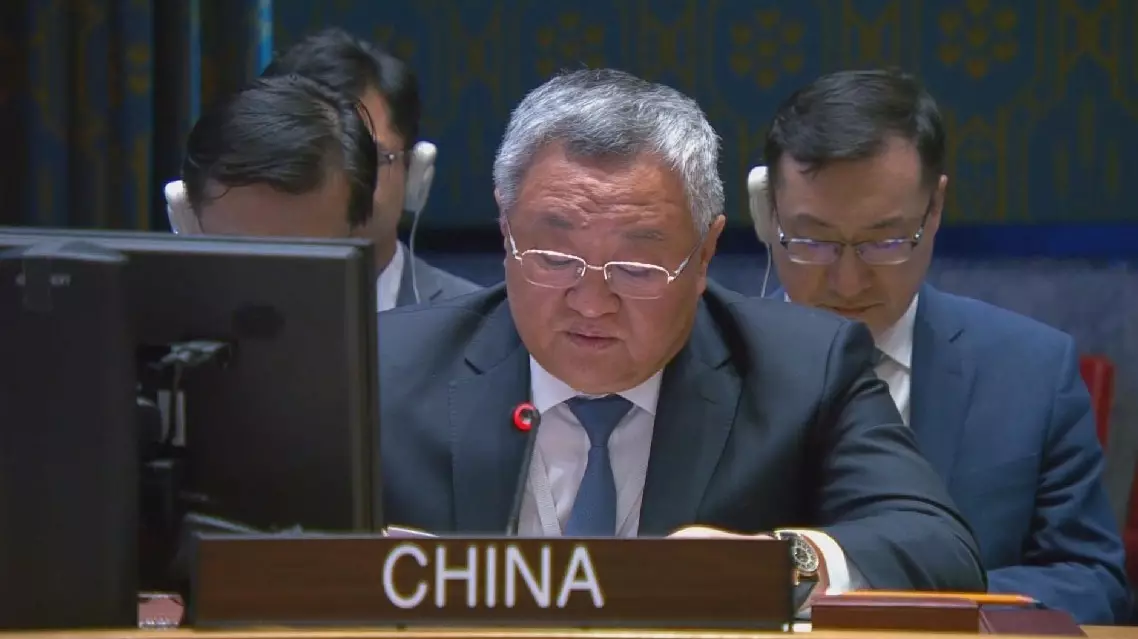
After the United States vetoed a latest U.N. Security Council draft resolution calling for an immediate ceasefire in the war-torn Gaza Strip on Nov. 20, hundreds of civilians have died and the situation is slipping to a more dangerous direction, Fu said.
Fu stressed that immediate effort should be made to achieve unconditional and long-lasting ceasefire, which is an important prerequisite for saving lives. He added that barriers to humanitarian aid access must be removed. The implementation of international humanitarian law is a non-negotiable obligation and cannot be used as a bargaining chip. Any unilateral attempts trying to undermine the two-state solution must be resisted.
Fu pointed out the U.N. Security Council must prevent a larger-scale regional conflict. The current situation in the Middle East is precarious. Israel must put aside its obsession with the use of force, stop its attacks against Lebanon, Syria, Iran and other countries, and stop its provocative and adventurous actions.
"The ongoing Gaza conflict is the biggest stress test the United Nations has ever faced in the Middle East. We believe it first tests the U.N. Security Council members' ability to save lives and maintain peace, the determination to uphold the international rule of law and justice, and the willingness to defend the authority of the U.N. Security Council mechanism and its resolutions," Fu said.
"So far, due to the negative attitude of some countries, the Security Council's performance in this test has been incompetent. We call on some countries to face up to their responsibilities and support the Security Council in using all the options in its toolbox to take further action to achieve an immediate ceasefire and restore peace," he said.
China urges swift actions from U.N. Security Council on Middle East situation


A video featuring a former member of Unit 731, a notorious Japanese germ-warfare unit during World War II (WWII), was released on Thursday in northeast China's Harbin, revealing details of how the unit used meteorological data to conduct horrific bacterial experiments on human beings.
The video was released by the Exhibition Hall of Evidence of Crimes Committed by Unit 731 of the Japanese Imperial Army, in which former Unit 731 member Tsuruo Nishijima detailed how the unit used meteorological data to carry out a bacterial dispersal experiment.
The video was recorded in 1997 by Japanese scholar Fuyuko Nishisato and donated to the exhibition hall in 2019, according to the hall, which was built on the former site of the headquarters of Unit 731 in Harbin, the capital city of Heilongjiang Province.
Jin Shicheng, director of the Department of Publicity, Education and Exhibition of the exhibition hall, said that Nishijima joined Unit 731 in October 1938 and served in the unit's meteorological squad. The squad was not a simple observation section but rather an auxiliary force supporting the unit's field human experiments by measuring wind direction, wind speed, and other conditions to ensure optimal experimental results, according to Jin.
Nishijima confirmed in the footage that "the meteorological squad had to be present at every field experiment." He testified to the "rainfall experiments" conducted by Unit 731, which involved aircraft releasing bacterial agents at extremely low altitudes.
At a field-testing site in Anda City, Heilongjiang, Unit 731 aircraft descended to about 50 meters above the ground. They sprayed bacterial culture liquids onto "maruta" -- human test subjects -- who were tied to wooden stakes. Each experiment involved about 30 people, spaced roughly 5 meters apart. After the experiments, the victims were loaded into sealed trucks and transported back to the unit, where their symptoms and disease progression were recorded over a period of several days.
"Unit 731's bacterial weapons were dropped by aircraft from a height of 50 meters in the open air. Therefore, the meteorological squad needed to observe wind direction and speed, which directly affected the precision and accuracy of the bacterial weapons deployment," said Jin.
Nishijima recounted the harrowing experience of the human test subjects.
"They were fully aware that inhaling the substances would certainly lead to death, so they closed their eyes and held their breath to avoid breathing them in. Their resistance prevented the experiment from proceeding. To compel them to comply, they were forced at gunpoint to open their mouths and lift their heads," said Nishijima.
These experiments, disguised as "scientific research," were in fact systematic tests of biological warfare weapons conducted by the Japanese military. The data generated from these inhumane activities became "research findings" shared among the Japanese army medical school, the medical community, and the military at large.
"At that time, the entire Japanese medical community tacitly approved, encouraged, and even participated in the criminal acts of Unit 731. The unit comprised members from Japan's medical and academic sectors who served the Japanese war of aggression against China. Thus, Unit 731 was not just a military unit but represented an organized and systematic criminal enterprise operating from the top down," said Jin.
Unit 731 was a top-secret biological and chemical warfare research base established in Harbin as the nerve center for Japanese biological warfare in China and Southeast Asia during WWII.
At least 3,000 people were used for human experiments by Unit 731, and Japan's biological weapons killed more than 300,000 people in China.
Video offers details of Japan's germ-warfare crimes in northeast China