Skip to Content Facebook Feature Image

ICC prosecutor requests arrest warrants for the head of Myanmar's military regime

News

ICC prosecutor requests arrest warrants for the head of Myanmar's military regime
News

News

ICC prosecutor requests arrest warrants for the head of Myanmar's military regime

2024-11-27 23:18 Last Updated At:23:30

THE HAGUE (AP) — The International Criminal Court’s chief prosecutor asked judges on Wednesday to issue an arrest warrant for the head of Myanmar’s military regime for crimes committed against the country’s Rohingya Muslim minority.

Senior Gen. Min Aung Hlaing, who seized power from elected leader Aung San Suu Kyi in 2021, is accused of crimes against humanity for the deportation and persecution of the Rohingya.

Nearly a million people were forced into neighboring Bangladesh to escape what has been called an ethnic cleansing campaign involving mass rapes, killings and the torching of homes.

From a refugee camp in Bangladesh, the court’s top prosecutor, Karim Khan, said in a statement that he intended to request more warrants for Myanmar's leaders soon.

“In doing so, we will be demonstrating, together with all of our partners, that the Rohingya have not been forgotten. That they, like all people around the world, are entitled to the protection of the law,” the British barrister said.

The allegations stem from a counterinsurgency campaign that Myanmar’s military began in August 2017 in response to an insurgent attack. Hlaing, who heads the Myanmar Defense Services, is said to have directed the armed forces of Myanmar, known as the Tatmadaw, as well as the national police to attack Rohingya civilians.

Khan was in Bangladesh where he met with members of the displaced Rohingya population. About 1 million of the predominately Muslim Rohingya live in Bangladesh as refugees from Myanmar, including about 740,000 who fled in 2017.

Rohingyas face widespread discrimination in Buddhist-majority Myanmar, with most denied citizenship. Myanmar's government refuses to recognize the Rohingya as one of the country’s 135 lawful ethnic minorities, instead calling them Bengalis, with the implication that their native land is in Bangladesh and they are illegally settled in Myanmar.

Human rights groups applauded the decision to seek a warrant. The dire situation of the Rohingya has received less attention as the conflicts in Ukraine and Gaza have grabbed headlines. “The ICC prosecutor’s decision to seek a warrant against Sr. Gen. Min Aung Hlaing comes amid renewed atrocities against Rohingya civilians that echo those suffered seven years ago. The ICC’s action is an important step toward breaking the cycle of abuses and impunity,” said Maria Elena Vignoli, senior international justice counsel at Human Rights Watch.

Zin Mar Aung, foreign minister for Myanmar’s opposition National Unity Government, established by elected lawmakers barred from taking their seats in 2021, said on X that ICC judges should “swiftly issue the warrant” and that governments should “act and enforce this warrant to uphold justice and international law.” She posted that the ICC action "represents a critical moment in Myanmar history.”

Myanmar’s military regime issued a short statement, rejecting the proceedings, noting it was not party to the ICC and insisting the country's leadership practiced a policy of “peaceful coexistence.”

Khan’s request now goes to a panel of three judges who will weigh the evidence provided and determine if a warrant should be issued. There is no deadline for a decision. A request for an arrest warrant for Russian President Vladimir Putin took less than three weeks in 2023. However, warrants for Israeli Prime Minister Benjamin Netanyahu, his former defense minister and Hamas’ military chief took more than six months to be issued.

Rohingya refugees in sprawling camps in Bangladesh's Cox's Bazar district welcomed the news.

“We, all the Rohingyas, are very delighted, and I am personally very happy to hear about the application sent to the judges because the Myanmar military government has been torturing us for about 75 years, forcing us to leave our native land —Arakan," said Zahid Hossain, 53.

Yahiya Khan, a 32-year-old human rights activist, also was optimistic: “The military has been persecuting us for decades. Thousands of women were raped, thousands of people were killed, children were thrown to the burning fire by the brutal military regime. So, as a Rohingya, we are happy to hear that the chief (prosecutor) of the ICC requested the judges to issue arrest warrants."

Myanmar does not belong to the global court, but Bangladesh does. In 2018, judges at the court ruled the prosecutor could look into crimes that were “completed” on the territory of a member state, such as forcible deportation.

In 2019, Khan’s predecessor, Fatou Bensouda, formally requested to open an investigation into the situation and judges gave the green light for investigations into “any crime, including any future crime” committed at least partly in Bangladesh or another court member state and linked to the Rohingya.

The move paved the way for Khan to pursue crimes beyond forcing men, women and children over the border and into refugee camps.

The request comes days after a powerful rebel group seized a key trading town in northeastern Myanmar on the Chinese border, taking control of a lucrative rare earth mining hub in another setback for the military-led government.

The military seized power from Aung San Suu Kyi's government in February 2021, triggering intensified fighting with long-established armed militias organized by Myanmar’s ethnic minority groups in its border regions which have struggled for decades for more autonomy.

In 2022, the International Court of Justice, the United Nations’ highest court, advanced a separate case against Myanmar brought by Gambia alleging the Southeast Asian nation is responsible for genocide against the Rohingya. Five European countries and Canada have asked the court to back Gambia in the proceedings.
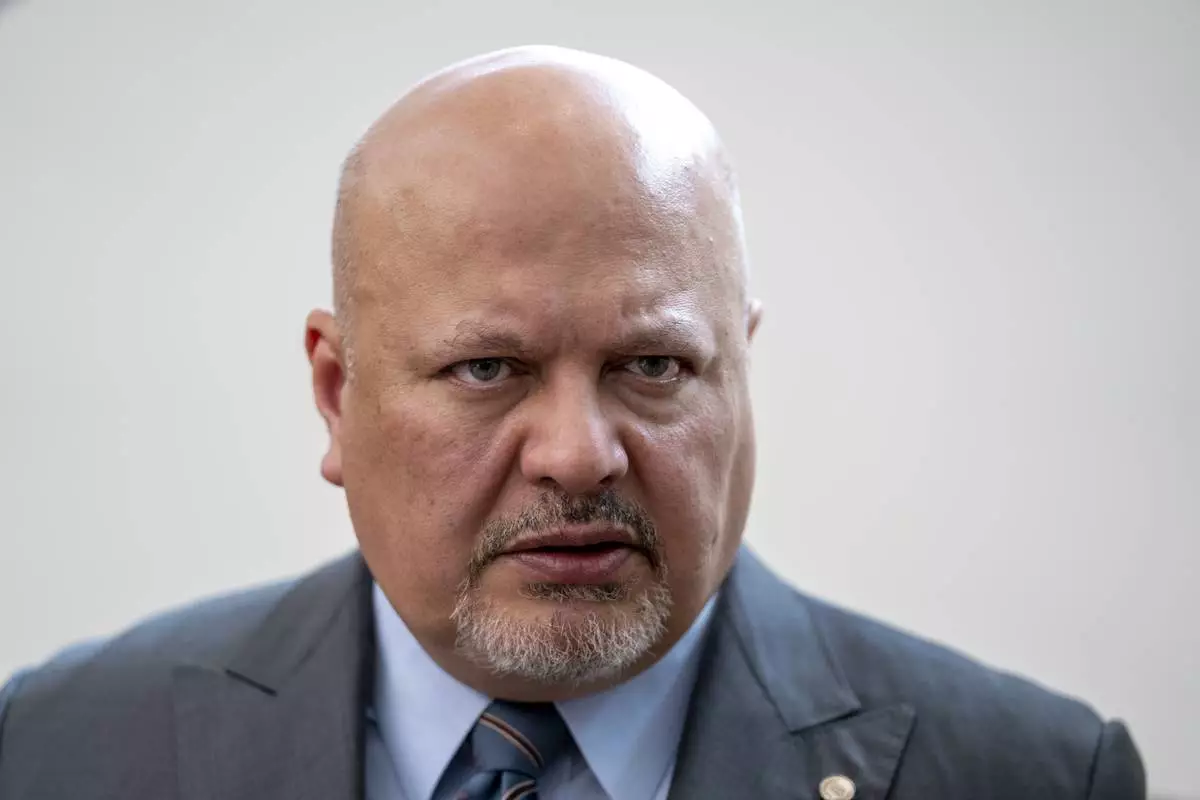
FILE - Karim Khan, Prosecutor of the International Criminal Court looks up prior to a press conference in The Hague, Netherlands, Monday, July 3, 2023. (AP Photo/Peter Dejong, File)
FILE - Karim Khan, Prosecutor of the International Criminal Court looks up prior to a press conference in The Hague, Netherlands, Monday, July 3, 2023. (AP Photo/Peter Dejong, File)

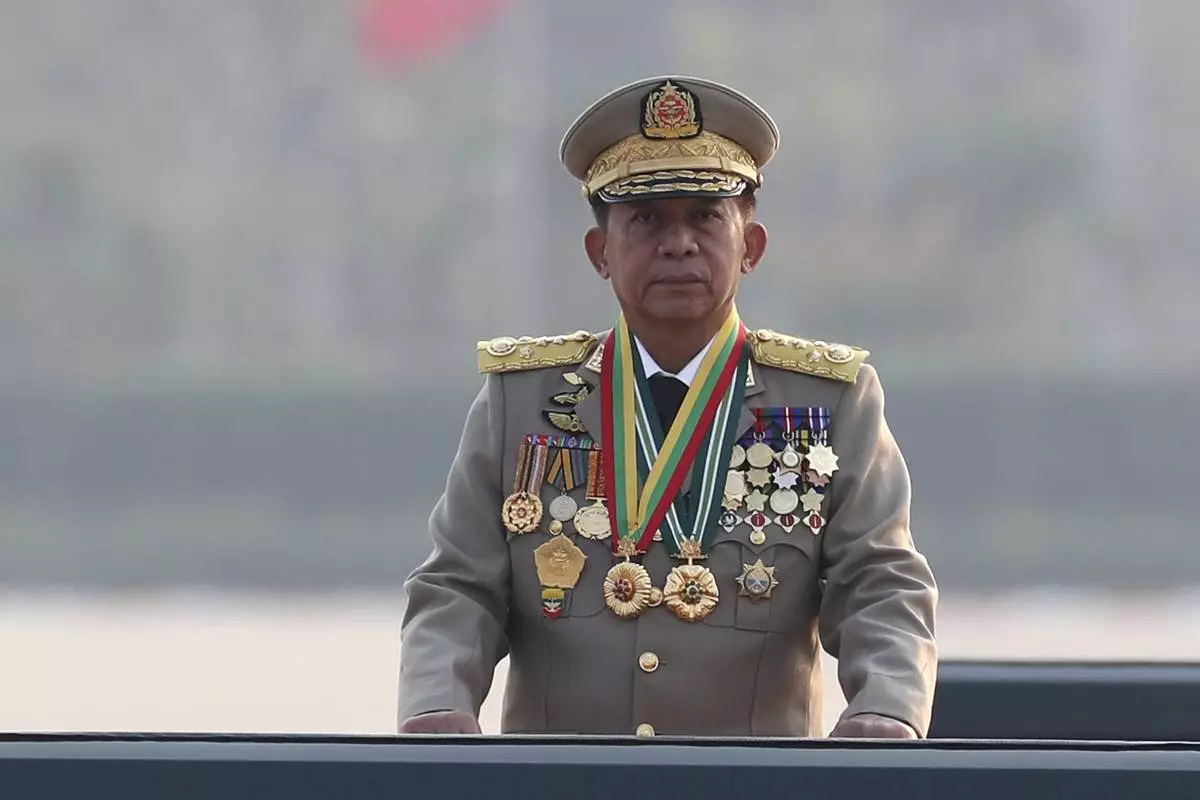
FILE - Senior Gen. Min Aung Hlaing, head of the military council, inspects officers during a parade to commemorate Myanmar's 78th Armed Forces Day in Naypyitaw, Myanmar, on March 27, 2023. (AP Photo/Aung Shine Oo, File)
FILE - Senior Gen. Min Aung Hlaing, head of the military council, inspects officers during a parade to commemorate Myanmar's 78th Armed Forces Day in Naypyitaw, Myanmar, on March 27, 2023. (AP Photo/Aung Shine Oo, File)

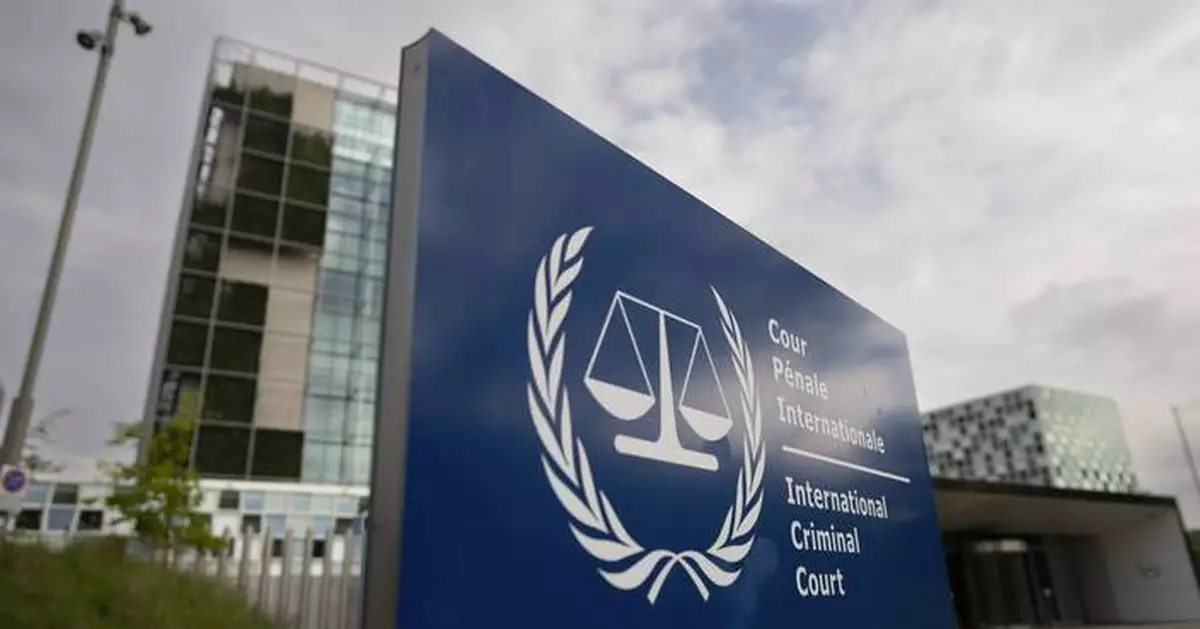
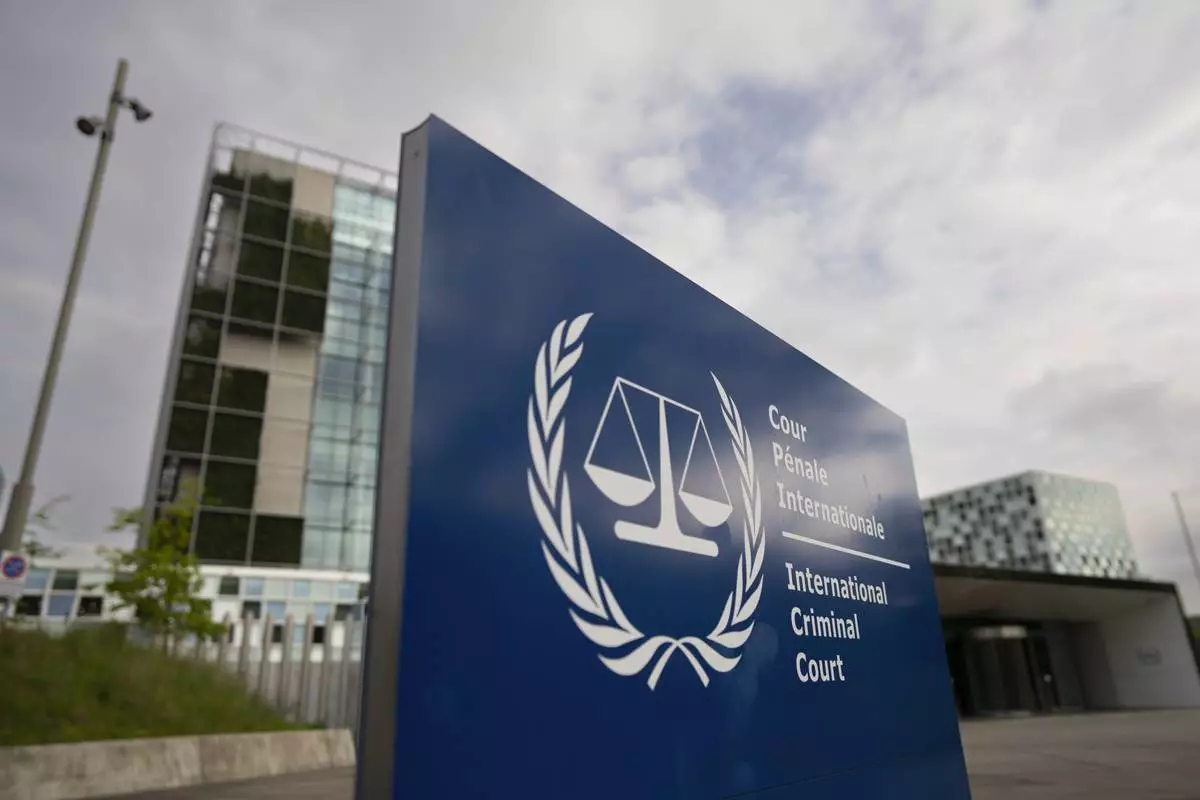
FILE - Exterior view of the International Criminal Court, or ICC, in The Hague, Netherlands, on April 30, 2024. (AP Photo/Peter Dejong, File)
FILE - Exterior view of the International Criminal Court, or ICC, in The Hague, Netherlands, on April 30, 2024. (AP Photo/Peter Dejong, File)
NEW YORK (AP) — Kamala Harris “wrote off rural America" during the 2024 presidential campaign and failed to attack Donald Trump with sufficient “negative firepower," according to a long-awaited post-election autopsy released on Thursday by the Democratic National Committee.

The committee's chair, Ken Martin, shared the 192-page report only after facing intense internal pressure from frustrated Democratic operatives concerned with his leadership. Martin had originally promised to release the autopsy, only to keep it under wraps for months because he was concerned it would be a distraction ahead of the midterms as Democrats mobilize to take back control of Congress.

On Tuesday, Martin apologized for his handling of the situation and conceded that the report was withheld because it “was not ready for primetime."

Although the autopsy criticizes Democrats' focus on “identity politics,” it sidesteps some of the most controversial elements of the 2024 campaign. The report does not address former President Joe Biden’s decision to seek reelection, the rushed selection of Harris to replace him on the ticket or the party's acrimonious divide over the war in Gaza.

“I am not proud of this product; it does not meet my standards, and it won’t meet your standards,” Martin wrote in an essay on Substack on Thursday. “I don’t endorse what’s in this report, or what’s left out of it. I could not in good faith put the DNC’s stamp of approval on it. But transparency is paramount.”

A spokesperson for Harris did not immediately respond to a request for comment.

The initial reaction from Democratic operatives was a mix of bafflement and anger over Martin's handling of the situation.

“Why not say this in 2024, or bring in more people to finish it, instead of turning this into the dumbest media cycle for 7-8 months?” Democratic strategist Steve Schale wrote on social media.

The postelection report, which was authored by Democratic consultant Paul Rivera, calls for “a renewed focus on the voters of Middle America and the South, who have come to believe they are not included in the Democratic vision of a stronger and more dynamic America for everyone.”

“Millions of Americans are suffering from poor access to healthcare, manufacturing and job losses, and a failing infrastructure, yet continue to be persuaded to vote against their best interests because they do not see themselves reflected in the America of the Democratic Party,” the report says.

The autopsy points to a reduction in support and training for Democratic state parties, voter registration shifts and “a persistent inability or unwillingness to listen to all voters.”

Thursday's release comes as Martin confronts a crisis of confidence among party officials who are increasingly concerned about the health of their political machine barely a year into his term. Some Democratic operatives have had informal discussions about recruiting a new chair, even though most believe that Martin’s job wasn't in serious jeopardy ahead of the midterm elections.

The report found that Harris and her allies failed to focus enough on Trump's negatives, especially his felony convictions. This was part of a broader criticism that Democrats' messaging is too focused on reason and winning arguments, “even in cycles when the electorate is defined by rage.”

“There was a decision in the 2024 Democratic leadership not to engage in negative advertising at the scale required,” the report states. “The Trump campaign and supportive Super PACs went full throttle against Vice President Harris, but there was not sufficient or similar negative firepower directed at Trump by Democrats.”

The report continues: “It was essential to prosecute a more effective case as to why Trump should have been disqualified from ever again taking office. The grounds were there, but the messaging did not make the case.”

Trump's attack on Harris' transgender policies were cited as a key contrast.

Specifically, the report suggested the Democratic nominee was “boxed” in by the Trump campaign's “very effective” ad that highlighted Harris' previous statement of support for taxpayer-funded gender-affirming surgeries for prison inmates.

Democratic pollsters believed that “if the Vice President would not change her position – and she did not – then there was nothing which would have worked as a response," the report said.

The report criticized Harris' outreach to key segments of America while condemning the party's focus on “identity politics.”

“Harris wrote off rural America, assuming urban/suburban margins would compensate. The math doesn’t work,” the report says. “You can’t lose rural areas by overwhelming margins and make it up elsewhere when rural voters are a significant share of the electorate. If Democrats are to reclaim leadership in the Heartland or the South, candidates must perform well in rural turf. Show up, listen, and then do it again.”

The report also references Democrats' underperformance with male voters of color.

“Male voters require direct engagement. The gender gap can be narrowed. Deploy male messengers, address economic concerns, and don’t assume identity politics will hold male voters of color,” it says.

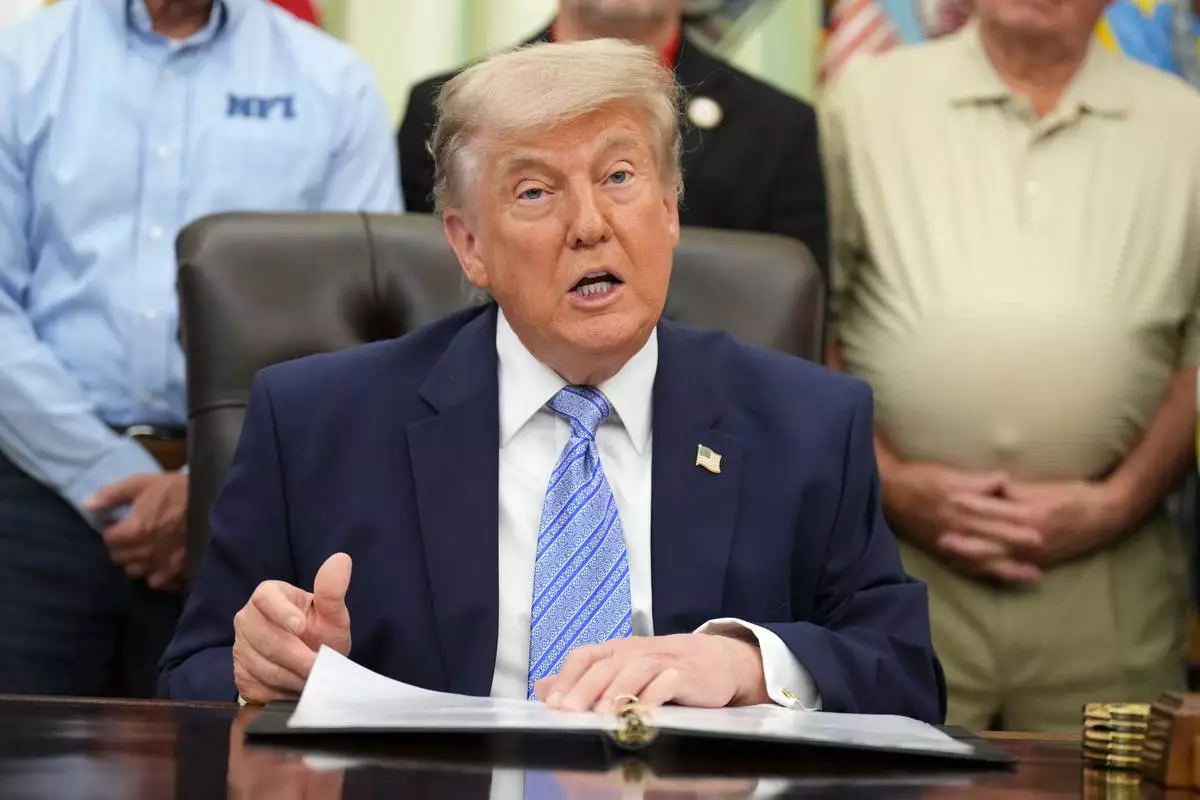
President Donald Trump speaks during an event about loosening a federal refrigerant rule, in the Oval Office at the White House, Thursday, May 21, 2026, in Washington. (AP Photo/Jacquelyn Martin)

President Donald Trump speaks during an event about loosening a federal refrigerant rule, in the Oval Office at the White House, Thursday, May 21, 2026, in Washington. (AP Photo/Jacquelyn Martin)

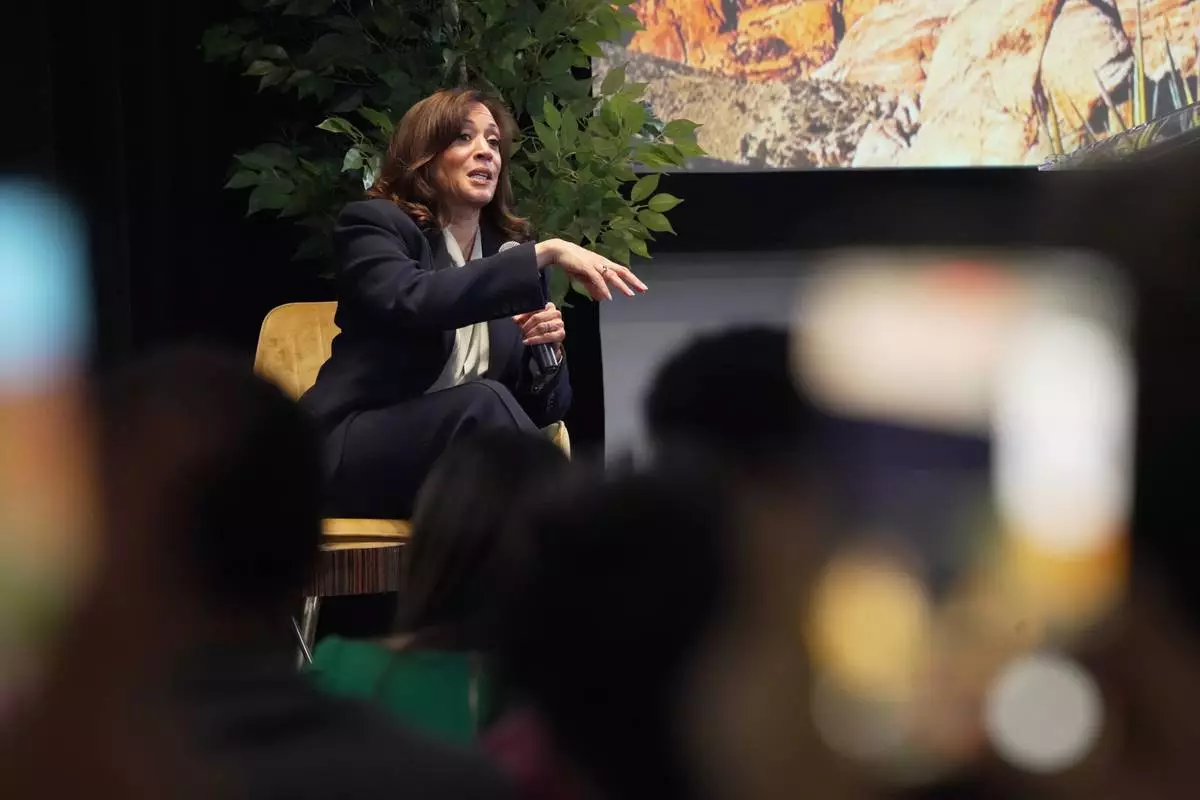
Former Vice President Kamala Harris speaks during a fireside chat on Thursday, May 7, 2026, in Las Vegas. (AP Photo/Ty ONeil)

Former Vice President Kamala Harris speaks during a fireside chat on Thursday, May 7, 2026, in Las Vegas. (AP Photo/Ty ONeil)

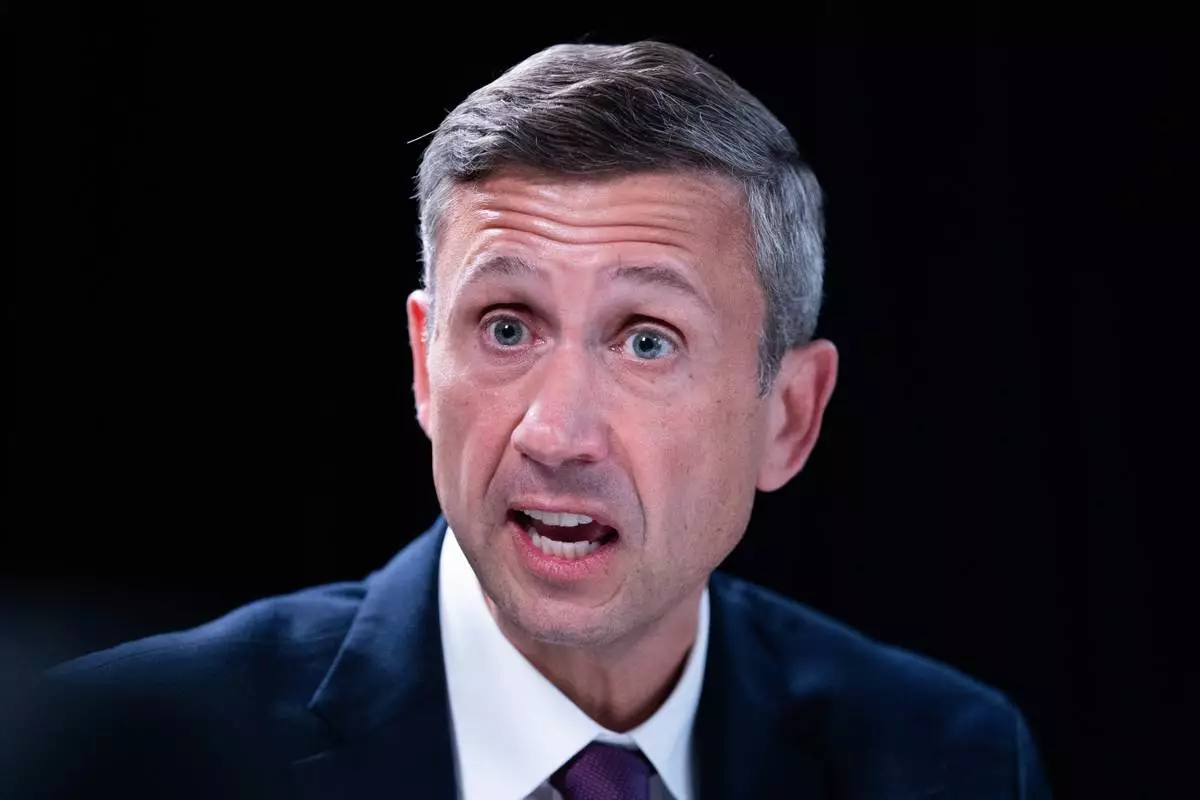
FILE - Democratic National Committee chair Ken Martin speaks during an interview with The Associated Press at DNC headquarters, Jan. 12, 2026, in Washington. (AP Photo/Allison Robbert, File)

FILE - Democratic National Committee chair Ken Martin speaks during an interview with The Associated Press at DNC headquarters, Jan. 12, 2026, in Washington. (AP Photo/Allison Robbert, File)

Recommended Articles