WELLINGTON, New Zealand (AP) — Tonga’s Prime Minister Siaosi Sovaleni abruptly resigned in parliament on Monday ahead of a planned no-confidence vote in his leadership, capping a period of fraught relations between his government and Tonga’s king.
Sovaleni, who took office in 2021, did not specify a reason for his departure but his resignation halted the no-confidence motion expected on Monday. It was not immediately clear who would succeed him.
His resignation comes less than a year before a national election in Tonga, a South Pacific island nation of 105,000 people, and it highlighted the occasional tensions between Tonga’s monarchy and elected lawmakers in a still-young democracy after reforms that transferred powers from the royal family and nobles to regular citizens in 2010.
A statement on the Tongan Parliament Facebook page said Sovaleni, 54, quit “for the good of the country and moving Tonga forward.” Video from Tonga’s parliament on Monday showed the leader making brief and emotional remarks in Tongan before the no-confidence vote was scheduled to take place.
Sovaleni’s office did not immediately respond to a request for comment. His leadership had survived a previous no-confidence vote in September 2023.
In recent months, Sovaleni's tenure was marked by difficult relations with Tonga's head of state, King Tupou VI. Although the sovereign’s predecessor ceded power voluntarily in the 2010 democratic reforms, Tupou VI retains powers to dissolve parliament, appoint judges and veto laws.
The king at times made his dissatisfaction with Sovaleni apparent, including by withdrawing confidence in him as defense minister in February. Some lawmakers at first decried the king's pressure on Sovaleni and his foreign minister as unconstitutional, but both eventually resigned their posts in April — although Sovaleni remained prime minister.
A month earlier, Sovaleni had been photographed at a traditional ceremony of apology to the king, but neither side publicly addressed the event. When Tonga hosted the Pacific Islands Forum Leaders’ Meeting in August, the king was traveling abroad and did not attend the conference — a significant event for the small Pacific nation — which analysts said was a snub to Sovaleni and his government.
Speaking to Radio New Zealand on Monday, Sovaleni did not signal a particular reason for his departure. Asked whether his decision was prompted by disagreements with the king, Sovaleni said that “differences in views” were normal.
“I’m not sure whether that’s the reason,” he said, according to RNZ, adding that he still did not know why he and Tonga's foreign minister had lost the king’s confidence earlier this year.
“But we still provide respect to his majesty,” Sovaleni told RNZ. “Whatever we do, we always consider that relationship. So maybe you can ask someone else.”
His successor will be selected by Tonga’s 26 lawmakers in a vote. The parliament is made up of 17 lawmakers elected by the public and nine who are nobles, elected by a group of hereditary chiefs.
Sovaleni entered parliament in 2014 and had been a minister since 2019. He led Tonga as the tourism-dependent country struggled to rebound from the impact of the coronavirus pandemic, growing threats from climate change and a catastrophic 2022 volcanic eruption and tsunami, which battered beachfront resorts, homes and businesses around Tonga's 171 islands.
A former senior public servant who also worked in the private sector before entering politics, Sovaleni is the son of a former Tongan deputy prime minister. He attended high school in New Zealand and studied at the University of Oxford and the University of the South Pacific, attaining master’s degrees in computer science and business.
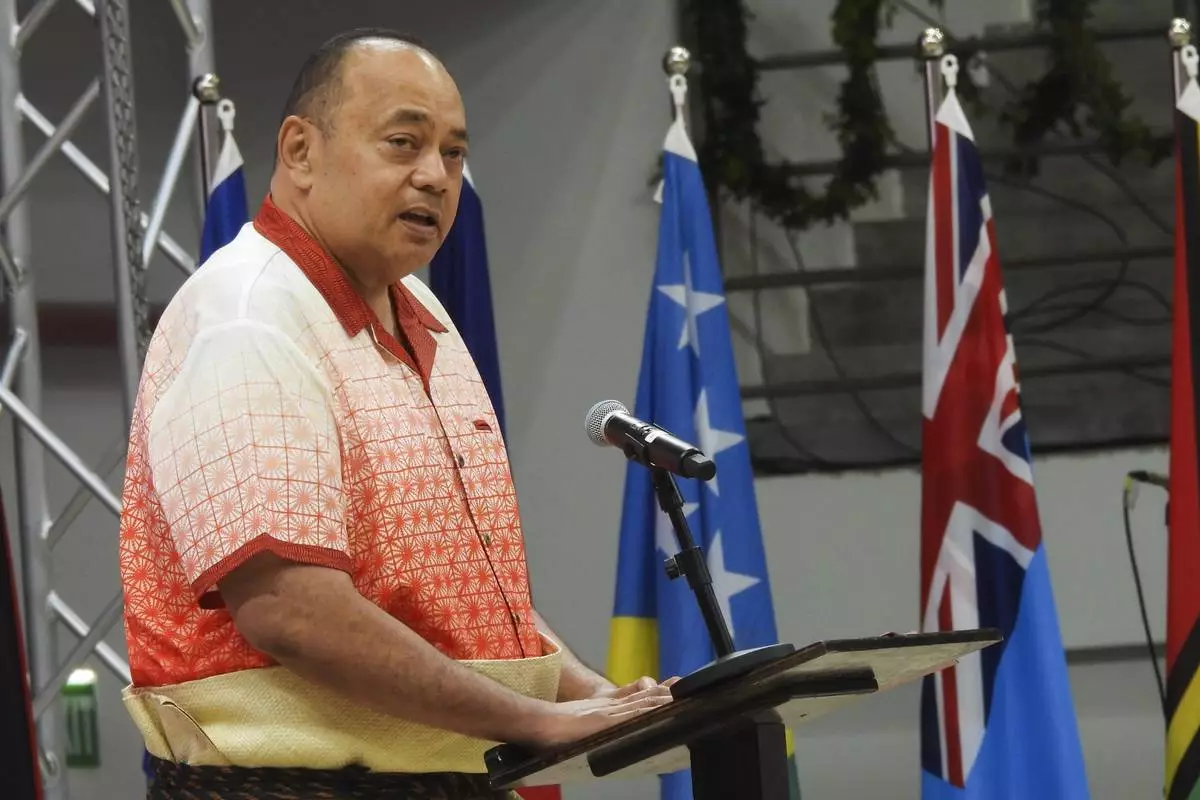
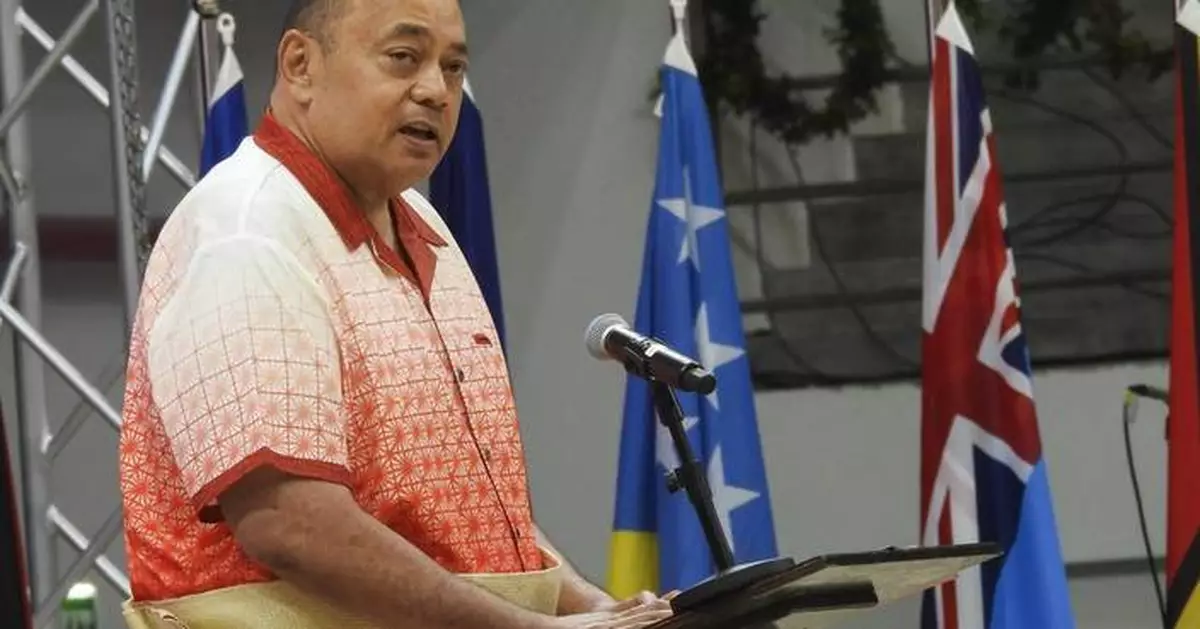
Tongan Prime Minister Hu'akavameiliku Siaosi Sovaleni speaks at the Pacific Islands Forum Leaders' Meeting in Nuku'alofa, Tonga on Aug. 26 2024. (AP Photo/Charlotte Graham-McLay)
NEW YORK (AP) — Kamala Harris “wrote off rural America" during the 2024 presidential campaign and failed to attack Donald Trump with sufficient “negative firepower," according to a long-awaited post-election autopsy released on Thursday by the Democratic National Committee.
The committee's chair, Ken Martin, shared the 192-page report only after facing intense internal pressure from frustrated Democratic operatives concerned with his leadership. Martin had originally promised to release the autopsy, only to keep it under wraps for months because he was concerned it would be a distraction ahead of the midterms as Democrats mobilize to take back control of Congress.
On Tuesday, Martin apologized for his handling of the situation and conceded that the report was withheld because it “was not ready for primetime."
Although the autopsy criticizes Democrats' focus on “identity politics,” it sidesteps some of the most controversial elements of the 2024 campaign. The report does not address former President Joe Biden’s decision to seek reelection, the rushed selection of Harris to replace him on the ticket or the party's acrimonious divide over the war in Gaza.
“I am not proud of this product; it does not meet my standards, and it won’t meet your standards,” Martin wrote in an essay on Substack on Thursday. “I don’t endorse what’s in this report, or what’s left out of it. I could not in good faith put the DNC’s stamp of approval on it. But transparency is paramount.”
A spokesperson for Harris did not immediately respond to a request for comment.
The initial reaction from Democratic operatives was a mix of bafflement and anger over Martin's handling of the situation.
“Why not say this in 2024, or bring in more people to finish it, instead of turning this into the dumbest media cycle for 7-8 months?” Democratic strategist Steve Schale wrote on social media.
The postelection report, which was authored by Democratic consultant Paul Rivera, calls for “a renewed focus on the voters of Middle America and the South, who have come to believe they are not included in the Democratic vision of a stronger and more dynamic America for everyone.”
“Millions of Americans are suffering from poor access to healthcare, manufacturing and job losses, and a failing infrastructure, yet continue to be persuaded to vote against their best interests because they do not see themselves reflected in the America of the Democratic Party,” the report says.
The autopsy points to a reduction in support and training for Democratic state parties, voter registration shifts and “a persistent inability or unwillingness to listen to all voters.”
Thursday's release comes as Martin confronts a crisis of confidence among party officials who are increasingly concerned about the health of their political machine barely a year into his term. Some Democratic operatives have had informal discussions about recruiting a new chair, even though most believe that Martin’s job wasn't in serious jeopardy ahead of the midterm elections.
The report found that Harris and her allies failed to focus enough on Trump's negatives, especially his felony convictions. This was part of a broader criticism that Democrats' messaging is too focused on reason and winning arguments, “even in cycles when the electorate is defined by rage.”
“There was a decision in the 2024 Democratic leadership not to engage in negative advertising at the scale required,” the report states. “The Trump campaign and supportive Super PACs went full throttle against Vice President Harris, but there was not sufficient or similar negative firepower directed at Trump by Democrats.”
The report continues: “It was essential to prosecute a more effective case as to why Trump should have been disqualified from ever again taking office. The grounds were there, but the messaging did not make the case.”
Trump's attack on Harris' transgender policies were cited as a key contrast.
Specifically, the report suggested the Democratic nominee was “boxed” in by the Trump campaign's “very effective” ad that highlighted Harris' previous statement of support for taxpayer-funded gender-affirming surgeries for prison inmates.
Democratic pollsters believed that “if the Vice President would not change her position – and she did not – then there was nothing which would have worked as a response," the report said.
The report criticized Harris' outreach to key segments of America while condemning the party's focus on “identity politics.”
“Harris wrote off rural America, assuming urban/suburban margins would compensate. The math doesn’t work,” the report says. “You can’t lose rural areas by overwhelming margins and make it up elsewhere when rural voters are a significant share of the electorate. If Democrats are to reclaim leadership in the Heartland or the South, candidates must perform well in rural turf. Show up, listen, and then do it again.”
The report also references Democrats' underperformance with male voters of color.
“Male voters require direct engagement. The gender gap can be narrowed. Deploy male messengers, address economic concerns, and don’t assume identity politics will hold male voters of color,” it says.
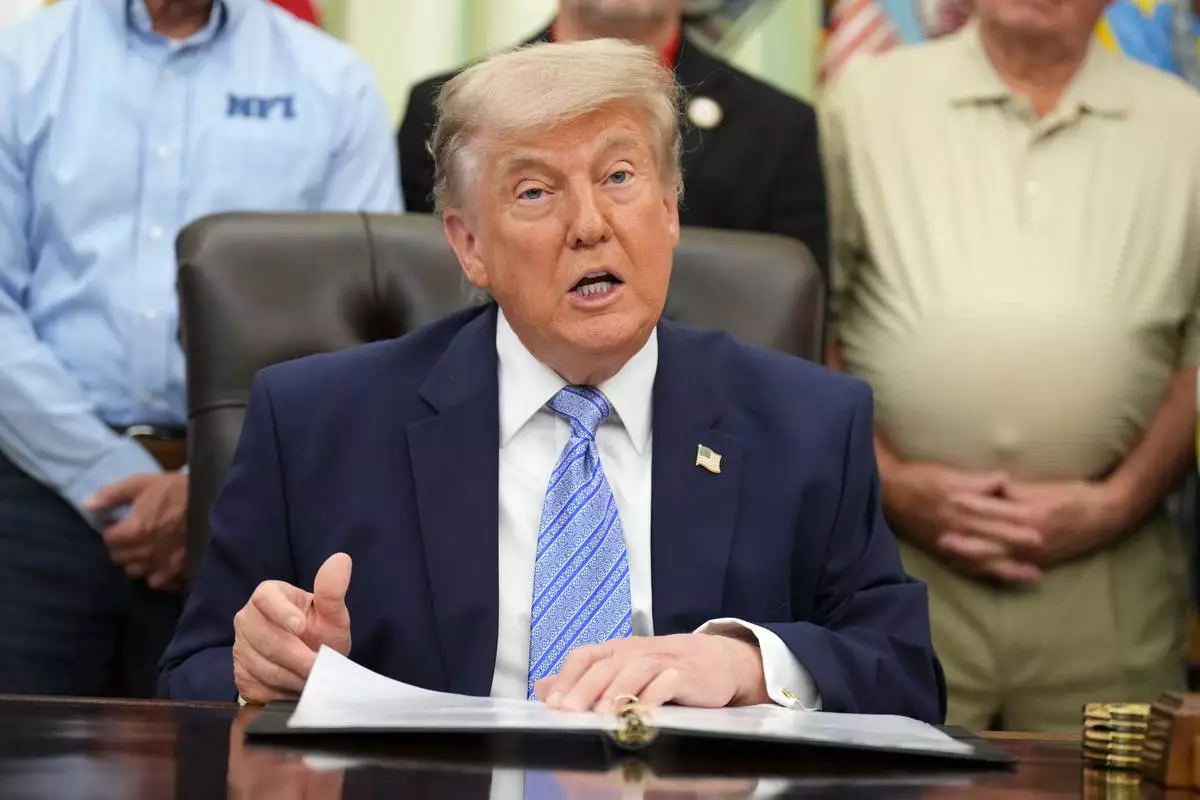
President Donald Trump speaks during an event about loosening a federal refrigerant rule, in the Oval Office at the White House, Thursday, May 21, 2026, in Washington. (AP Photo/Jacquelyn Martin)
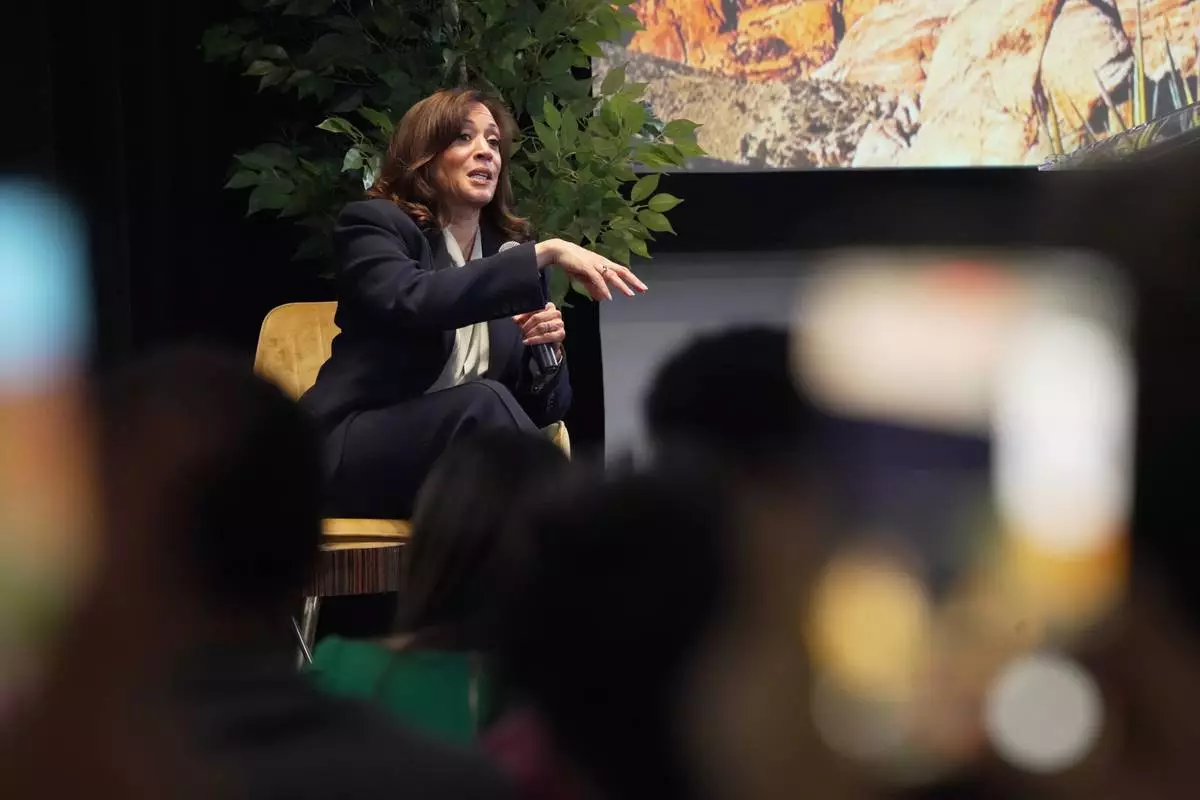
Former Vice President Kamala Harris speaks during a fireside chat on Thursday, May 7, 2026, in Las Vegas. (AP Photo/Ty ONeil)
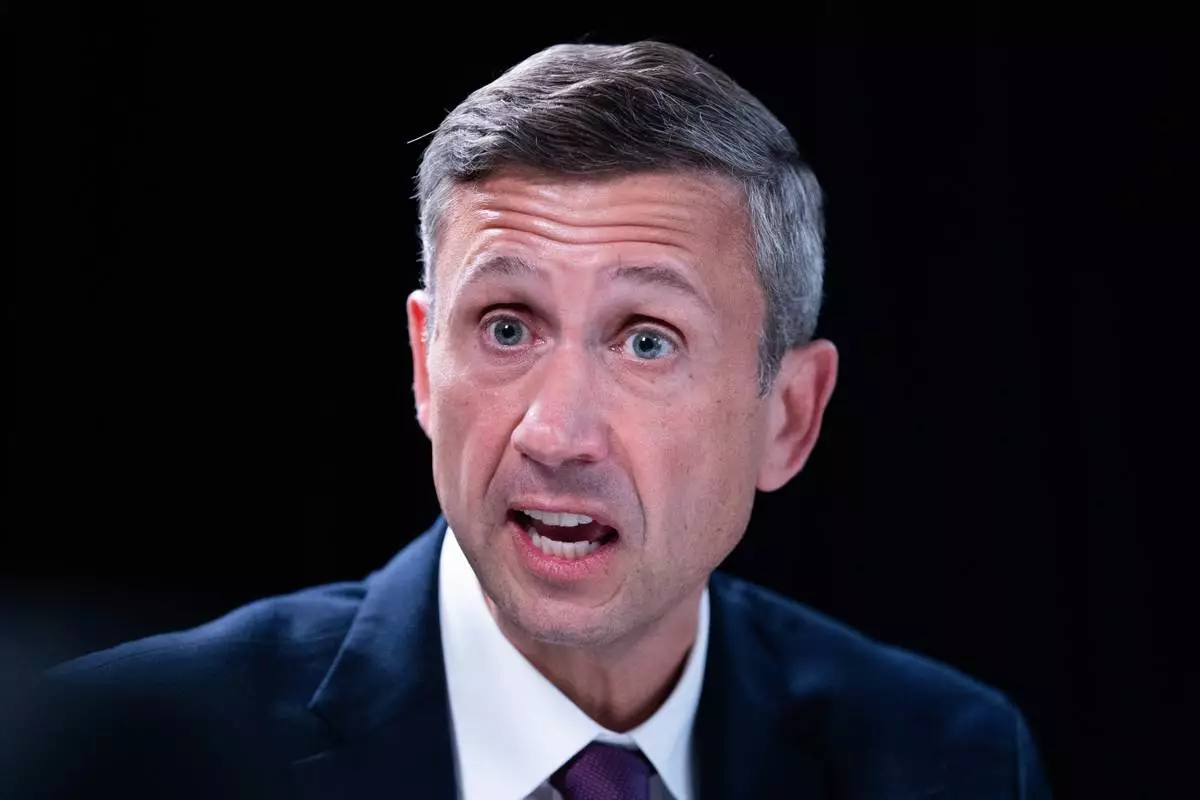
FILE - Democratic National Committee chair Ken Martin speaks during an interview with The Associated Press at DNC headquarters, Jan. 12, 2026, in Washington. (AP Photo/Allison Robbert, File)