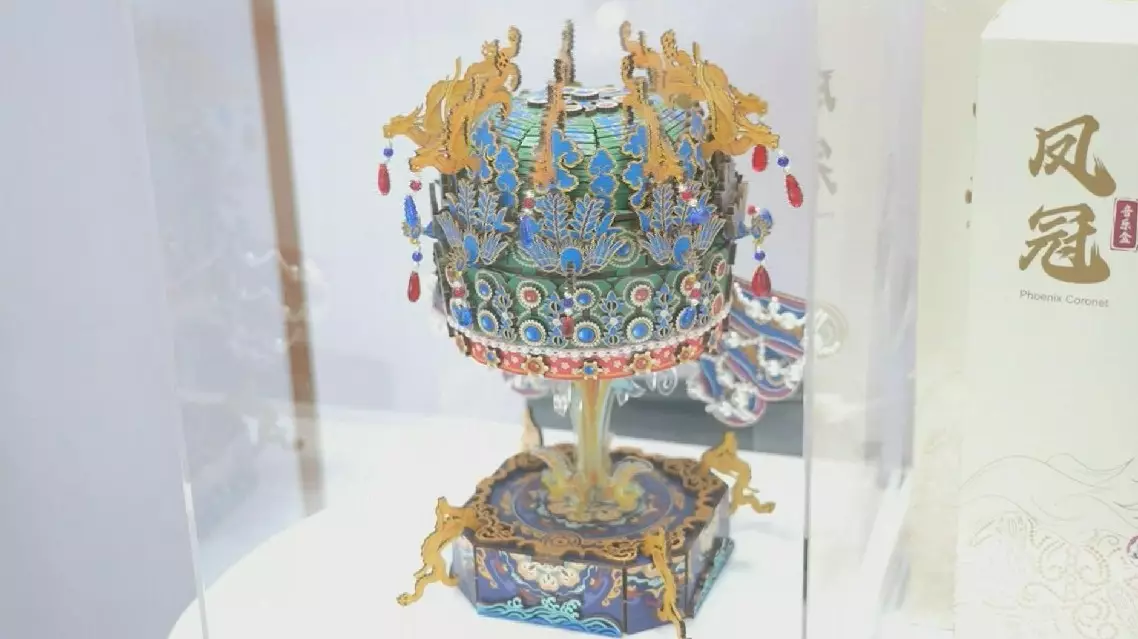
A fridge magnet inspired by the heavenly palace caldron ceiling at the Beijing Ancient Architecture Museum has taken the internet by storm in recent days, becoming a symbol of China's booming cultural creativity industry.
Designed after the museum's prized treasure housed in the Wanshan Zhengjue Hall, the magnet's unique craftsmanship, three-dimensional structure, and exquisite detail have captivated consumers.
"It's quite different from traditional museum souvenirs. The layered, 3D design is stunning, and its texture, structure, and overall look are very unique," said Lei Jie, a visitor. The success of the fridge magnet is just one example of the rising popularity of museum cultural and creative products. Other viral hits include the National Museum of China's fridge magnet inspired by the phoenix crown of Empress Xiaoduan from the Ming Dynasty (1368-1644), which sold 145,000 units in just over 100 days, and Suzhou Museum's plush toy modeled after a bronze sword of King Fuchai (about 528 BC to 473 BC) of the Wu Kingdom. The Henan Museum has also gained attention with its lotus-and-crane jewelry pen, which doubles as a stylish desk ornament and a pendant.
Visitors have praised these products for their artistic appeal, with many describing them as "miniature works of art".
Experts said the popularity of museum cultural products reflects a broader trend -- the rise of China-chic. This movement celebrates Chinese culture, craftsmanship, and heritage, resonating especially with younger generations who are keen to embrace and showcase their cultural identity.
"At its core, China Chic is a revival of Chinese culture. Whether it is traditional handicrafts or modern industrial products, there is a growing recognition and appreciation. This reflects a deeper cultural awareness and confidence among consumers. By incorporating artificial intelligence, museum products can become more dynamic and interactive. Visitors can use these new technologies to co-create their own cultural products, making the experience even more engaging," said said Wei Pengju, dean of the Cultural and Economic Research Institute of Central University of Finance and Economics.
The rise of cultural products has brought significant benefits to museums, boosting both visit numbers and revenue. By 2023, major museums, including the Sanxingdui Museum, the Palace Museum, the Shanghai Museum, and the National Museum of China each reported annual revenues exceeding 100 million yuan (about 13.7 million U. S. dollars), with as much as two-thirds of their income coming from cultural product sales.
Beyond financial gains, the cultural creativity boom is driving broader economic growth.
"Cultural consumption has no ceiling. It meets both spiritual and material needs, which are essentially limitless. Cultural products can inspire upgrades in the dining, fashion, and manufacturing industries, helping to create new Chinese brands and trends, and shape a new wave of Chinese consumer power," said Wei.
China's museum souvenirs lead new wave of cultural innovation, boosting industry growth