The 2024 International Symposium on the Peaceful Use of Space Technology - Health (IPSPACE 2024) concluded in Haikou City of south China's Hainan Province Thursday.
A broad theme of the three-day IPSPACE 2024 was peaceful use of space technology on human health. It gathered scientists, entrepreneurs, educators, scholars, and professionals in health, spatial IT, education, finance, insurance, energy and more.
The symposium covers topics such as spatial information, energy, propulsion, and lunar exploration. Participants also explored the latest advancements in space technology, application prospects, transformation and incubation, as well as pathways for peaceful utilization of the techs.
Luo Ge, IPSPACE co-chair, Director General of China Association of Remote Sensing Application (CARSA), said China has been actively promoting international cooperation in aerospace, with significant outcomes achieved in recent years.
The country will continue to work with international partners going forward to explore new pathways for the peaceful use of space technology, he said.
"China and Brazil have held over 30 years of fruitful cooperation in the field, during which a total of seven Earth resource satellites have been launched. Additionally, in the past decade, we have engaged in a series of successful satellite cooperation projects with France, Germany, and Italy, including oceanographic satellites, astronomical satellites, and electromagnetic satellites," Luo said in an interview with China Central Television on the sidelines of the symposium.
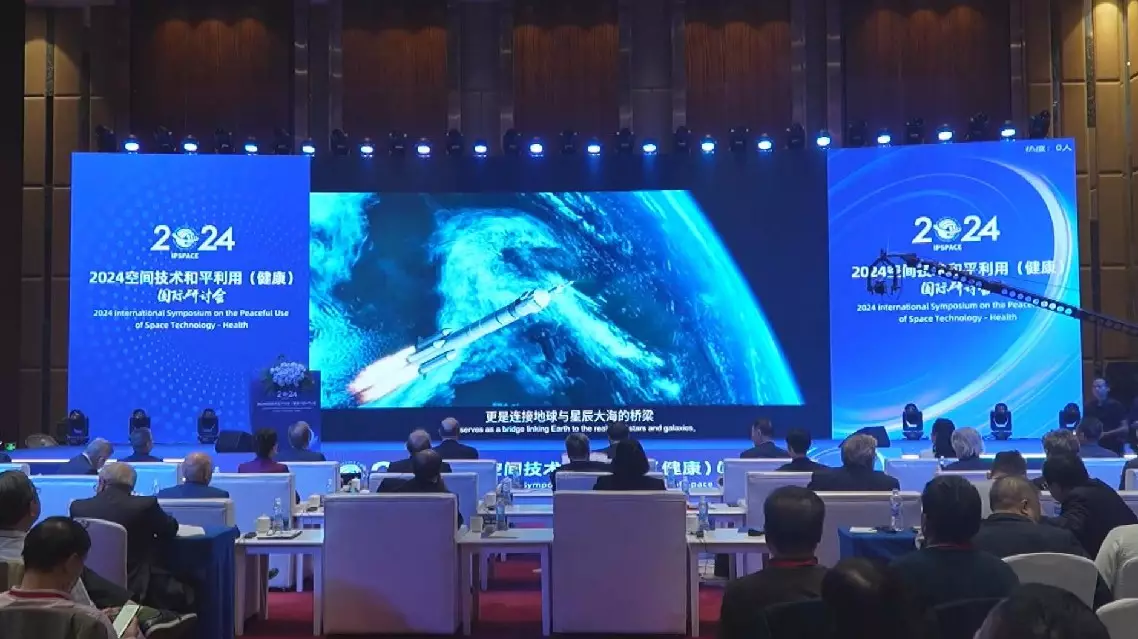
International symposium held to discuss space collaboration on human health
Visitors can now experience firsthand how artificial intelligence (AI) is reshaping future lifestyles at the newly opened AI Matrix Store "MetAI Hub" in Shanghai's Zhangjiang AI Innovation Town.
Opened on May 11, the nearly 2,000-square-meter space features more than 500 AI products from 100 brands. Unlike traditional "display-only" technology venues, the store encourages visitors to touch, test, and interact with the latest AI products.
The store houses six themed zones, including a curated product space, makers' workshops, and an AI health area. One of the most popular attractions is an AI health screening system that generates a rapid health assessment report within 90 seconds using non-contact sensing technology.
The store also functions as a makerspace for innovators, helping startups test products in real-life scenarios and shorten the time it takes to turn a concept into reality.
"Here we can see the advanced processing equipment, including 3D printer and laser engraver. We also have a highly experienced technical team that helps One-Person Companies quickly bring their ideas to life and conduct model testing," said Lan Chaoxiang, head of the Maker Area of MetAI Hub.
In addition, the AI Matrix Store aims to serve as a global launch platform for AI products and a gateway for startups expanding overseas.
"When their products are still in the prototype stage, we will build a complete funding mechanism for producers, allowing many global geeks to get a sneak peek. We also hope to combine online and offline channels for this overseas expansion platform," said Zhao Tongyang, an executive at the store.
Zhao said the store will be developed into an AI ecosystem center rather than a traditional retail outlet, combining experience, commerce, incubation, and social interaction.
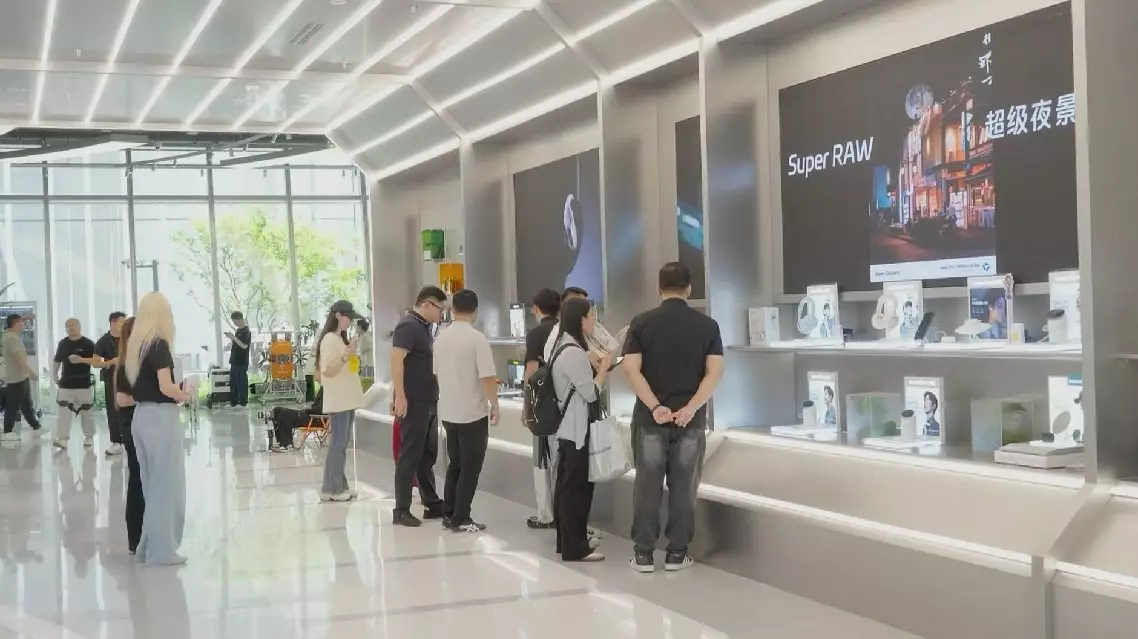
Visitors explore future lifestyles at newly opened AI store in Shanghai