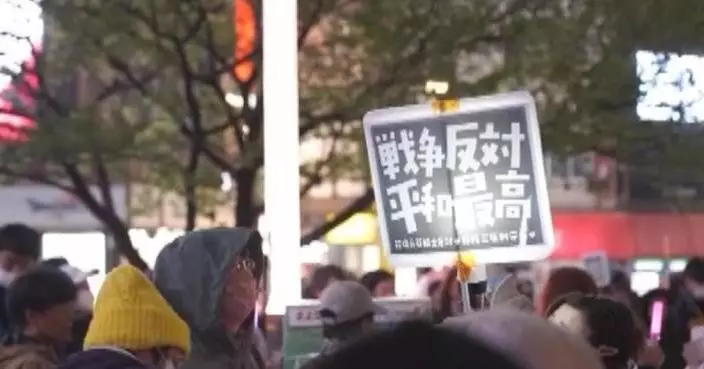
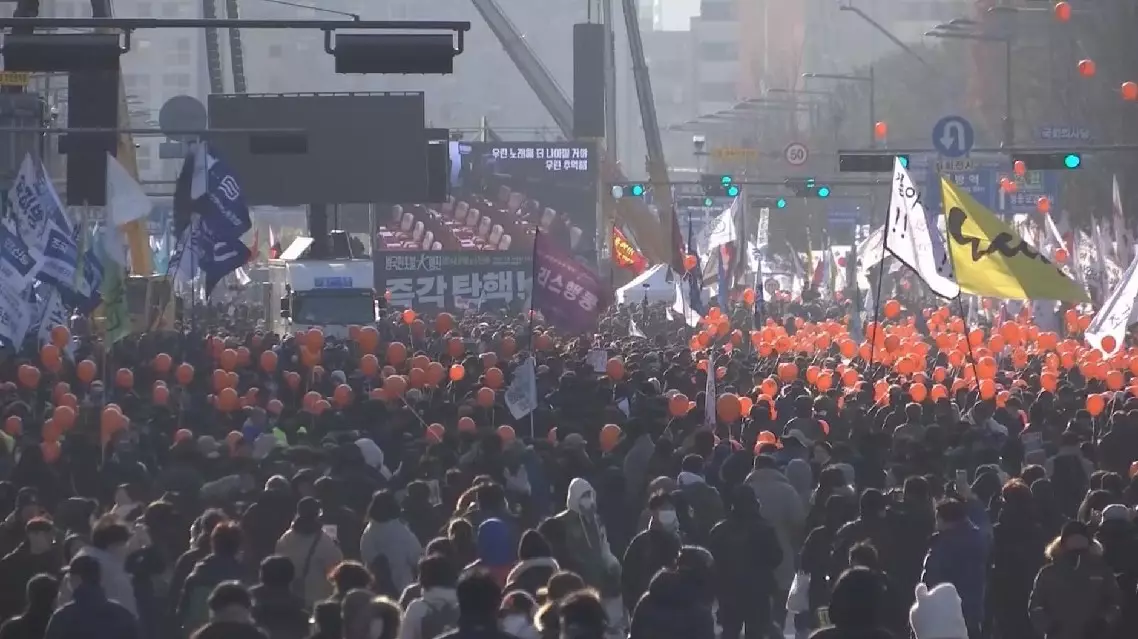
A large crowd of protesters gathered on Saturday in front of the National Assembly in Seoul, South Korea, demanding the impeachment of President Yoon Suk-yeol.
The protest, marked by a concert-like atmosphere with K-pop music and chants, reflected the public's mounting frustration. Similar demonstrations have taken place in major cities across the country over the past few days, following Yoon's emergency martial law declaration on the night of December 3. The measure, however, was revoked by the National Assembly just hours later.
For many participants, joining the protest was a deeply personal decision, driven by a desire to express their anger and be part of what they saw as a significant moment in the nation's history. Some viewed it as an opportunity to educate younger generations, while others traveled long distances to ensure their voices were heard.
"After the president's speech, I talked to my child about it the next day. When I explained what the president said, my child was really surprised. Since my child has been studying modern and contemporary history these days, I thought it would be good for him to experience participating in something related to it. That's why we decided to come together," said one protester.
"I had to hurry a bit this morning to come here from outside the city, but I thought today might become a historic moment after only seeing it on the news. To be honest, I was quite upset last week when the vote was rejected, and I thought maybe I could let out some of that frustration by being here. I also heard that many people would be gathering, so I came with the thought that I could contribute, even though a little bit," said another participant.
Later in the day, the country's parliament voted to impeach President Yoon over his martial law declaration. Of 300 lawmakers of the unicameral National Assembly attending the historical plenary session, 204 voted in favor and 85 against with three abstentions and eight voided.
The first impeachment motion was confirmed invalid last Saturday after most of the 108 ruling People Power Party left the parliamentary hall and refused to cast ballots.
With the parliamentary approval, the constitutional court will deliberate the impeachment for up to 180 days, during which Yoon's constitutional power will be suspended and Prime Minister Han Duck-soo will be an acting president.
If the impeachment is upheld by the court, a snap presidential election would be held within 60 days.
It marked the third presidential impeachment in the Asian country's modern history. Former conservative President Park Geun-hye was removed from office by the constitutional court in March 2017.
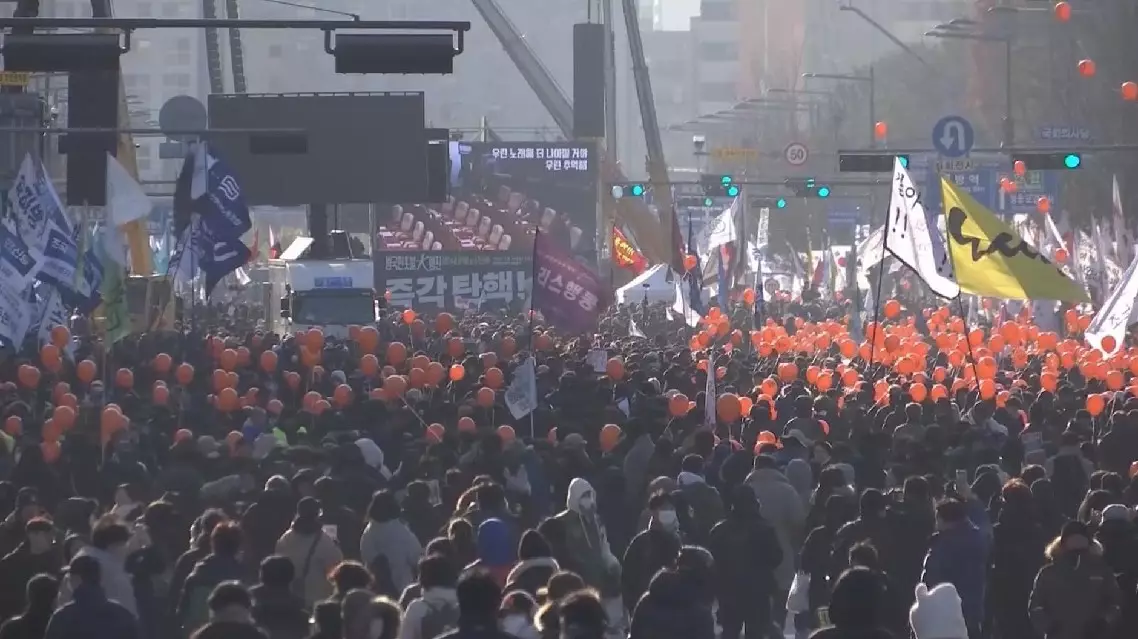
Protesters gather in Seoul, demanding Yoon's impeachment
Protesters gather in Seoul, demanding Yoon's impeachment