As Macao aligns itself more closely with China's overall development, particularly in the tech sector, a new era of innovation and advancement is unfolding, propelling Macao towards a hub for pioneering scientific and technological breakthroughs.
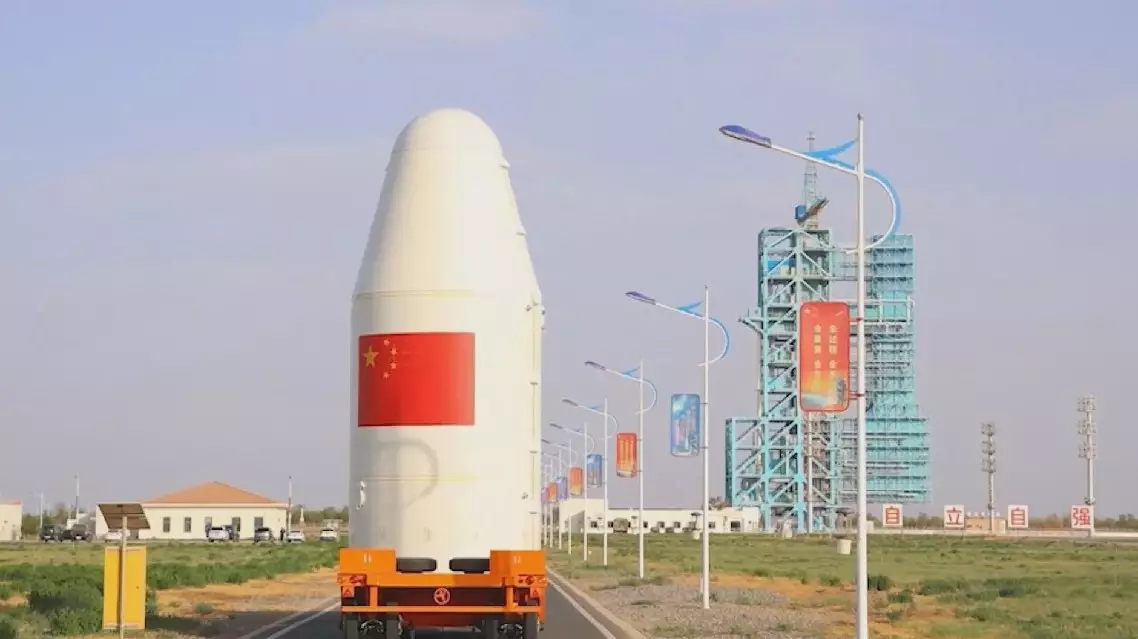
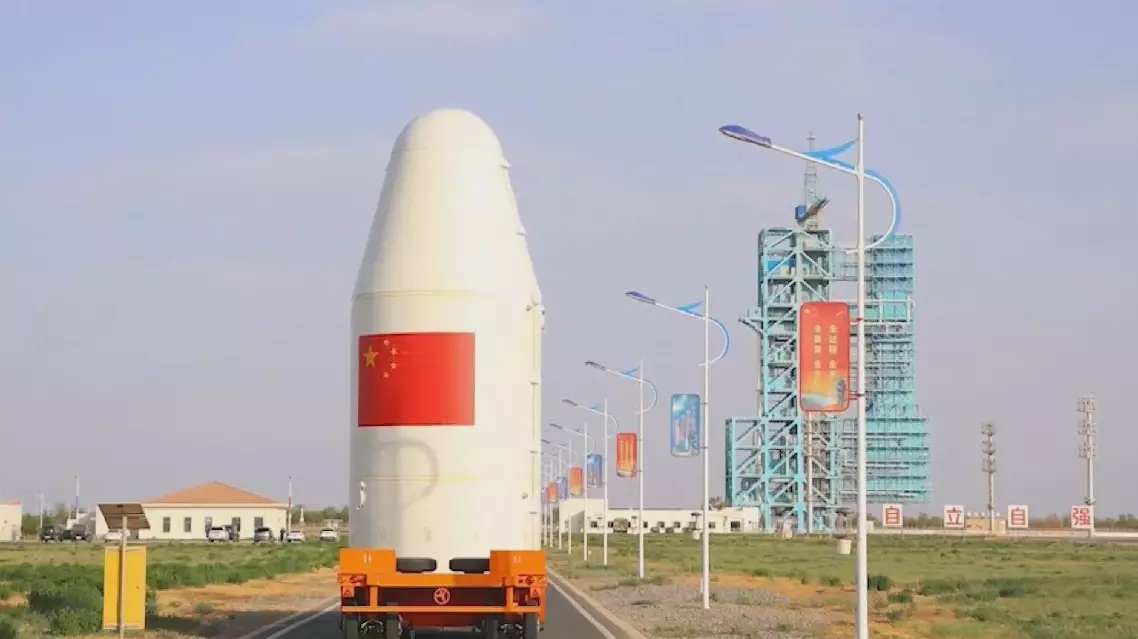
In May 2023, China successfully launched two satellites of the "Macao Science 1" space exploration program into space using a Long March-2C carrier rocket from the Jiuquan Satellite Launch Center in northwest China for Earth magnetic field detection and research.
After the launch, 18 representatives of teachers and students from the Macao University of Science and Technology (MUST), who participated in the satellite project, wrote a letter to Chinese President Xi Jinping to share their joy and expressed their hope and commitment to joining China's scientific and technological research.
"Seeing the Long March-2C rocket lift off with a huge flame was truly exhilarating. We had this idea even before the satellite launch. If the launch is successful, we intend to report this to President Xi, to express our excitement about being part of this project. Then we wrote the letter to him," said Sun Zhaolong, a researcher of the Macao Institute of Space Technology and Application, MUST.
Sun works at MUST after his graduation and participated in the research work of Macao Science 1 satellites. This is the first space technology satellite jointly developed by Macao and the mainland, marking the top level of China's precision in Earth magnetic field detection.
"Our ancestors invented the compass, making great contribution to the research of Earth magnetic field. Now with the launch of an Earth magnetic field satellite, this torch of research just returned to China," said Zhang Keke, dean of the Macao Institute of Space Technology and Application.
President Xi replied to their letter soon. In his letter, Xi expressed the hope that faculty and students of the university would continue to carry forward the fine tradition of loving both the motherland and Macao, integrate their own development into the overall development of the country, actively take part in the development of the Guangdong-Hong Kong-Macao Greater Bay Area, and help with Macao's efforts to appropriately diversify its economy so as to make new contributions to the successful practice of "One Country, Two Systems" in Macao.
"[The letter] went viral on my social media. It encourages and inspires me to devote myself into our country's scientific and technological research," said Sun.
"President Xi's reply really inspired us. We're honored and confident that we won't let him down. We will continue our country's scientific and technological research and integrate into the overall scientific development," said Joseph Lee Hun Wei, principal of MUST.
In recent years, Macao's cooperation with the mainland has made great progress in space technology. This progress is occurring within the broader context of China's modernization, providing ample development opportunities for universities and scientific personnel.
"Speaking from the bottom of my heart, I feel the success of the 'Macao Science 1' satellite as a genuine experiment in the successful 'One Country, Two Systems' implementation. It highlights the collaborative efforts and coordination between scientists and engineers from the mainland and Macao. We are planning the Macao Science 2 satellite, which will form a high-precision Earth magnetic field constellation alongside the Macao Science 1 satellite. This constellation is poised to have a significant impact on Earth science research. The Macao Science 2 satellite is a direct response to the crucial guidance of General Secretary Xi in his letter," said Zhang.
Today, the Macao Science 1 satellite has emerged as a fresh emblem of Macao's technological prowess. Since its return to the motherland, Macao has continually deepened its scientific collaboration with the mainland, achieving significant progress in aerospace engineering, smart cities, and other fields.
The Ministry of Science and Technology has established four national key laboratories in Macao, attracting more young Macao residents to engage in scientific endeavors. Macao is swiftly integrating into the national development landscape, bolstering technological innovation in the Greater Bay Area.
"We are glad to see that Macao is having increasingly closer exchanges and cooperation with the mainland and continuing to make its unique contribution to the reform, opening-up and modernization drive of the motherland while sharing the opportunities and benefits brought by development of the motherland," said President Xi while addressing a gathering marking the 15th anniversary of Macao's return to China in 2014.
This year marks the 25th anniversary of Macao's return to China.
'Macao Science 1' satellite stands as testament to successful 'One Country, Two Systems' practice
'Macao Science 1' satellite stands as testament to successful 'One Country, Two Systems' practice