The Ruins of Saint Paul's, representing the historic center of China's Macao Special Administrative Region (SAR), bears witness to one of the earliest and longest-lasting encounters between Chinese and Western cultures, as Macao is gearing up to mark the 25th anniversary of its return to China on December 20.
Located in the heart of Macao's historic center, the Ruins of Saint Paul's is an iconic landmark of Macao, with its structure resembles a traditional Chinese-style archway. Its name in Chinese "Da San Ba" is the Portuguese transliteration of "Saint Paul".
The original Saint Paul's Cathedral was built in the early 17th century by Jesuit missionaries from Portugal. In 1853, after a devastating fire, the cathedral was reduced to its front facade, with much of its foundation and steps remaining.
Its stone carvings feature a blend of both Chinese and Western cultural elements, depicting the effortless and perfect fusion of Eastern and Western civilizations, which is a hallmark of the region's cultural identity.
With the support of the central government, Macao's historic center including the Ruins of Saint Paul's was inscribed as a UNESCO world heritage site in 2005, making it China's 31st world heritage site.
The Ruins of Saint Paul's is one of the most popular tourist attractions in Macao. According to statistics, on average, the site draws around 90,000 visitors a day, with people coming from all over the world to admire its beauty, learn about its history and take photos in front of the striking facade.
The story of the Ruins of Saint Paul's was featured in the fourth episode of the China Media Group (CMG) documentary, titled "25 Years of Lotus Bond."
The series premiered on CCTV-1 at 20:00 Dec. 13 and will run until Dec. 17, with subsequent broadcasts on CCTV-4 and CCTV-13.
The documentary comprises five thematic episodes: Love for the Home and the Nation, A Path of Diversity, The Flavor of Happiness, A City of Integration, and Gateway to the Future. It highlights the successful practices of "one country, two systems" in Macao under the strategic guidance of the central government.
The Chinese government resumed the exercise of sovereignty over Macao and established the Macao SAR on December 20, 1999.
Iconic Ruins of St. Paul's in Macao bears integration of Chinese, Western cultures
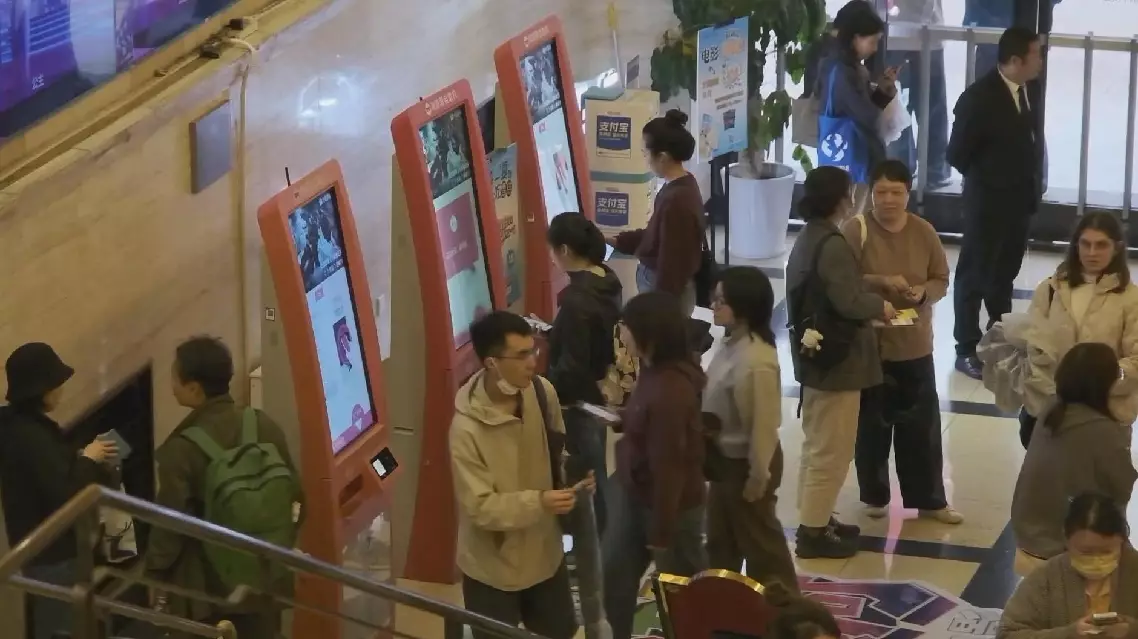
The 17th meeting of the China-Vietnam Steering Committee for Bilateral Cooperation was held in Hanoi on Tuesday.
Member of the Political Bureau of the Communist Party of China Central Committee and Foreign Minister Wang Yi and Vietnamese Deputy Prime Minister Bui Thanh Son co-chaired the meeting with officials from various ministries and provincial governments of both sides participating online and offline.
Efficient coordination among various departments and localities of the two countries has led to an upgrade in all-round cooperation, Wang noted.
Faced with a complex and volatile international situation, China and Vietnam should join hands to advance the path of socialist modernization, continuously create new prospects for relations between the two parties and countries, and make new contributions to strengthening Global South unity and self-reliance and promoting international and regional peace and stability, said Wang.
He added that both sides should expand the breadth of pragmatic cooperation, including promoting railway connectivity, strengthening cooperation in agriculture, electricity, finance, key minerals, and technological innovation, and jointly safeguarding the multilateral trading system.
Efforts should also be made to maintain the momentum of people-to-people exchanges, such as promoting cooperation in media, publishing, radio, and film, and to strengthen the management of differences, advance maritime cooperation, and conclude consultations of the Code of Conduct in the South China Sea at an early date, Wang added.
Son said that Vietnam has always regarded China as a top priority and strategic choice in its foreign policy, adding that Vietnam firmly adheres to the one-China policy and opposes any form of Taiwan separatist activities.
He added that Vietnam agrees with the next steps of cooperation proposed by China, and is willing to further consolidate strategic mutual trust, prepare for high-level exchanges, and strengthen party and parliamentary exchanges.
Vietnam is willing to deepen defense and security cooperation, promote mutually beneficial cooperation in trade, agriculture, finance, green energy, and cultural and educational fields, strengthen multilateral coordination and cooperation, properly manage differences, and advance Vietnam-China relations to deeper and more substantive levels, Son said.
China, Vietnam hold meeting to advance cooperation