Macao has seen a surge in visitors this year, welcoming over 32 million tourists eager to experience the region's renowned historic buildings and photogenic views.
The region has seen a 26 percent increase in visits compared to the same period last year, according to official data. Tourism from the Chinese mainland is the main force, accounting for nearly 70 percent of visits, data showed.
The Ruins of St. Paul's, a UNESCO World Heritage site, stands as a testament to one of the earliest and most enduring encounters between China and the West. It is typically an early and essential stop for every tourist.
"We came from Zhuhai City, Guangdong Province (in southern China). We have just arrived in Macao, and this is our first stop. We've taken many photos and enjoyed a wonderful meal. We are very happy," said a tourist.
"I came from Anhui Province (in eastern China). The people in Macao are very hospitable, and I think the city is wonderful," said another visitor.
The enchanting city also attracts numerous tourists from around the world.
"It's a really vibrant city. I love the architecture," said an international tourist.
A narrow and elongated area in the city is dotted with historic buildings, from the A-Ma Temple dedicated to the sea-goddess Mazu, to the Mandarin's House -- the former residence of a prominent Chinese historical figure and the landmark Ruins of St. Paul's.
This year, a newly unveiled building in the area offers visitors a panoramic view of eight World Heritage sites from its rooftop, earning it the name "M8." It is the first commercial urban renewal and reconstruction project since Macao's return to the motherland.
"This place is perfect for photography. I've been here before, but at that time I only used my phone to take pictures. Today, I brought my camera specifically for this visit. Beneath the layers of history and culture, there are also bustling, lively, and prosperous scenes. I feel that the blend of (tradition and modern life) is very well integrated," said a tourist.
Project organizers said they hope to showcase the rich history and modern life of Macao while helping to tap into tourism to boost the region's economy.
"We bring together both culture and commerce. We hope to explore a new path for development in this historic city and establish a fresh direction for cultural tourism in Macao," said Loi U Man, Project Director of M8.
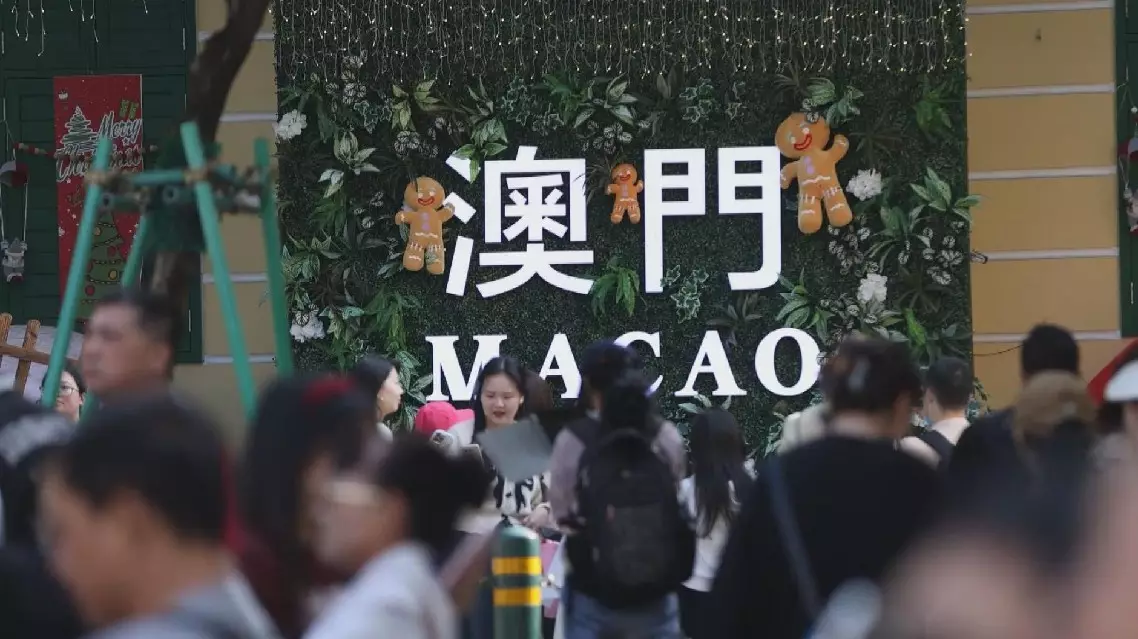
Macao sees surge in tourism with cultural and modern charms
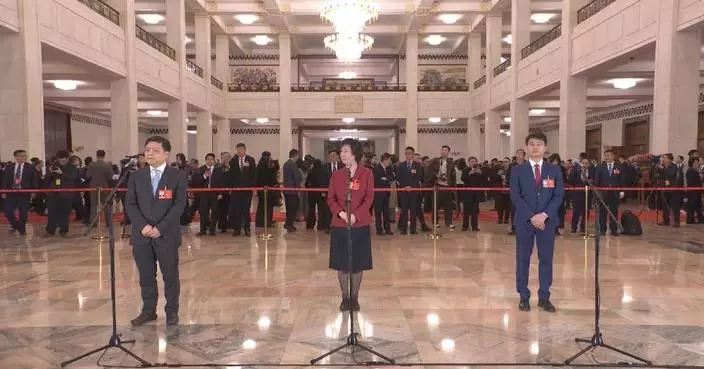
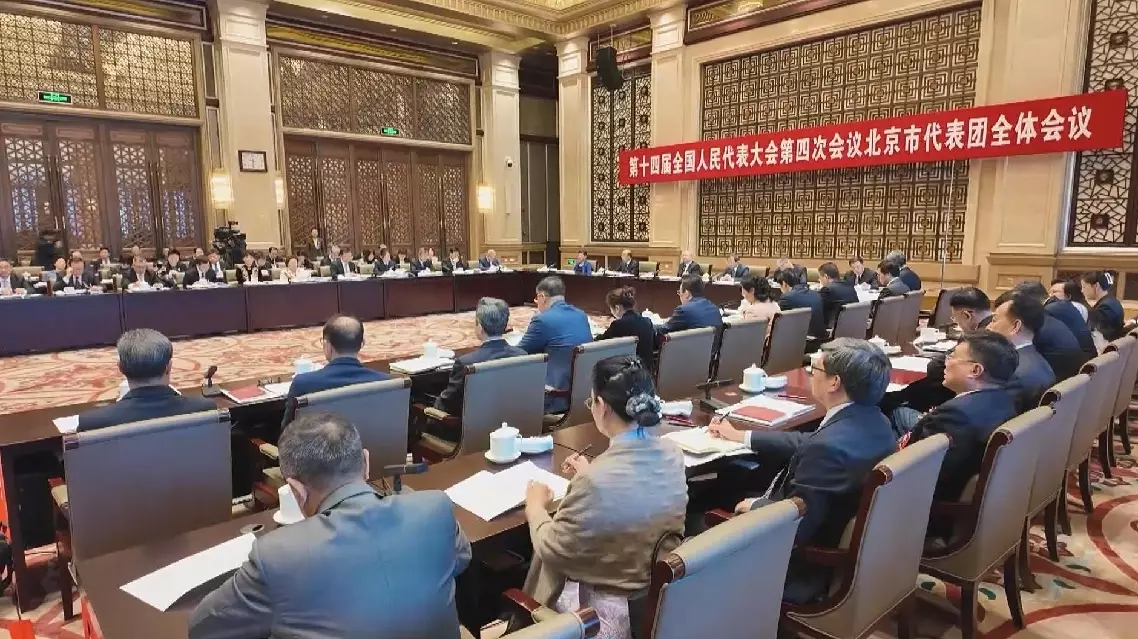
Rapid developments in advanced industries across China, including AI and robotics, were major topics of discussion at open press interviews on Friday with leading researchers and industry executives serving as deputies to the 14th National People's Congress (NPC), currently in its ongoing fourth session.
The NPC, China's top legislature, is holding its annual session from Thursday through March 12.
At a series of open press events, delegations from various parts of the country, including Beijing, south China's Guangxi Zhuang Autonomous Region and east China's Jiangxi Province, took questions on how their regions are shaping China's technological progress.
Deng Langni, a deputy to the 14th NPC and vice chairman of Guangxi University of Science and Technology, emphasized that as sources of innovation, universities need to take the initiative and provide strong support for the AI industry's development at the local level.
"The rapid pace of industrial transformation poses serious challenges to traditional disciplines and majors, pushing universities to 'break down walls' and bring classrooms onto industrial chains. Taking Guangxi University of Science and Technology as an example, it has quickly launched a number of AI-related micro-credentials across the campus, enabling students from different majors to gain 'AI thinking' and provide urgently-needed compound talents for industrial upgrading in Guangxi," said Deng.
A deputy from Beijing, Lei Jun, founder of consumer tech giant Xiaomi, offered an optimistic vision on the transformative impact that technological advances will have in manufacturing and industry.
"Sci-tech innovation can accelerate the development of new quality productive forces. Private enterprises have a key advantage in being close to markets and users, responding quickly, and rapidly applying new technologies to real-world scenarios. Humanoid robots have already been deployed in automobile factories, and I believe that, in the coming years, they will enter factories on a large scale," he said.
During the open event hosted by the Jiangxi NPC delegation, deputies said that the province has mapped out six key areas for future industries, including bold new areas such as embodied intelligence, brain-computer interfaces and humanoid robots.
"Many aviation, automotive and equipment manufacturing companies in Jiangxi are using intelligent robots, virtual reality and metaverse technologies to upgrade manufacturing. Workers can remotely operate equipment using immersive interfaces. Over the years, we have been dedicated to researching the key algorithms necessary for the efficient collaboration among embodied intelligent humanoid robots, digital humans and people," said NPC deputy Min Weidong, also the dean of the Metaverse Research Institute at Nanchang University.
Innovation experts from across China highlight accelerated tech deployment