The power generation team at China's Zhongshan Station in Antarctica is working at full capacity to ensure a stable energy supply for the country's 40th Antarctic expedition. In Antarctica, winter temperatures can drop to below minus 80 degrees Celsius, and snowfall can be extremely heavy, sometimes accumulating to several meters in height. In such an unforgiving environment, maintaining a stable power supply becomes a significant challenge.
At the Zhongshan Station, the power generation building oversees and controls the entire station's power supply.
"This is our power generation room, where all the station's switches are located. The power generation building is equivalent to the heart in the human body. If the power in this building fails, there will be no electricity across the entire station area," said Zhang Dong, head of the power generation team for China's 40th Antarctic expedition.
In Antarctica, energy is the lifeline for human survival. Whether enduring a long, frigid night or basking in daylight, energy serves as the most fundamental and vital support for the station.
""Our work pressure is also greater than in other positions, with three people working in two shifts. Each shift lasts 12 hours. This power generation room requires workers to monitor the operation of the generators 24 hours a day. So far this year, we've generated 990,000 kWh of electricity," Zhang said.
At the Zhongshan Station, energy is primarily supplied by diesel, with the three generator sets in the power generation building undergoing maintenance once every two weeks on a rotational basis.
Additionally, the power generation building oversees the station's fire protection system. This system records and prints real-time alerts pinpointing problem areas, enabling swift resolution.
“The biggest challenge in Antarctica is handling fire emergencies. Unlike in China, where water can be used to extinguish fires. In Antarctica, snow is ineffective for this purpose. While there is an abundance of water here, it's all in the form of ice. Our fire-fighting system relies on Heptafluoropropane, a highly effective agent. For instance, if a fire breaks out in the power generation room, this system can suppress it by displacing all the air inside the room,” Zhang said.
The oil storage tank at the Zhongshan Station has a capacity of 660 cubic meters, which ensures smooth operation of the station.
The Zhongshan Station is the second Chinese research station in Antarctica and was opened on February 26, 1989.
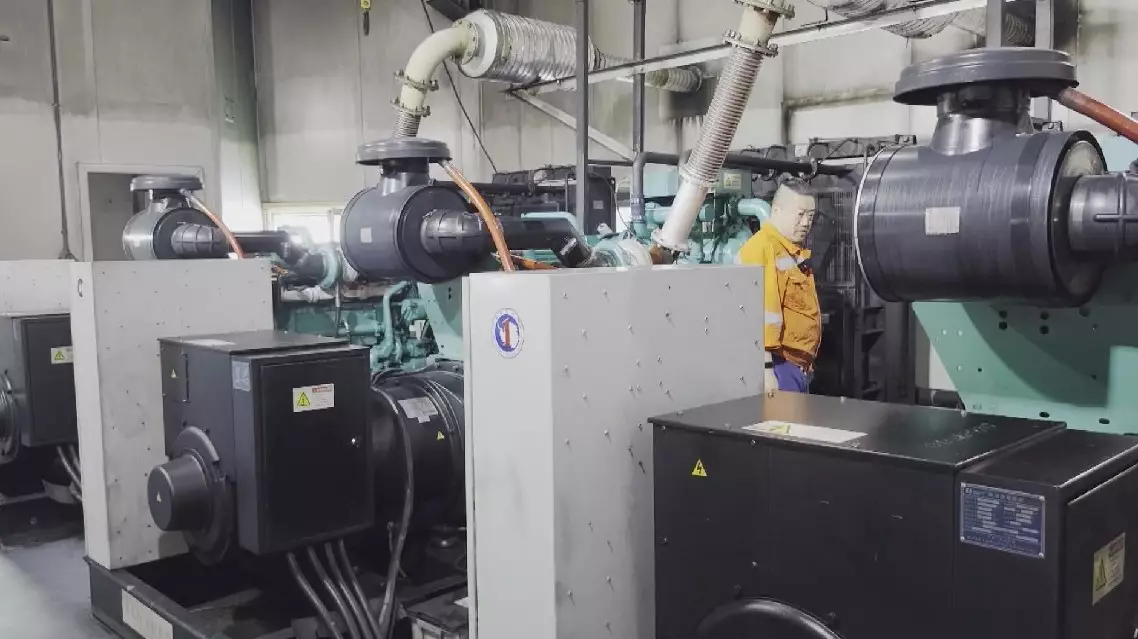
Power generation team works at full capacity to support Antarctic expedition