Skip to Content Facebook Feature Image

China releases report on progress in scientific research and applications of space station

China

China

China

China releases report on progress in scientific research and applications of space station

2024-12-30 17:29 Last Updated At:12-31 00:47

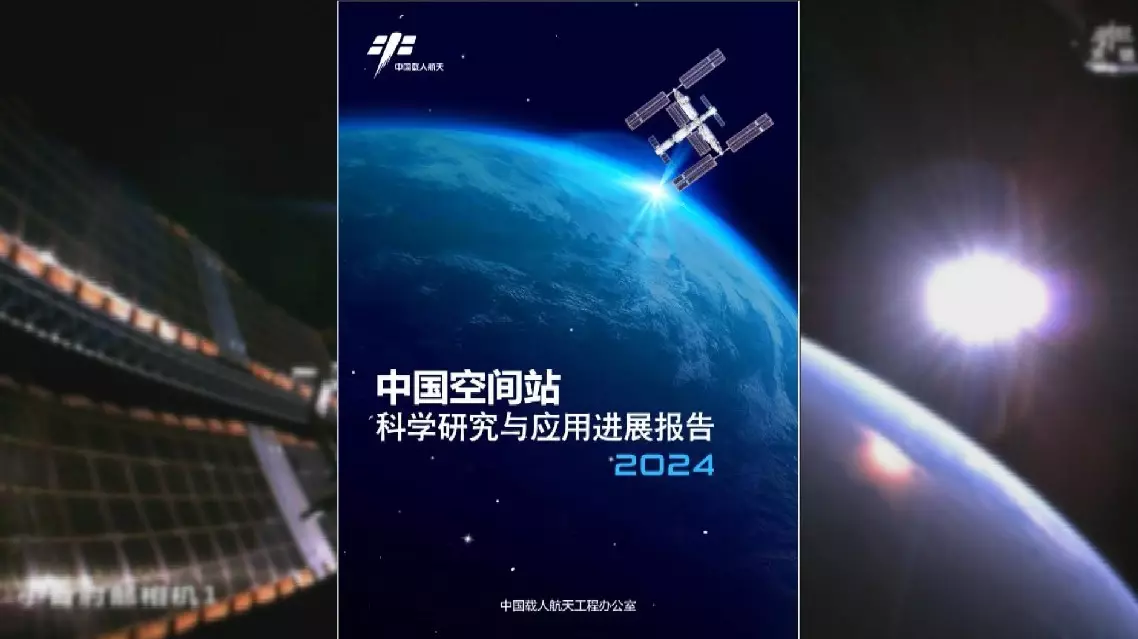
The China Manned Space Engineering Office (CMSEO) released a report on Monday on progress in scientific research and applications of Chinese space station (2024) for the first time, to celebrate the two-year anniversary of the comprehensive completion of the Chinese space station.

The report provides a systematic summary of the progress in scientific research and applications of China's space station Tiangong over the past two years. Subsequent reports will be released annually based on the progress, said CMSEO.

The report aims to promote the development of space science, technology, and applications, focusing on areas including space life and human research, microgravity physics research, space new technologies, and applications.

It highlights 34 representative research and application achievements, along with various science communication and cultural activities.

In the two years since the comprehensive completion of the space station, China has successfully conducted four manned missions, three cargo resupply missions, and four spacecraft return missions, according to the report.

Five astronaut crews, totaling 15 individuals, have undertaken long-term stays in orbit, performed 10 spacewalks, deployed various payloads, executed multiple extravehicular maintenance tasks, setting a world record for the longest single spacewalk duration.

During the past two years, the fourth batch of astronaut candidates, including two payload specialists from Hong Kong Special Administrative Region and Macao Special Administrative Region, were selected.

In addition, the research and development of a low-cost cargo transportation system has been initiated.

Currently, the Chinese space station is operating steadily with excellent performance, said the report.

The first batch of space science, application experiments, and technological trials carried out at the Chinese space station have made significant progress, with fruitful outcomes and cutting-edge and innovative achievement, said the report.

Currently, China has planned four major research areas in space: space life and human body research, microgravity physics, space astronomy and earth science, and space new technologies and applications, covering 32 research topics.

As of December 1, 2024, a total of 181 scientific and application projects have been implemented in orbit. Nearly two tons of scientific materials have been sent up to the station, and nearly 100 types of experimental samples have been brought back to Earth.

The report outlined multiple world records, like the first germplasm resources of rice and ratoon rice developed in space, and the first human embryonic stem cells differentiated into hematopoietic stem/precursor cells in space.

It also includes the world's first cold atom interference gyroscope in space microgravity, the first high-throughput in-orbit microbial control test platform, and the longest time of running of a water ecosystem in orbit.

Scientific teams in various fields have published over 500 high-level SCI papers, and obtained more than 150 patents. Some achievements have been applied, thereby driving the rapid advancement of China's space science and applications.

The Chinese space station, as the national space lab, will conduct over 1,000 research projects in the next 10-15 years. It will promote science outreach and international collaboration, attract high-level teams globally, and advance China's space science, technology, and applications, contributing to the nation's endeavor in space exploration, said CMSEO.
China releases report on progress in scientific research and applications of space station

China releases report on progress in scientific research and applications of space station
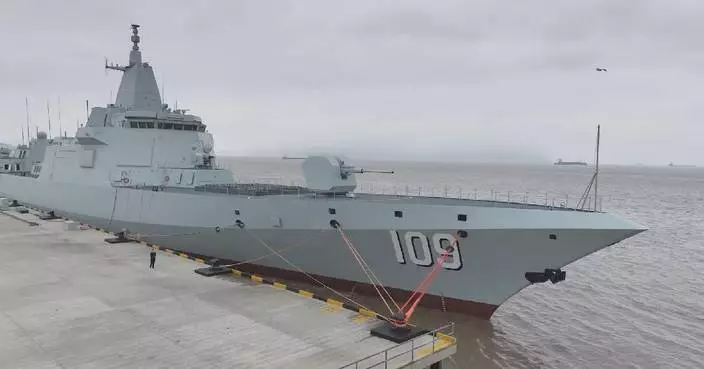
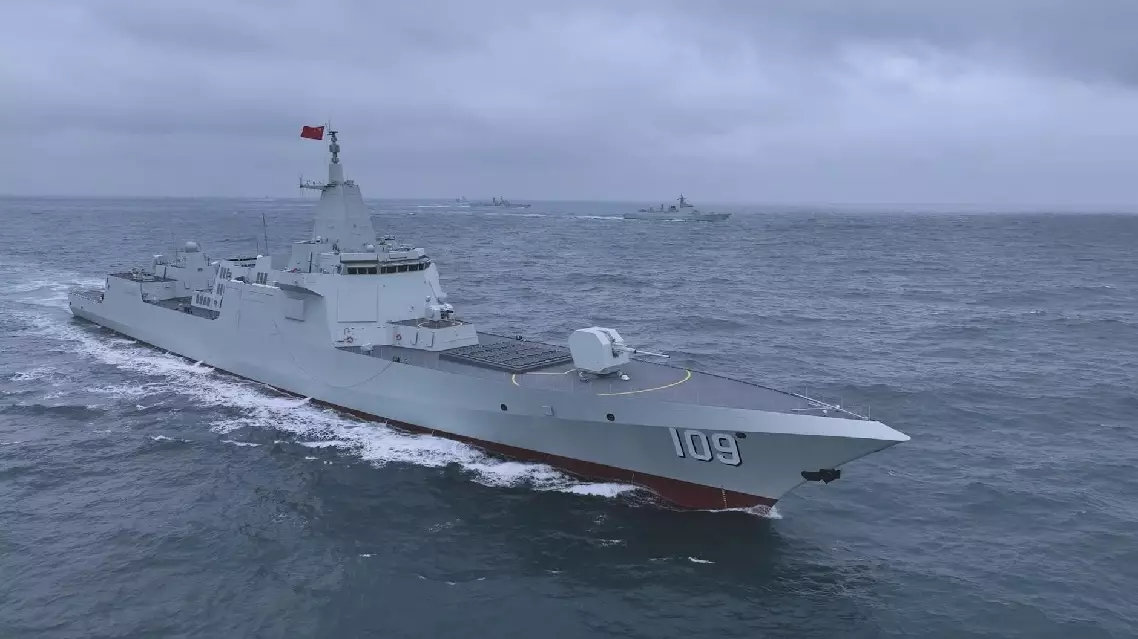
A new Type 055 guided-missile destroyer, the Dongguan (Hull 109), recently completed its first maritime training at the waters of the East China Sea after commissioning to the Chinese People's Liberation Army (PLA) Navy.

During this combat-oriented training exercise, the Dongguan not only completed single-vessel training subjects such as navigating through narrow waterways and damage control, but also coordinated with other warships in the formation to conduct joint operation drills, including maritime assault missions, at-sea replenishment, and multi-domain coordinated strikes.

With the improved performance of weaponry and equipment, the software and hardware of the Dongguan are vastly different from those of previous vessels. Sailors onboard the warship said that it's much more well-equipped and responsive.

"The Dongguan can now observe farther and hear more clearly. From detecting the target to launching strikes, it may take only a few seconds. However, seeing farther and wider also brings exponentially more interference factors. This requires us to practice and observe more frequently to accumulate experience, so as to enable rapid identification and efficient response," said Guo Tian, a lieutenant onboard the Gongguan.

In addition to diversified subjects with a clear combat focus, the Dongguan also faced challenges posed by harsh weather conditions during the training exercise. The crew remained at their posts throughout the process, demonstrating exceptional skills in maneuvering the vessel.

"To accelerate the combat readiness of the vessel, we participated fully in the testing and trial navigation missions from the very beginning of taking over the ship. The very first power trial navigation was independently completed by our own crew. Throughout this process, we not only learned how to operate the ship, but also understood the working principles behind its operation. This has laid a solid foundation for our combat-oriented training and equipment maintenance," said Zhang Chen, a helmsman onboard the Dongguan.

"During this maritime training exercise, we adhered to a problem-oriented approach. By creating complex settings and simulating real combat scenarios, we thoroughly tested the quality and effectiveness of the integration of trial and training during the equipment handover period, while systematically validating the combat effectiveness of the new equipment. Next, we will further optimize deployment, consolidate our foundation, strengthen coordination and cooperation, actively integrate into formation and group training, and continuously enhance the vessel’s comprehensive combat capabilities," said Shen Kai, commanding officer onboard the Dongguan.

The Type 055 destroyer is the fourth-generation destroyer independently developed and built by China. As one of the Chinese PLA Navy's most advanced surface warships, it carries advanced radar, universal vertical launch systems, and comprehensive radio frequency system, serving as the core the naval fleets for far-sea missions.

The Dongguan was commissioned to the PLA Navy together with another Type 055, the Anqing (Hull 110). With these additions, the number of China's Type 055 10,000-ton-class destroyers has risen to 10 since the first Type 055 destroyer Nanchang (Hull 101) was commissioned in 2020.

China's newly commissioned Type 055 destroyer Donggaun completes 1st maritime training

China's newly commissioned Type 055 destroyer Donggaun completes 1st maritime training

Recommended Articles