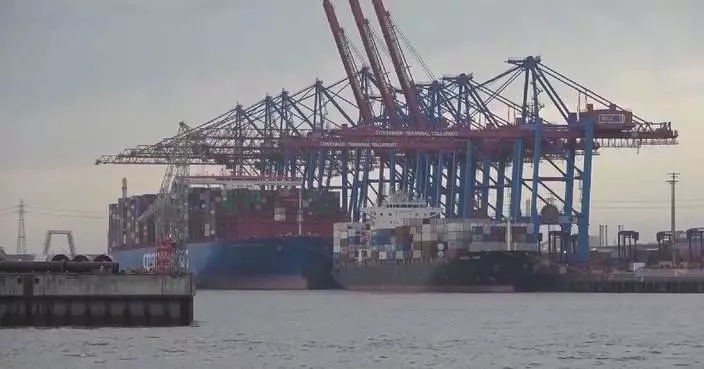
Three years since it came into force, the Regional Comprehensive Economic Partnership (RCEP), the world's largest free trade pact encompassing 15 Asia-Pacific nations, has contributed significantly to regional economic integration.
Entering into force on Jan 1, 2022, the free trade agreement, the world's biggest of its kind in terms of population, economic scale, and growth potential, has partially offset the adverse impacts of fluctuating global demand and growing trade barriers. The pact comprises 10 member states of the Association of Southeast Asian Nations (ASEAN), China, Japan, the Republic of Korea, Australia, and New Zealand. Together, they cover about 30 percent of the world's population and 30 percent of global economic and trade volume.
In 2023, the RCEP member countries' contribution to global trade reached 13 trillion U.S. dollars, up 200 billion dollars from 2021, according to a report from the Chinese Ministry of Commerce.
The region also attracted 2,340 greenfield investment projects in 2023 with a combined investment of 243.09 billion dollars, representing a 33.9 percent increase in project numbers and a 120 percent surge in investment value compared to 2021, official data showed. Renewable energy, electronic component manufacturing, and telecommunications sectors were among major sectors that spurred this investment boom.
In addition to the growth of traditional trade, emerging sectors such as digital trade and green trade have gained significant momentum. The RCEP has created a favorable institutional environment for developing advanced fields, including next-generation information technology, artificial intelligence, clean energy, and biopharmaceuticals. These advancements have not only boosted regional economic integration but also served as a key driver of global investment growth.
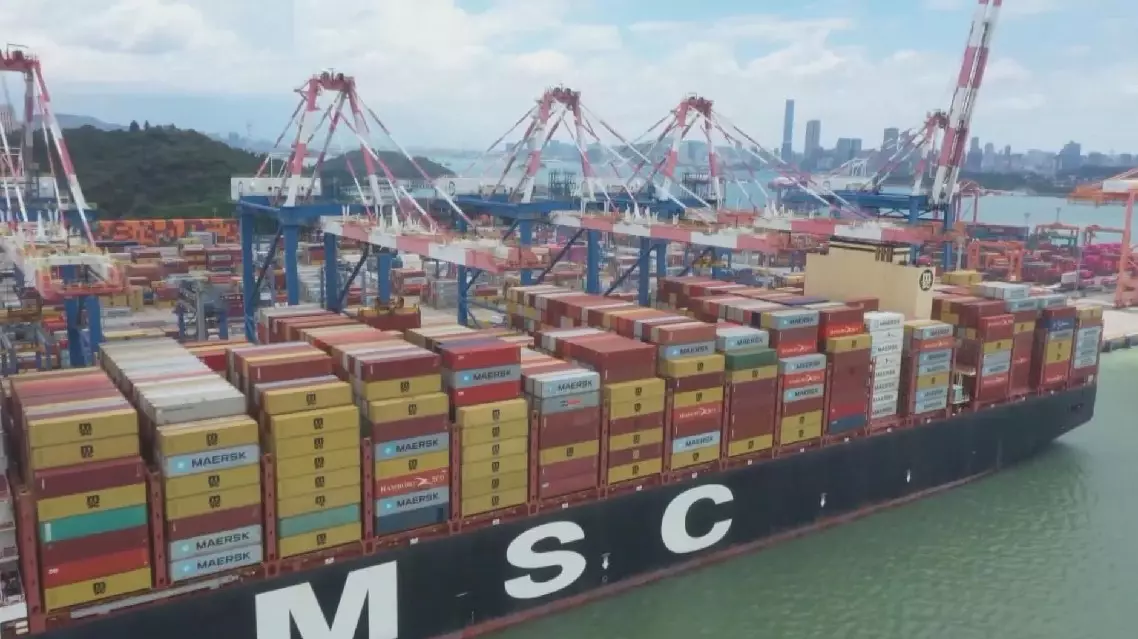
Three-year-old RCEP boosting Asia-Pacific economic integration
Spanish students have expressed their expectation that a healthy China-U.S. economic and trade relationship will inject greater stability into the global economy and create greater opportunities for Spain.
On Sunday, Chinese and U.S. delegations convened in Paris, France for talks on economic and trade issues. Guided by the consensus reached by the two heads of state in Busan and their subsequent phone talks, the two sides will conduct consultations on economic and trade matters of mutual concern.
Ahead of the talks, members of the public in Madrid, Spain, shared their views on China–U.S. economic and trade relations with China Media Group (CMG). They agreed that reaching an agreement between the world’s two largest economies would have a direct impact on the global landscape.
"They are the two countries that contribute the most economically, in a manner of speaking, to the rest of the countries. They are major importers and exporters. So I think that a satisfactory relationship between them can be very beneficial for all other countries," said Claudia, an engineering student.
Noting that both sides are important trading partners of Spain, the interviewees stated that a healthy, stable and sustainable China-U.S. economic and trade relationship also affects various aspects of the Spanish society, and that agreements between the two countries would help promote Spain's economic growth.
"I do think that it could have a certain effect on the Spanish economy, both in terms of prices, and I would dare say employment as well. Because I think that if those two great powers reach an agreement, Spain could also get in on the action. It would create quite a few jobs in Chinese and American multinationals for all Spaniards," said Claudia.
"Spain is caught in the middle; it has good relations with both the U.S. and China. If it gets on the bad side of either one, it could be hit hard, because Spain mainly relies on tourism -- well, other things too, but essentially tourism, construction and agriculture. It's very important to have more help and trade with all countries around the world," said Denis, a law student.
Spanish students say stable China-US ties benefit global economy