Vanuatu's Ambassador to China Nguk Yang Dennis Nai has expressed his gratitude to the Chinese government for its timely humanitarian aid, which he said will play a crucial role in helping the Pacific Island nation rebuild and recover from the devastating earthquake that struck last month.
On Dec 17 last year, Vanuatu was hit by a powerful 7.3-magnitude earthquake which killed 14, injured more than 200, and severely damaged the country's urban infrastructures.
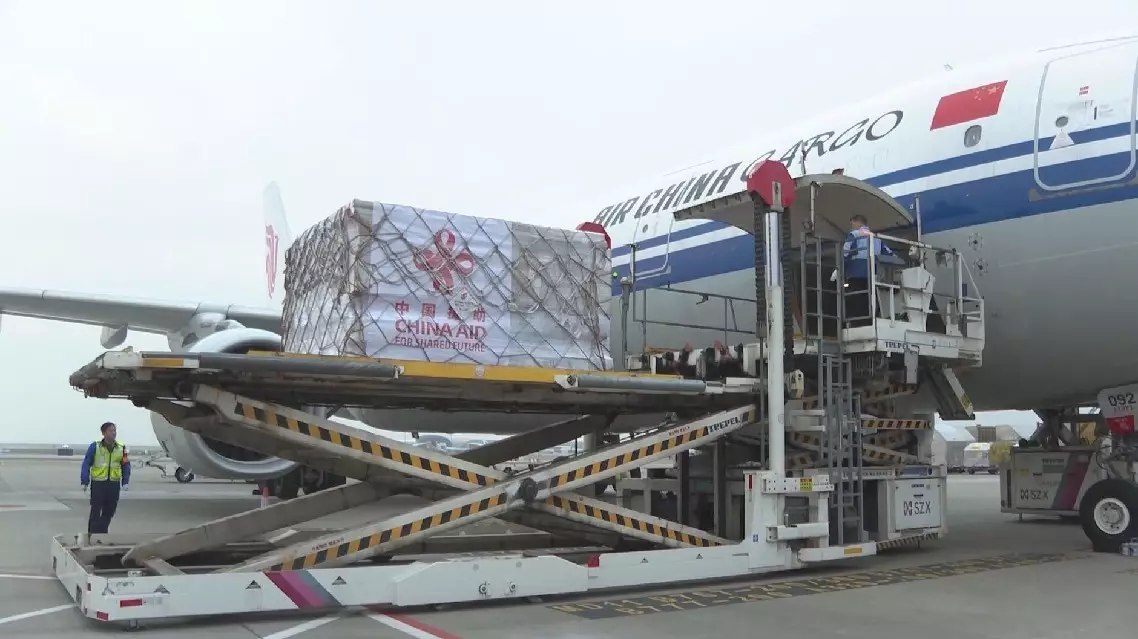
A Chinese cargo plane arrived in Vanuatu's capital Port Vila on Thursday, bringing much-needed relief supplies, including tents, folding beds, water purification systems, non-perishable instant food, and essential medical equipment.
In an interview with the China Global Television Network (CGTN), ambassador Nai extended his thanks to China for its support.
"We are very glad to have a friend like China. It was the first one to respond. On the very next day, they have donated to my country 10,000 U.S. dollars. Three days later, the Red Cross (Society of China) gave 100,000 U.S. dollars to our Red Cross. And also two days later, the Chinese government has helped us with another million dollars in USD. On top of that, there was a plane that arrived yesterday (Jan. 1) from Shenzhen. It comes with 35 tons of aid and very importantly, there are four engineers to help us evaluate the worthiness of the building. On top of that, we have medical supplies (from China), abundant medical supplies that in normal times is good for one year. So, this come in very needy times, it is a great help from the Chinese government and not only from government to government, even from people to people. There were lots of people that donated money to help us out through this disaster. Not only from companies, but even from the private sector too," he said.
In addition to the current disaster relief, Nai also said Vanuatu looks forward to deepening cooperation with China in disaster prevention and mitigation, particularly against the backdrop of intensifying climate change.
"Vanuatu is located in the South Pacific. Because of climate change, we have lots of challenges every year, earthquakes, typhoons, during the cyclone seasons, but whenever there are things like these, China is always there for us. This modern-day technology from China is very helpful to the people of the Pacific islands. It's not only helpful to Vanuatu, but the whole Pacific," he said.
Vanuatu ambassador hails China's earthquake relief efforts
U.S. President Donald Trump said on Friday that he estimates a deal with Iran will be signed "in the next day or two."
Trump said in an interview with Israel's Channel 12 News that the United States and Iran will probably meet over the weekend to finalize a deal to end the war. "The Iranians want to meet and make a deal," he said.
He said "the naval blockade on Iran is helping to make a deal. I will not lift it until we make a deal," adding that "the biggest part of this deal is that it will make Israel safer. This deal is good for Israel."
According to the channel, one component of the deal under discussion is that the United States will release 20 billion U.S. dollars in frozen Iranian funds.
In exchange, Iran would give up its stockpile of enriched uranium, and would be only allowed to have nuclear research reactors to produce medical isotopes, all above ground.
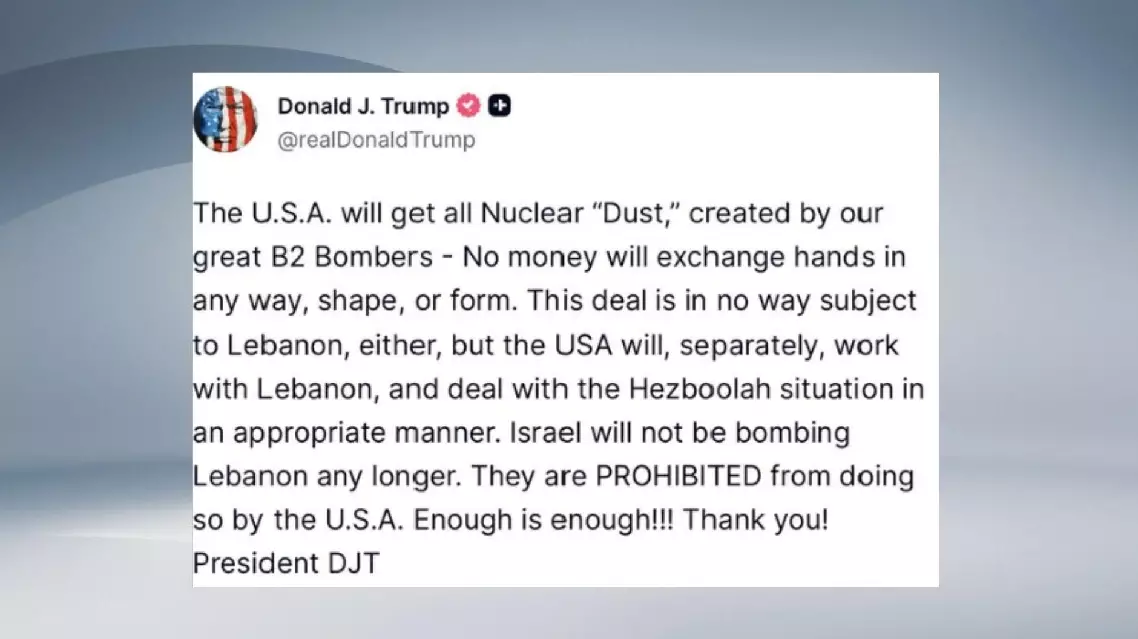
Trump also stressed that Israel must stop the strikes on Lebanon, saying, "They can't keep blowing up buildings. I'm not going to allow that."
Also on Friday, Trump said in a phone interview with Bloomberg that a deal to end the U.S.-Israeli war with Iran is mostly complete as talks over a lasting peace deal will "probably" be held this weekend in Pakistan.
Trump said in the phone interview that Iran agreed to suspend its nuclear program indefinitely, and will not receive any frozen funds from the United States.
"Most of the main points are finalized. It'll go pretty quickly," Trump said.
Asked if he would travel to Pakistan to sign the potential deal, Trump said: "I may."
Trump again denied that the moratorium on Iran's nuclear program would expire after 20 years. "No years, unlimited," Trump said.
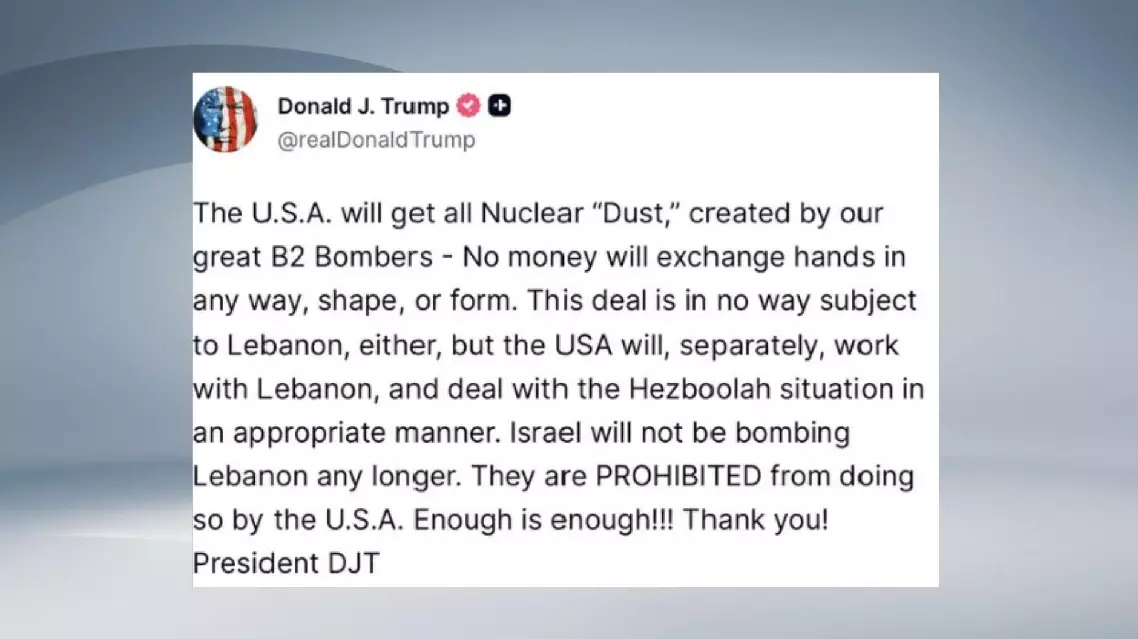
The United States will get all of Iran's nuclear "dust" with no money having exchanged hands "in any way, shape, or form," Trump wrote on social media earlier on Friday. Multiple Western media outlets have interpreted Trump's reference to nuclear "dust" as meaning Iran's stockpile of enriched uranium.
Iran has yet to comment on any deal beyond the reopening of the Strait of Hormuz, nor on claims made by Trump that Tehran had offered concessions, including over the key issue of its nuclear program.
If the United States continues its naval blockade of the Strait of Hormuz, Iran will consider it a violation of the ceasefire between the two countries and will close the waterway, the semi-official Tasnim news agency reported Friday, citing an informed source close to the Supreme National Security Council.
The Iranian side has yet to respond to the media report on the enriched uranium issue.
The United States and Iran had their first round of negotiations in Pakistan's Islamabad last weekend to ease tension in the Middle East. The talks, which failed to produce an agreement, took place after a ceasefire was announced on April 8 between Iran, the United States, and Israel, following 40 days of fighting.
Iran tightened control over the Strait of Hormuz after the United States and Israel launched joint attacks on the country on Feb. 28. The United States also imposed a naval blockade on the strait following the failed negotiations in Islamabad.
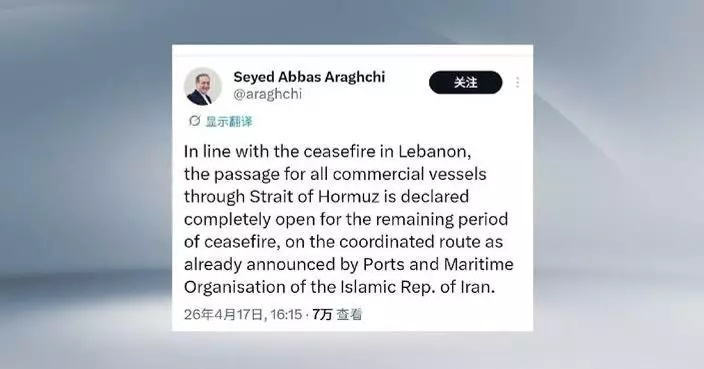
Earlier on Friday, both Washington and Tehran confirmed that the strait had been completely open for all commercial vessels. However, Trump said on Truth Social that the U.S. naval blockade would "remain in full force." In response, Iran warned of closing the waterway again if the U.S. blockade continues.
Trump says may sign deal with Iran "in the next day or two": Israeli media
Trump claims peace deal with Iran mostly complete: report