As East Africa is bracing for drier weather in the first quarter of the new year, some Ugandan farmers have turned to irrigation farming to combat the impacts of climate change.
Madi Okollo, a district in the northwest part of Uganda, is one of the regions worst hit by climate change and is now experiencing high temperatures and dry spells.
Drani Kizito is a local farmer who previously relied on rainwater for farming. However, the unpredictable weather significantly affected his yields.
"The rain may be for two days or three days. We may think that this rain may go for more than one week. Then all of a sudden, the rain just stops and then it begins to shine. Then this sunshine can go for a whole week or a whole month. Then within the whole month, when the crop has not established the roots and so on and so on, you'll find it beginning to wither," said Kizito.
The unpredictable rains have forced Kizito to buy new farmland in the valley where he can pump water from the swamp to water his crops. To increase food supply and income, he has also switched to growing vegetables that take a shorter time to mature.
Kizito's shift to irrigation farming allows him to reap harvests even during the dry spells.
"In the case of a dry season, I bring the pump into the valley and take the water. And if it's not there like today, I never brought it out, because the rain was there. So it made my work easier in a way that the quality of the crops that I put in my field are always constant," said Kizito.
The Food and Agriculture Organization (FAO) of the United Nations and the Intergovernmental Authority on Development (IGAD) in Eastern Africa have predicted Uganda and the rest of the region will suffer crop failures due to abnormally high temperatures this year.
The forecast shows temperatures may go as high as 32 degrees Celsius and likely produce worse climate conditions.
The FAO said that farmers need to build resilient agriculture technologies, similar to Kizito's.
"The climate is changing. Farmers need to prepare and adapt to the changing climate, and this requires understanding the crop, understanding the climate, understanding the soil and understanding the overall ecosystem," said Antonio Querido, FAO country representative in Uganda.
The climatic changes could potentially spark off a food crisis in the region, affecting millions who depend on agriculture for a living.
IGAD's Climate Prediction and Applications Center said more than 664 million people were in need of humanitarian assistance in the Horn of Africa by the end of November last year.
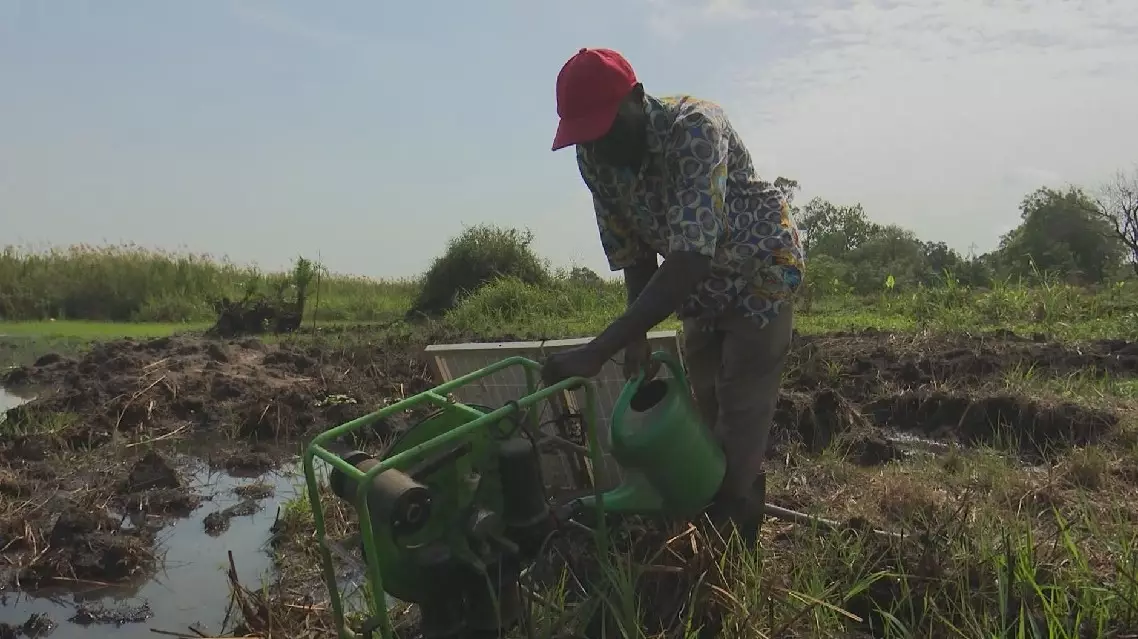
Ugandan farmers turn to irrigation farming to combat unpredictable climate